
Packaging Line Trolley Track
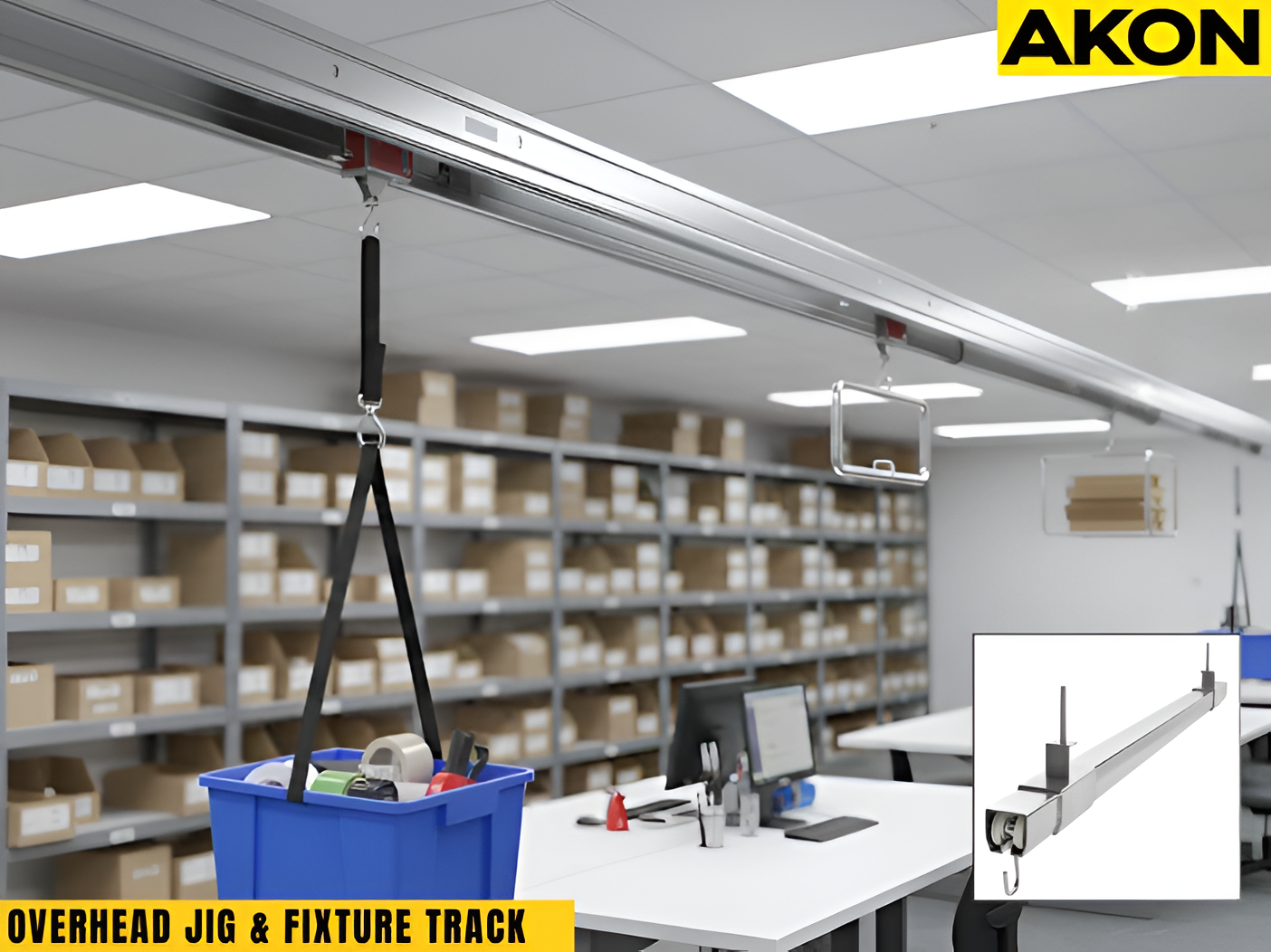
A Packaging Line Trolley Track is an overhead enclosed rail system designed to move products efficiently between packaging stations. Commonly used in high-volume packaging lines, warehouses, and assembly environments, it helps improve workflow while preserving valuable floor space. This article outlines key operational challenges, system benefits, comparisons, and guidance for selecting the right solution.
Common Packaging Line Challenges That Limit Efficiency
After knowing what a Packaging Line Trolley Track is, it becomes clear that movement between stations often determines how efficient a packaging line truly is. In many facilities, the equipment performs well. The real limitations appear in how materials travel through the process and how the layout supports growth.
Workflow Bottlenecks and Manual Transfers
Products frequently slow between sealing, labeling, inspection, and staging stations. When one process lags, material begins to accumulate, disrupting overall line balance. Even short delays at transfer points can reduce daily output and create inconsistent production flow.
In some operations, products are still moved manually or repositioned using carts. While manageable at lower volumes, manual transfers restrict speed and introduce variability. As production increases, these small inefficiencies become more noticeable and harder to control.
Floor Congestion and Layout Constraints
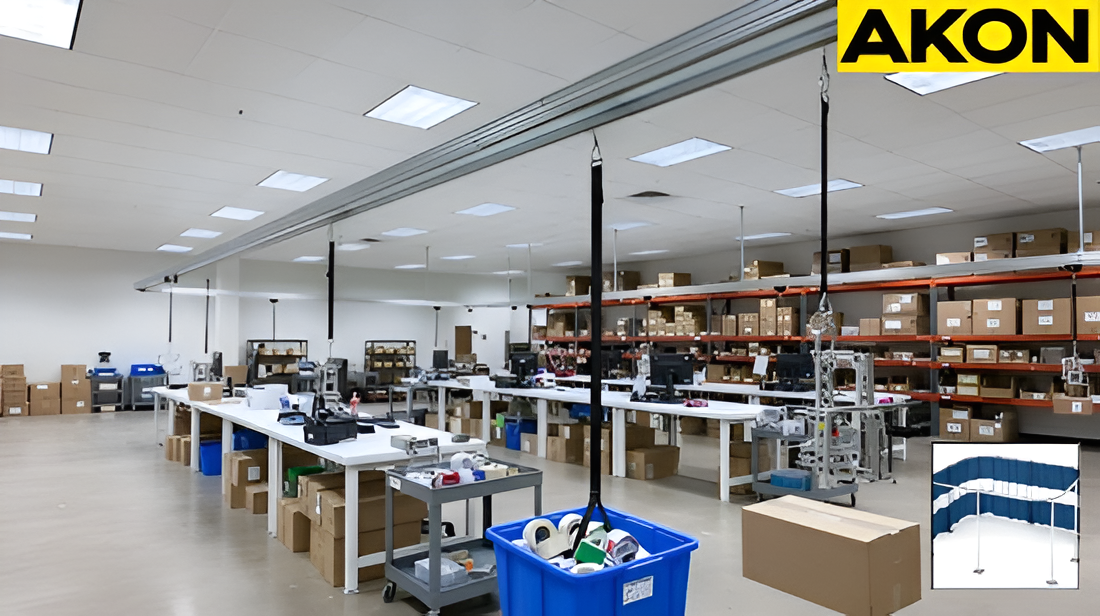
As packaging lines expand, floor space becomes increasingly crowded. Conveyors, carts, and staging areas compete for the same square footage, tightening movement paths for both equipment and personnel. Over time, congestion affects productivity and coordination across the facility.
Growth also exposes layout limitations. Reconfiguring floor-based transport systems often requires relocating equipment or redesigning pathways. In facilities where space is already committed, scaling production can feel restricted by physical layout rather than demand.
Make Shapes
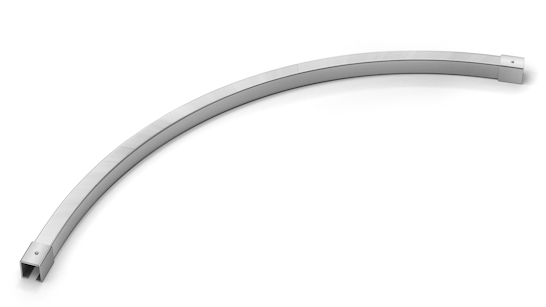
Radius Corner
By using a 90 degree radius corner you can go around obstructions or make shapes. The 24" radius corner quickly attaches and detaches as needed. Use 1 radius for an L-Shape design, 2 radius corners for a C-Shape and 4 radius corners for a complete enclosure.

How Packaging Line Trolley Tracks Improve Workflow
When product transport becomes structured and elevated, packaging performance becomes more consistent and controlled. A Packaging Line Trolley Track creates a dedicated overhead movement path that supports smooth coordination between stations and keeps production aligned from start to finish.
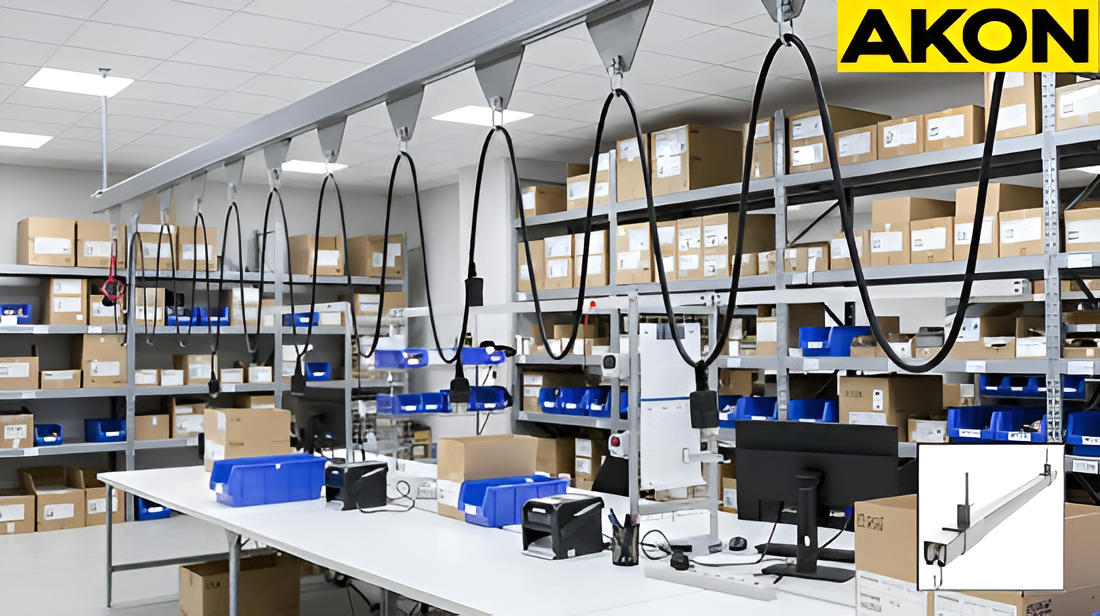
• Improved operational consistency. Guided transport ensures materials follow a defined route every time. This reduces variability in station handoffs and supports stable daily output.
• Clearer production oversight. Elevated product movement makes it easier to monitor how materials travel across the line. Supervisors can identify slow points quickly and maintain better coordination between teams.
• Scalable infrastructure. Modular track components allow systems to expand without disrupting the existing layout. As production demands grow, the transport system can grow with it.
Faster Throughput
Continuous overhead movement maintains steady product flow between packaging stages.
More Usable Floor Space
Elevated routing keeps the production floor open for equipment and personnel.
Flexible Layout Design
Configurable track paths adapt to changing production requirements.
Trolley Track vs Traditional Systems
Understanding the advantages is important. Choosing the right system requires a direct comparison. Many packaging facilities rely on floor conveyors or manual carts, but each transport method impacts space, workflow, and long-term adaptability differently.
| Feature | Packaging Line Trolley Track | Floor Conveyor | Manual Carts |
|---|---|---|---|
| Space Usage | Overhead, minimal floor use | Occupies floor | Occupies floor |
| Workflow | Continuous movement | Linear only | Manual movement |
| Flexibility | Customizable layouts | Hard to reroute | Labor dependent |
| Scalability | Easy to expand | Complex modifications | Limited scalability |
| Safety | Reduced floor obstruction | Potential congestion | High traffic zones |
Each option serves a purpose depending on production volume, facility layout, and operational goals. For packaging environments seeking structured transport without consuming floor area, overhead trolley systems provide a distinct advantage. Traditional systems may still fit certain setups, but evaluating long-term flexibility and space efficiency is essential when planning for growth.
Types of Curtain Track Mounts
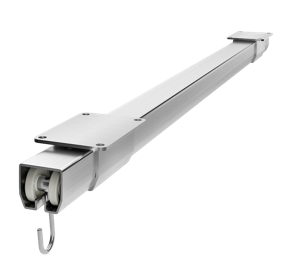
Ceiling Mount Curtain Track
Choose this mounting style if you want your industrial curtain track to mount to the ceiling with only a few inches of open gap.
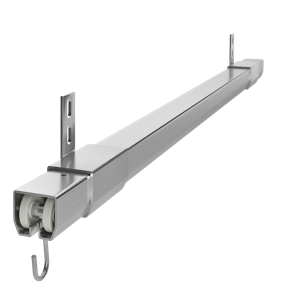
Wall Mount Curtain Track
This curtain track mount is designed for mounting the track next to a vertical wall or stud. This can be parallel to the wall, or perpendicular.
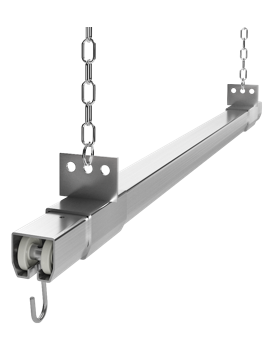
Chain or Cable Curtain Track
Like the threaded rod, a chain supported curtain track is also good for spanning large distances. Both chain or cable can be used to hold up the track.
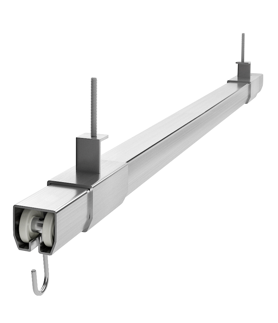
Threaded Rod Curtain Track
If the distance between the anchor points above is higher than where you want the curtain track, then a threaded rod mount might work well. Steel rods support the track and span the distance between the track and the ceiling.
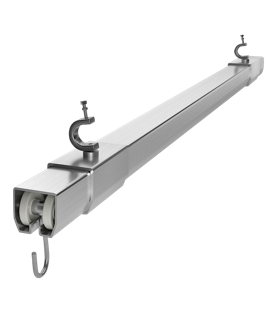
I-Beam Curtain Track
When connecting to a truss, I-Beam or any other horizontal steel support this style of mount works best. Once connected, you simply tighten down the set screw.
Choosing the Right System for Your Packaging Line
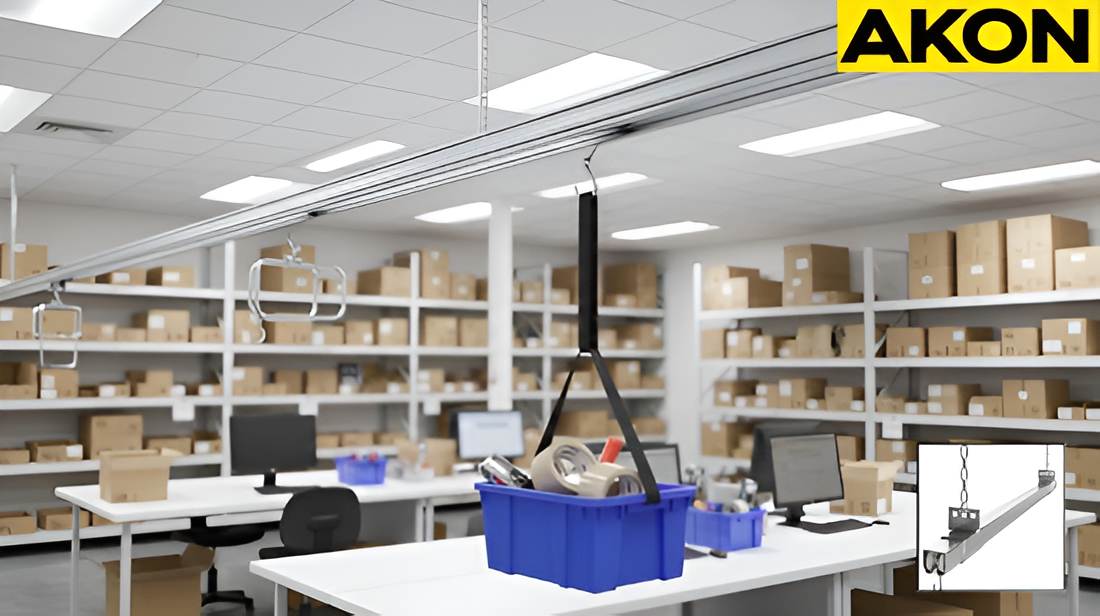
After knowing how different transport methods compare, the next step is selecting the right overhead configuration for your facility. The following trolley systems from the overhead trolley track line support different structural conditions and operational requirements.
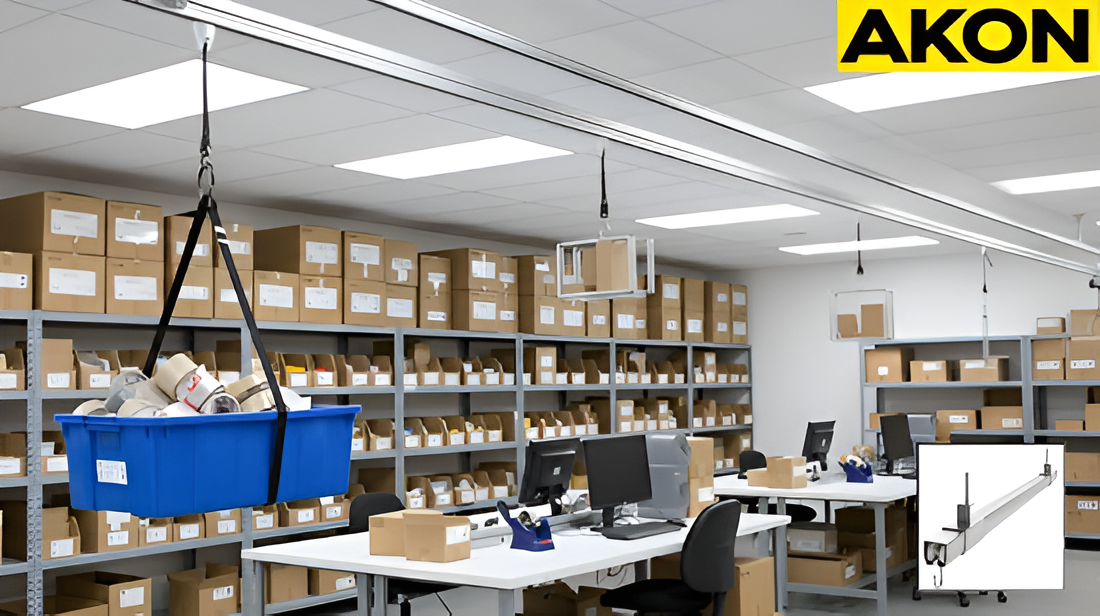
Ceiling Trolley
Ceiling Trolley systems mount directly to structural beams or reinforced ceiling supports. They are best suited for facilities with strong overhead infrastructure and consistent load requirements.
• Designed for permanent installation in fixed production layouts
• Supports suspended product movement across multiple packaging stations
• Maintains stable alignment over long track runs
• Ideal for high-volume environments requiring reliable overhead routing
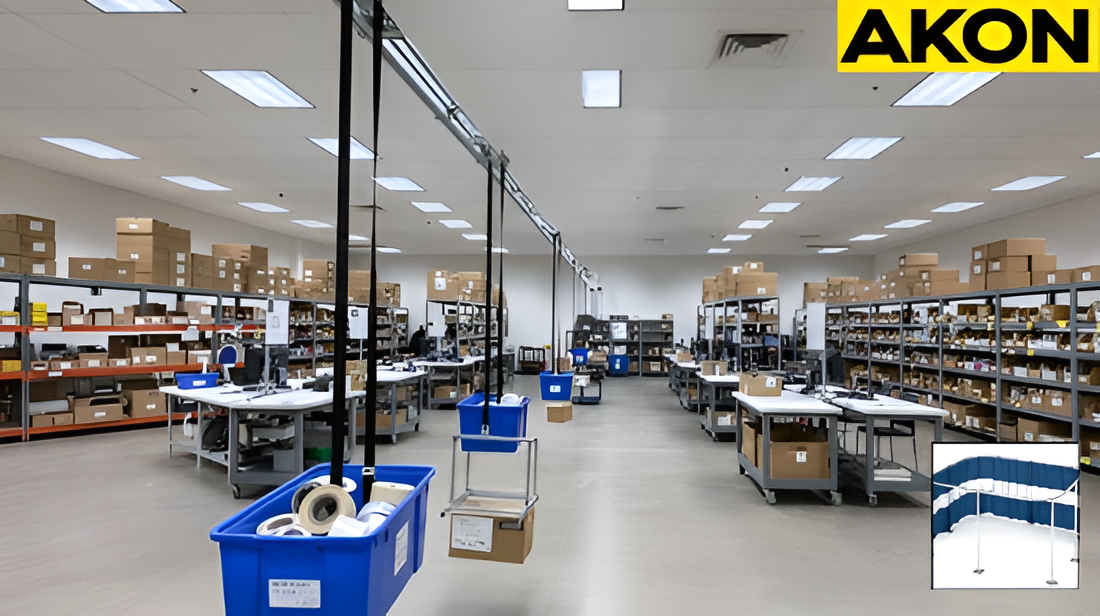
Free Standing Trolley
Free Standing Trolley systems are supported by their own steel framework rather than the building structure. This makes them suitable for facilities where ceiling attachment is limited or unavailable.
• Requires no structural ceiling modification
• Effective in retrofit, temporary, or leased facilities
• Provides overhead transport without building dependency
• Can be positioned to match evolving workstation arrangements
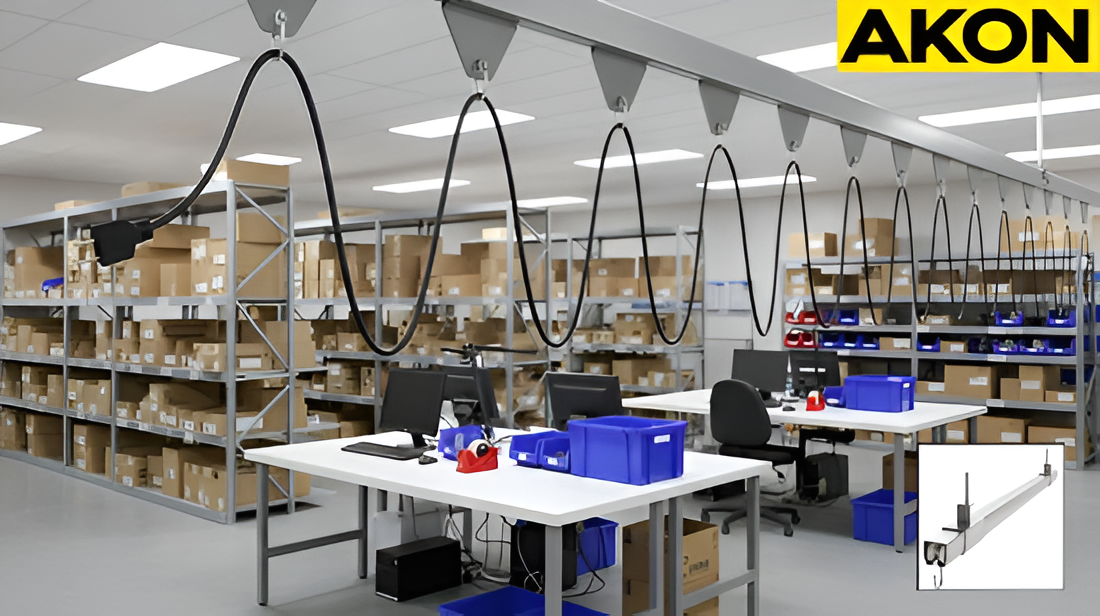
Overhead Electrical Cord Trolley
Overhead Electrical Cord Trolley systems manage electrical supply and cable routing above the packaging line. They help maintain organized access to power in areas using mobile or powered equipment.
• Keeps extension cords elevated and controlled
• Reduces floor-level cable interference
• Supports moving tools, printers, or powered devices
• Improves cable organization in dynamic production zones
Frequently Asked Questions
FAQs About Packaging Line Trolley Track Systems
What is a Packaging Line Trolley Track used for in a packaging facility?
A Packaging Line Trolley Track is used to move products between packaging stations using an enclosed overhead rail. It helps create structured transport paths across production areas and is commonly implemented in high-volume operations.
How much weight can a Ceiling Trolley system support on a packaging line?
Load capacity depends on track size, trolley configuration, and mounting structure. A properly installed Ceiling Trolley system mounted to reinforced beams can handle substantial industrial loads when designed for the application.
Is a Packaging Line Trolley Track better than a floor conveyor for high-volume operations?
In facilities where preserving floor space and maintaining structured routing are priorities, overhead systems are often the better option. Floor conveyors may still suit certain layouts, but trolley tracks are frequently chosen for long-term flexibility.
Can a Packaging Line Trolley Track be installed in an existing facility?
Yes. Many systems are retrofitted into active packaging facilities. If ceiling mounting is limited, a Free Standing Trolley system provides overhead routing without modifying the building structure.
What is the difference between a Ceiling Trolley and a Free Standing Trolley system?
A Ceiling Trolley mounts directly to structural supports, while a Free Standing Trolley relies on its own framework. The right choice depends on building structure and installation flexibility.
How customizable are Packaging Line Trolley Track layouts?
Layouts can include straight runs, curves, and intersections to match production flow. Modular components allow the system to align with specific station configurations.
How long does it take to install a trolley track system?
Installation timelines vary depending on system size and facility conditions. Smaller systems may be installed quickly, while larger layouts require more planning and coordination.
What type of maintenance does a trolley track system require?
Routine inspection of trolleys, fasteners, and track alignment is recommended. When properly installed, most systems require minimal ongoing maintenance.
Can the system be expanded as production grows?
Yes. Modular track components allow expansion without redesigning the entire packaging layout. This makes the system suitable for operations planning future growth.
What industries typically use Packaging Line Trolley Tracks?
These systems are widely used in packaging, manufacturing, warehousing, and assembly environments that require controlled overhead transport.
Are trolley tracks suitable for continuous production lines?
Yes. Ceiling Trolley systems are commonly selected for continuous production environments where stable and reliable transport is required.
Can overhead systems support suspended containers or fixtures?
Yes. Carrier attachments can be selected to match product type, weight, and movement requirements within the packaging line.
Is it possible to integrate power management with overhead routing?
Yes. An Overhead Electrical Cord Trolley system can manage cable routing above the production floor, supporting powered tools and mobile equipment.
Do overhead trolley systems improve workplace safety?
By elevating transport pathways and reducing floor obstruction, they help maintain clearer movement areas for equipment and personnel.
What ceiling height is needed for installation?
Required height depends on product clearance and operator workspace. A system provider evaluates the facility to determine optimal mounting elevation.
Is a Free Standing Trolley system ideal for leased facilities?
Yes. Free Standing Trolley systems are often recommended for leased or temporary spaces because they do not require structural ceiling attachment.
Can the layout include curves or directional changes?
Yes. Curved track sections and routing adjustments can be incorporated to follow specific packaging workflows.
How do I choose between different trolley configurations?
The best option depends on structural support, load requirements, and layout complexity. Consulting an overhead trolley track specialist ensures the right system is selected.
Are overhead trolley tracks compatible with automated packaging equipment?
Yes. They can operate alongside automated machinery as part of a coordinated production layout.
Who should design and install a Packaging Line Trolley Track system?
An experienced provider of Ceiling Trolley, Free Standing Trolley, and related overhead systems can assess your facility and recommend a configuration aligned with operational goals.
Photo Gallery
Is a Packaging Line Trolley Track Right for Your Facility?
A Packaging Line Trolley Track provides a structured overhead transport approach for facilities evaluating how materials move across their production lines. For packaging operations planning expansion, reconfiguration, or improved layout control, exploring solutions such as Ceiling Trolley, Free Standing Trolley, or Overhead Electrical Cord Trolley systems can help determine the right fit. Reviewing your current setup with an experienced overhead trolley track provider is a practical next step toward long-term operational alignment.
Packaging Line Trolley Track System
