
Quality Inspection Station Track
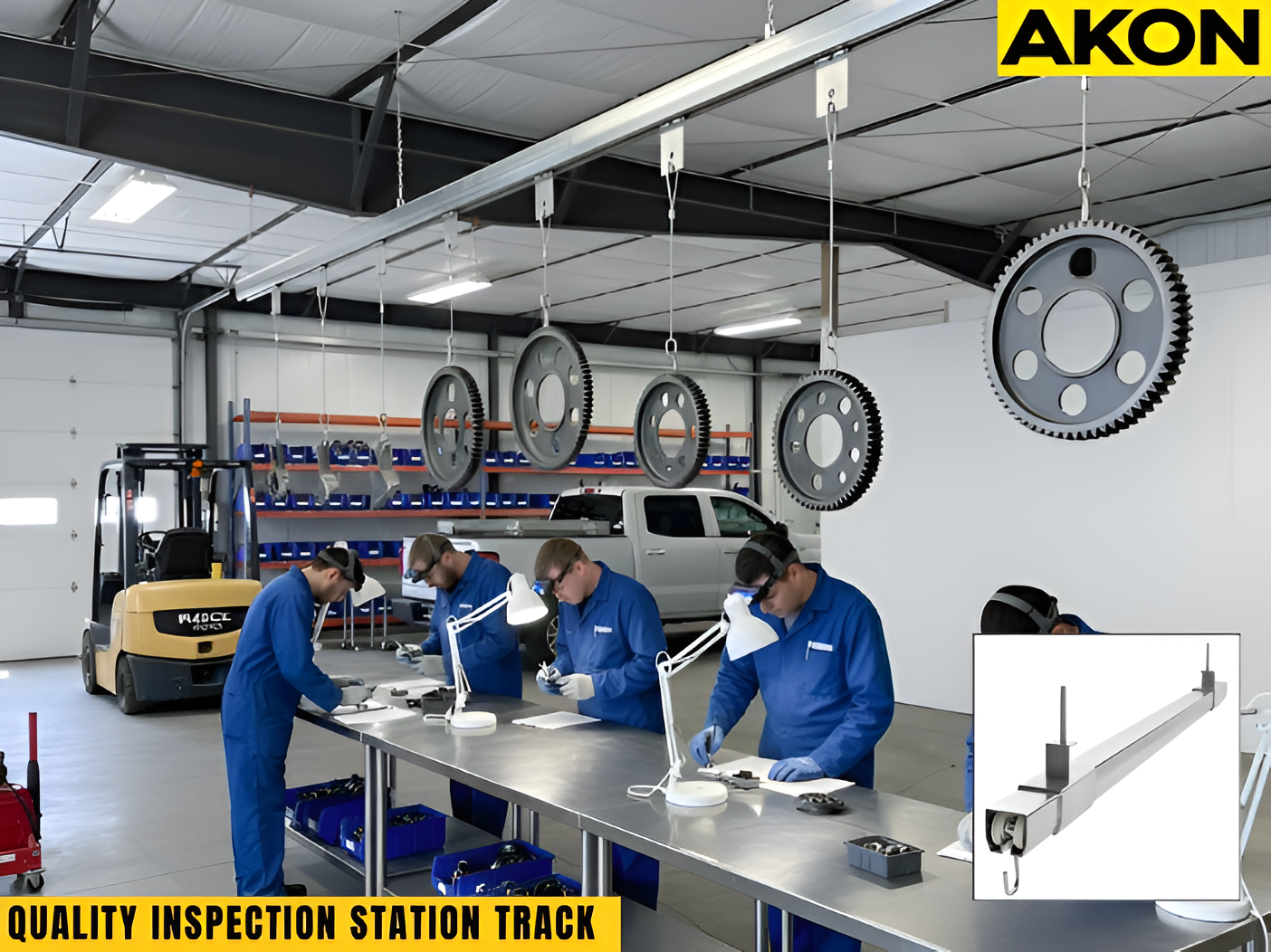
A Quality Inspection Station Track is a ceiling-mounted enclosed trolley system that guides products through defined inspection checkpoints. Built for industrial environments, it integrates into quality control and manufacturing workflows requiring structured movement. This article examines inspection workflow challenges, how overhead track systems support organized sequencing, and what to consider when selecting the right configuration.
Inspection Workflow Challenges That Limit Efficiency
Even when inspection standards are clearly defined, efficiency often breaks down in how products move between checkpoints. In many facilities, workflow limitations stem not from inspection criteria, but from inconsistent product handling and layout constraints. Small operational gaps can accumulate quickly, affecting pacing, organization, and output. Before improving performance, it is important to understand where these workflow challenges typically occur.
Movement and Routing Disruptions
Manual transfers between inspection checkpoints frequently slow overall throughput. When products must be lifted, carried, or repositioned repeatedly, inspection timing depends heavily on individual handling rather than a consistent system.
Even minor delays at one station can create accumulation at another, disrupting the rhythm of the entire inspection line. Over time, inconsistent routing makes workflow less predictable and harder to manage effectively.
Space Constraints and Repeated Handling
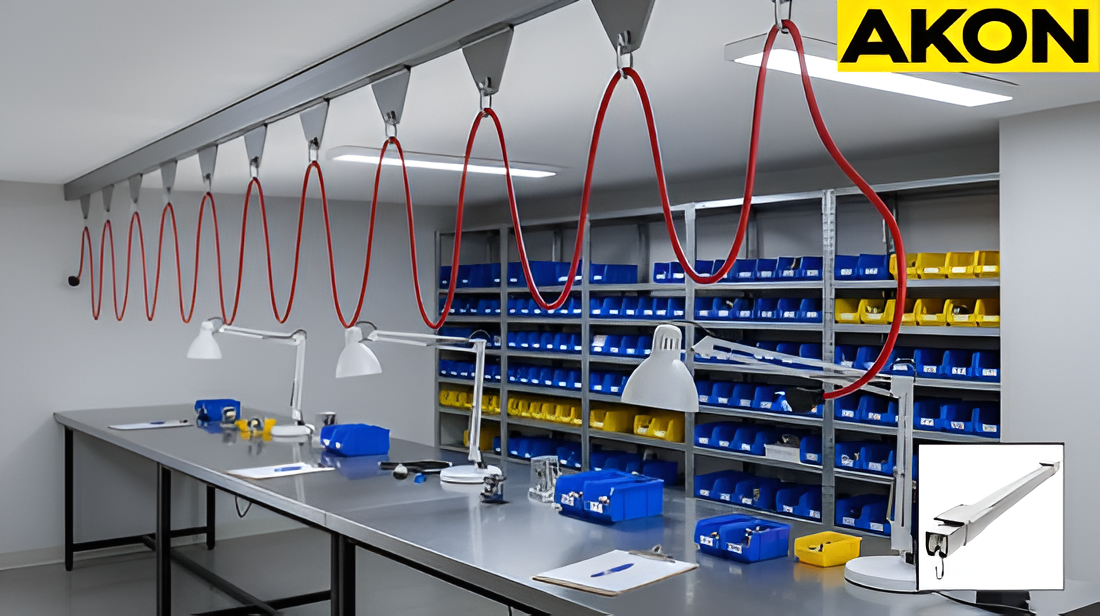
Inspection areas often become crowded with carts, temporary staging zones, and repositioned equipment. As products pass through multiple checkpoints, limited floor space can restrict mobility and reduce overall organization within the work area.
Congestion can slow coordination between stations and make it harder to maintain steady inspection pacing. Repeated handling also increases the risk of minor damage and operator fatigue, particularly in high-volume environments.
Make Shapes
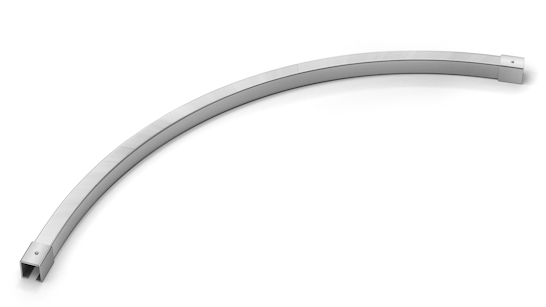
Radius Corner
By using a 90 degree radius corner you can go around obstructions or make shapes. The 24" radius corner quickly attaches and detaches as needed. Use 1 radius for an L-Shape design, 2 radius corners for a C-Shape and 4 radius corners for a complete enclosure.

How an Overhead Trolley Track Improves Inspection Performance
Once workflow inefficiencies are identified, introducing a controlled movement system changes how inspection stations operate. An enclosed overhead trolley track establishes a defined travel path above the work area, creating a more organized inspection environment. Instead of relying on variable transfers between checkpoints, inspection movement becomes structured and intentional.
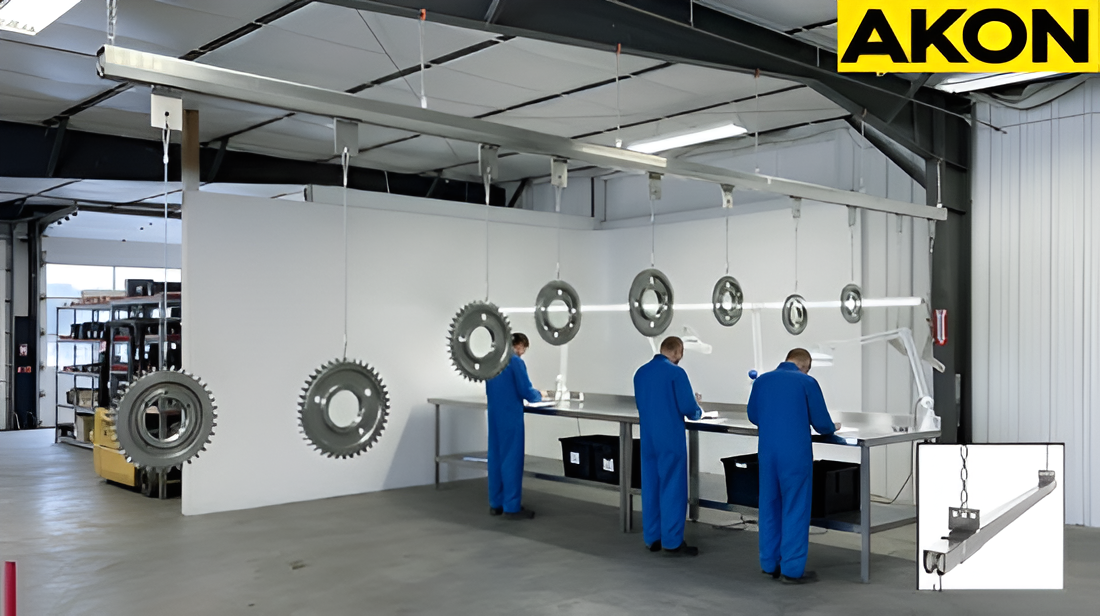
• Clearer Station Layout Planning. A defined overhead route makes it easier to design inspection areas around a structured workflow. Workstations can be positioned with greater precision, improving coordination between checkpoints.
• Improved Operational Visibility. When product movement follows a fixed path, supervisors can monitor inspection progress more easily. This transparency supports better pacing control and workload balancing between stations.
• Scalable Workflow Integration. Inspection requirements often evolve as production volumes increase. An overhead track system allows expansion or reconfiguration without completely redesigning the inspection area.
Controlled Product Flow
A guided overhead path directs each item through inspection checkpoints in a defined sequence.
Consistent Inspection Process
Predictable routing supports standardized inspection procedures across stations.
Reduced Manual Handling
Products transition between checkpoints with less physical repositioning.
Performance Comparison: Manual Handling vs. Overhead Inspection Track
The operational impact becomes clearer when comparing traditional inspection handling with a guided overhead system. Rather than focusing on theory, this side-by-side view highlights how movement structure influences day-to-day inspection performance.
| Category | Manual Handling | Overhead Inspection Track System |
|---|---|---|
| Workflow Control | Variable | Guided and structured |
| Inspection Speed | Slower | More streamlined |
| Floor Space Use | Occupied | Open and organized |
| Operator Strain | Higher | Minimized |
| Long-Term Reliability | Dependent on labor | Engineered industrial system |
This comparison illustrates how movement design directly affects inspection stability and operational clarity. Shifting to a guided overhead system supports a more controlled and scalable inspection environment over time.
Types of Curtain Track Mounts
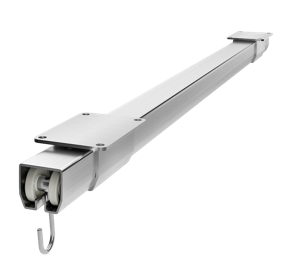
Ceiling Mount Curtain Track
Choose this mounting style if you want your industrial curtain track to mount to the ceiling with only a few inches of open gap.
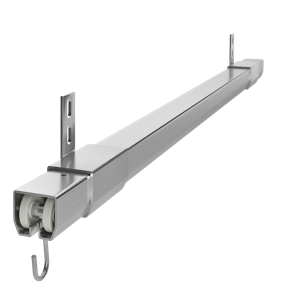
Wall Mount Curtain Track
This curtain track mount is designed for mounting the track next to a vertical wall or stud. This can be parallel to the wall, or perpendicular.
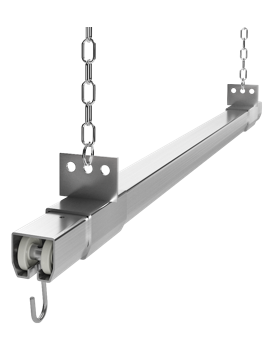
Chain or Cable Curtain Track
Like the threaded rod, a chain supported curtain track is also good for spanning large distances. Both chain or cable can be used to hold up the track.
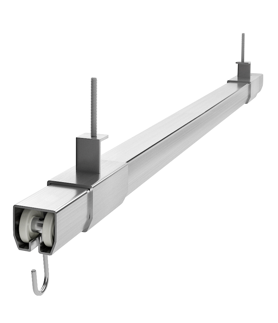
Threaded Rod Curtain Track
If the distance between the anchor points above is higher than where you want the curtain track, then a threaded rod mount might work well. Steel rods support the track and span the distance between the track and the ceiling.
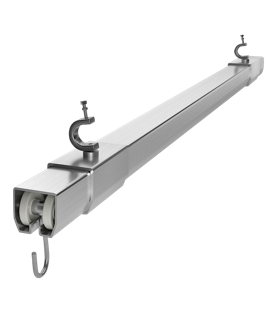
I-Beam Curtain Track
When connecting to a truss, I-Beam or any other horizontal steel support this style of mount works best. Once connected, you simply tighten down the set screw.
Track System Options for Quality Inspection Stations
After knowing how inspection performance shifts with a guided system, the next step is selecting the right configuration for your facility. Structural conditions, product weight, and inspection volume all influence which overhead trolley solution is most appropriate.
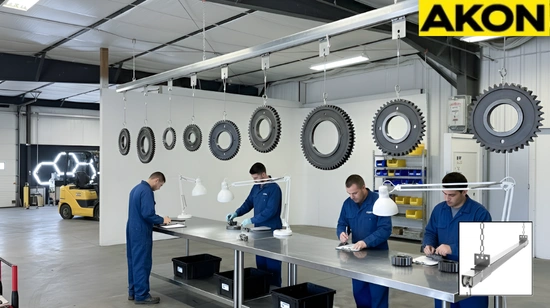
Ceiling Trolley
The Ceiling Trolley is designed for inspection stations with reliable overhead structural support. It mounts directly to ceiling joists or beams to create a fixed routing path above the work area.
• Direct ceiling or beam mounting for permanent installations
• Suitable for established inspection lines with consistent layouts
• Available in configurations built for industrial load requirements
• Designed for steady, repeated daily movement
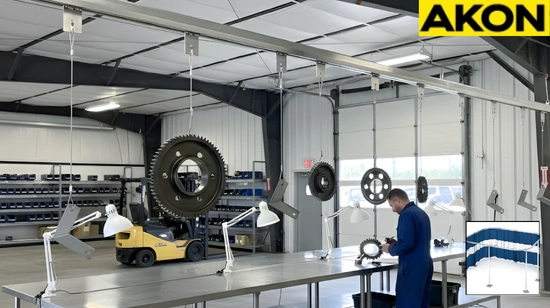
Free Standing Trolley
The Free Standing Trolley provides an independent support structure when ceiling mounting is not feasible. It allows inspection movement paths to be created without modifying the existing building framework.
• Self-supporting frame design
• Ideal for leased facilities or temporary inspection zones
• Can be repositioned if layouts change
• Supports moderate to heavy loads depending on configuration
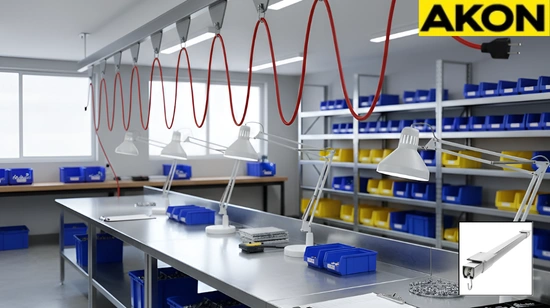
Overhead Electrical Cord Trolley
The Overhead Electrical Cord Trolley helps organize power lines within inspection environments. It keeps electrical cords elevated and aligned above workstations.
• Manages power supply routing above inspection areas
• Reduces floor-level cable exposure
• Supports powered inspection tools and test equipment
• Protects cords from wear caused by foot or cart traffic
Frequently Asked Questions
FAQs About Quality Inspection Station Track
What load capacity can a Ceiling Trolley support in an inspection station?
A Ceiling Trolley can support industrial loads depending on track configuration and mounting structure. Load capacity is influenced by trolley spacing, beam strength, and overall system design. Facilities handling heavier components may require reinforced configurations.
Can a Quality Inspection Station Track include curved or custom layouts?
Yes, overhead trolley systems can be designed with curved sections to match inspection workflow requirements. Custom layouts allow facilities to align product movement with existing checkpoints. Layout design depends on space constraints and routing needs.
What type of structural support is required for a Ceiling Trolley system?
A Ceiling Trolley typically mounts to structural beams or reinforced ceiling joists. The building structure must be capable of supporting the applied load safely. If ceiling support is limited, a Free Standing Trolley may be more suitable.
How much ceiling clearance is needed for an overhead trolley track system?
Clearance requirements depend on product size and trolley configuration. The system must allow safe product travel without interfering with lighting, HVAC, or other overhead utilities. A site evaluation helps determine the proper mounting height.
Can a Free Standing Trolley be used in leased industrial facilities?
Yes, a Free Standing Trolley is often recommended for leased spaces where structural modifications are restricted. It uses its own support frame and does not rely on ceiling attachment. This makes it a practical option for adaptable inspection setups.
Is an overhead trolley track better than a conveyor for inspection areas?
An overhead trolley track provides guided routing without continuous powered movement. Conveyors are typically used for constant production flow, while trolley systems allow more controlled sequencing between checkpoints. The right choice depends on inspection process requirements.
Can a Ceiling Trolley system be expanded later as inspection lines grow?
Yes, many Ceiling Trolley systems can be extended with additional track sections. Planning for expansion during the initial installation simplifies future adjustments. This supports evolving production demands.
What maintenance is required for an overhead trolley track system?
Routine inspections include checking mounting hardware, trolley wheels, and track alignment. Enclosed systems are designed for durability and typically require minimal ongoing maintenance. Regular review ensures consistent performance over time.
Can an Overhead Electrical Cord Trolley be integrated into an inspection station?
Yes, an Overhead Electrical Cord Trolley can run alongside a Ceiling Trolley system. It keeps power cords elevated and aligned above workstations. This supports organized electrical management in inspection environments.
How do I determine whether I need a heavy-duty track configuration?
Facilities handling larger or heavier components may require reinforced track systems. Load weight, inspection frequency, and environmental conditions should all be evaluated. A supplier can recommend the correct configuration.
Can inspection track systems support testing equipment or tools?
Yes, certain configurations allow integration with tool or accessory support components. The compatibility depends on overall load requirements and track design. This should be reviewed during system planning.
Are overhead trolley systems suitable for high-volume manufacturing inspections?
Yes, when properly specified, Ceiling Trolley systems are designed for frequent daily use. Heavy-duty options are available for demanding industrial environments. Correct installation ensures long-term reliability.
What materials are used in industrial overhead trolley track systems?
Most systems are manufactured using galvanized or reinforced steel components. These materials support durability in manufacturing and inspection environments. Material selection depends on environmental conditions.
Can the track system operate in dusty or debris-prone environments?
Enclosed trolley track systems help protect internal trolley components. However, environmental conditions should be considered during system selection. Additional protective measures may be recommended.
How are trolleys spaced along the inspection track?
Trolley spacing depends on product weight and support requirements. Proper spacing ensures stable and balanced movement along the track. System design determines optimal placement.
Is engineering approval required before installing a Ceiling Trolley?
In many industrial facilities, structural evaluation is recommended before installation. Engineering review confirms load distribution and mounting integrity. This helps ensure long-term safety.
Can a Free Standing Trolley support moderate to heavy inspection components?
Yes, Free Standing Trolley systems are available in configurations suited for moderate to heavy loads. Frame strength and track selection determine capacity. Proper specification ensures structural stability.
What factors influence the cost of a Quality Inspection Station Track system?
Cost is influenced by track length, load requirements, mounting method, and layout complexity. Custom curved sections or reinforced components may affect pricing. Accurate facility measurements help determine budget estimates.
How long does installation take for an overhead inspection track?
Installation time varies based on system size and facility conditions. Straight ceiling-mounted systems typically install faster than custom configurations. Proper pre-install planning reduces operational disruption.
How do I choose between a Ceiling Trolley and a Free Standing Trolley?
The decision depends on structural support and layout flexibility. A Ceiling Trolley is ideal when overhead mounting is available, while a Free Standing Trolley works best when ceiling attachment is not practical. Evaluating facility infrastructure helps determine the correct option.
Photo Gallery
Designing a More Controlled Inspection Workflow
Designing an effective inspection workflow starts with aligning product movement, structural support, and long-term operational planning. Overhead trolley track systems allow facilities to build inspection layouts that adapt as production requirements change while maintaining industrial-grade reliability. If you are reviewing how to improve your inspection setup, exploring a tailored overhead trolley track solution can help position your operation for sustained accuracy and growth.
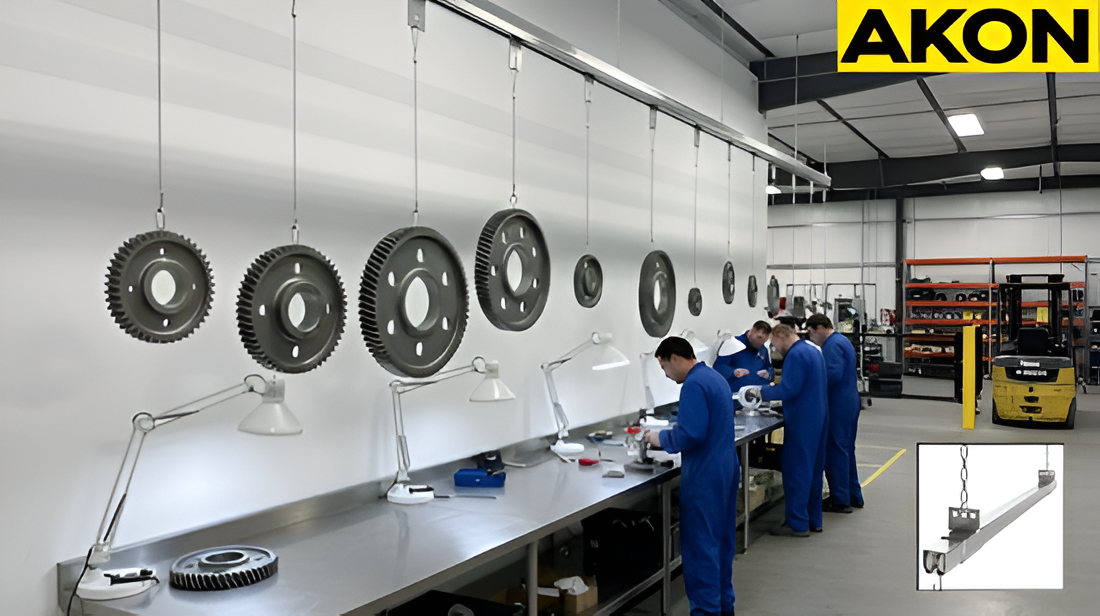
Inspection Workflow Layout
