
Overhead Jig & Fixture Track
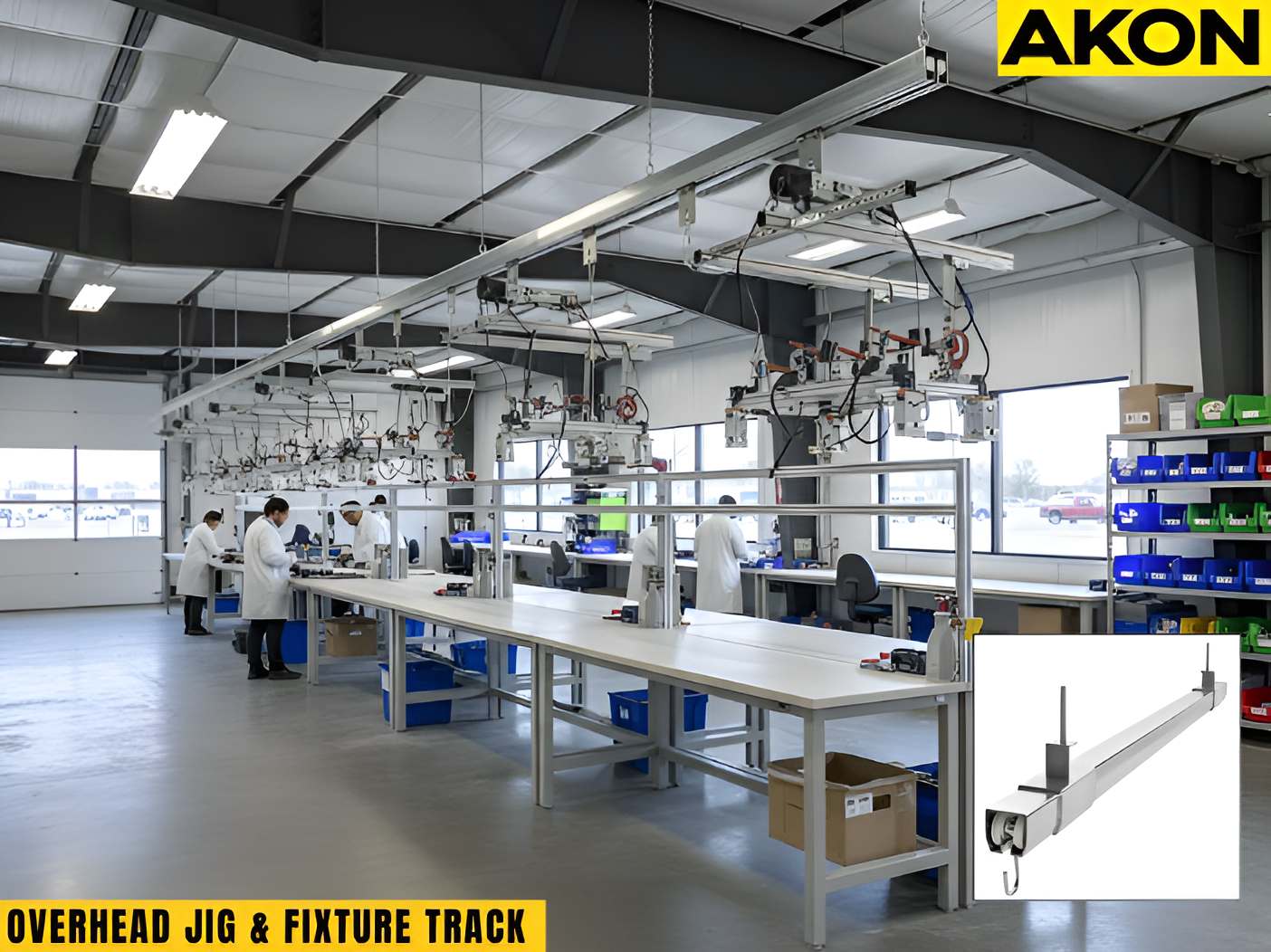
An Overhead Jig & Fixture Track is a ceiling-mounted enclosed rail system with rolling trolleys designed for sliding jigs into position between workstations. As part of an overhead trolley track system, it enables controlled overhead positioning while keeping production floors clear. This article examines common positioning challenges, key benefits, system comparisons, and recommended track solutions for industrial facilities.
Operational Challenges When Sliding Jigs into Position
Even in organized facilities, sliding jigs into position can create workflow friction. When positioning depends on floor-based movement or manual adjustment, small inefficiencies begin to compound. What seems like a simple transfer between stations can gradually affect timing, coordination, and production consistency. Over time, these interruptions reduce operational control and limit overall throughput.
Floor-Based Movement Slows Production
In many facilities, jigs are moved using carts or forklifts to reach different workstations. While practical, this method increases traffic in active production areas and restricts clear movement paths.
As equipment circulates through tight spaces, operators are forced to pause or adjust their workflow. Over time, this added movement slows production and reduces overall efficiency.
Inconsistent Positioning Disrupts Workflow
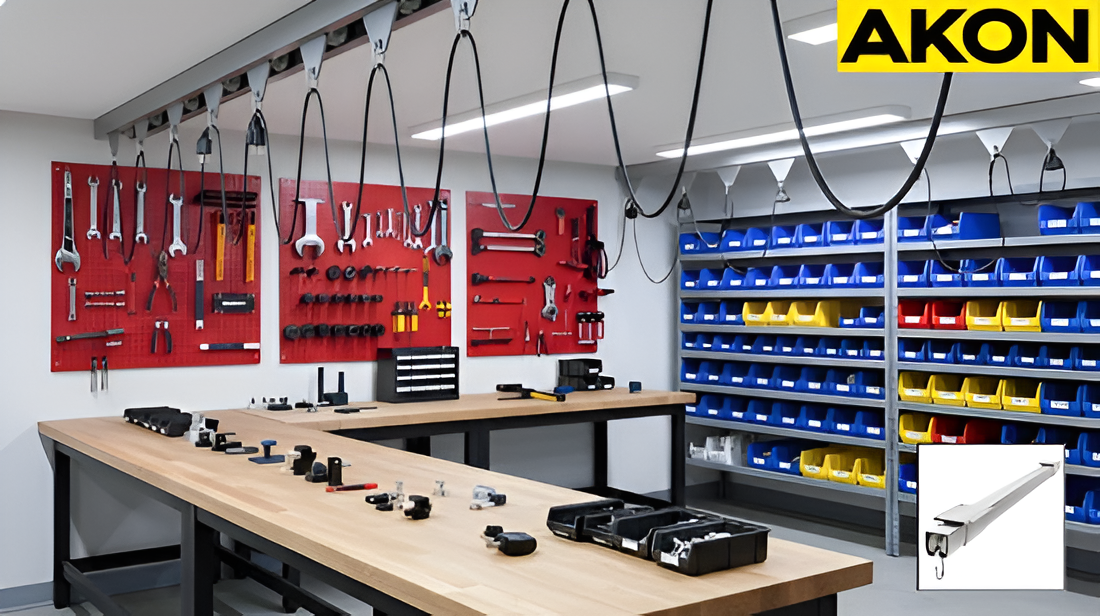
When jigs are slid into position manually, alignment can vary from one cycle to the next. Even small inconsistencies may affect downstream processes and require additional adjustments.
This lack of precision makes it difficult to maintain steady output across stations. As a result, workflow continuity suffers and positioning tasks become recurring points of delay.
Make Shapes
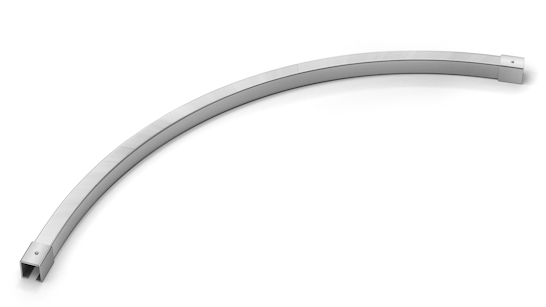
Radius Corner
By using a 90 degree radius corner you can go around obstructions or make shapes. The 24" radius corner quickly attaches and detaches as needed. Use 1 radius for an L-Shape design, 2 radius corners for a C-Shape and 4 radius corners for a complete enclosure.

Key Benefits of an Overhead Jig & Fixture Track System
An overhead jig & fixture track system simplifies sliding jigs into position while keeping production floors organized and efficient. By introducing a guided overhead path, it transforms fixture positioning into a controlled and repeatable process. This shift improves coordination across workstations and supports steady production flow.
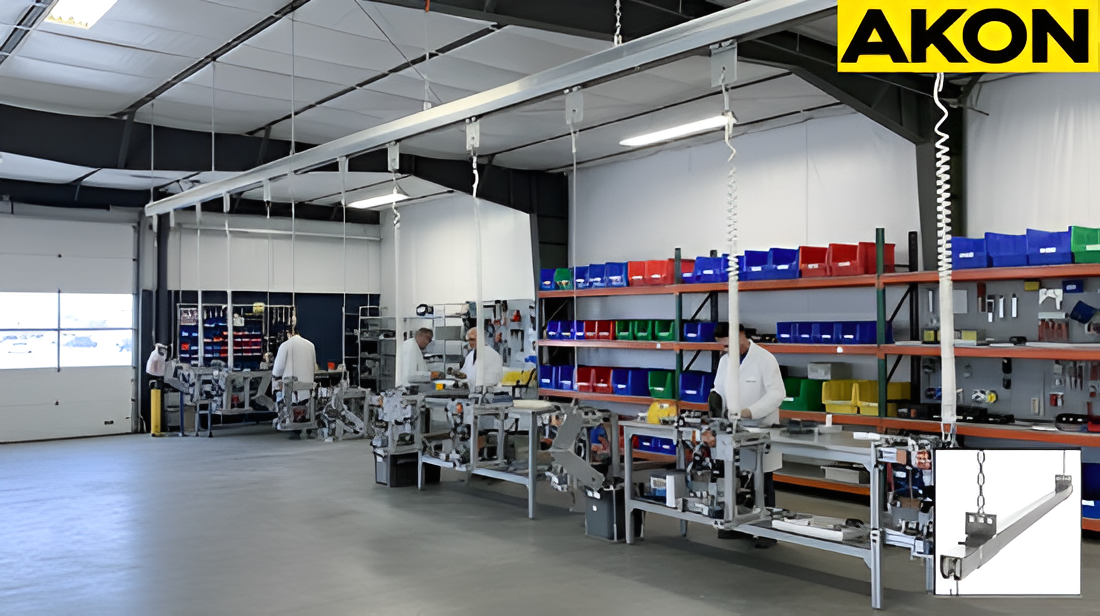
• Supports Lean Manufacturing Practices. Encourages organized production flow. Structured overhead positioning reduces unnecessary motion and improves process discipline across stations. This alignment supports continuous improvement initiatives and long-term operational efficiency.
• Extends Fixture and Equipment Longevity. Reduces handling stress. Guided rail movement limits abrupt impacts and uncontrolled repositioning that can strain fixtures over time. This contributes to more stable performance and lower maintenance interruptions.
• Improves Production Predictability. Enhances process consistency. When jig positioning follows a defined overhead path, timing between stations becomes easier to standardize and manage. This helps supervisors maintain coordinated output across teams and shifts.
Clear Production Floors
Relocates jig movement overhead to preserve usable workspace.
Precise Fixture Positioning
Provides guided sliding along a fixed rail for consistent workstation alignment.
Safer Material Handling
Moves fixture transport above active work areas to support structured movement control.
Overhead Track vs Floor-Based Positioning Methods
Choosing the right positioning method affects more than movement alone. It influences alignment control, spatial efficiency, and long-term adaptability. The comparison below outlines how an overhead jig and fixture track differs from floor-based and fixed alternatives.
| Criteria | Overhead Jig & Fixture Track | Floor Carts / Forklifts | Fixed Mount Systems |
|---|---|---|---|
| Sliding Jigs into Position | Smooth and controlled | Manual and variable | Not flexible |
| Floor Space Usage | Excellent | Poor | Moderate |
| Workflow Continuity | High | Moderate | Low |
| Safety Exposure | Lower | Higher | Varies |
| Scalability | Expandable | Limited | Limited |
An overhead jig and fixture track delivers controlled, scalable positioning. Floor carts and forklifts depend on manual handling and equipment availability, which can introduce variability. Fixed mount systems offer stability but limit flexibility. For facilities focused on consistent alignment and adaptable workflows, overhead positioning provides a more structured approach.
Types of Curtain Track Mounts
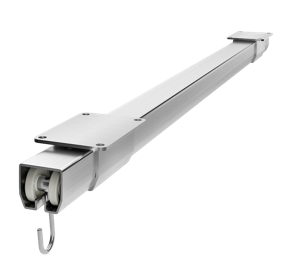
Ceiling Mount Curtain Track
Choose this mounting style if you want your industrial curtain track to mount to the ceiling with only a few inches of open gap.
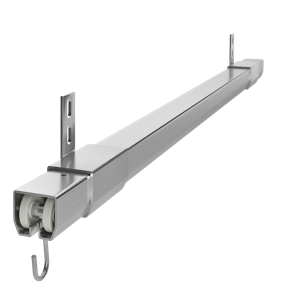
Wall Mount Curtain Track
This curtain track mount is designed for mounting the track next to a vertical wall or stud. This can be parallel to the wall, or perpendicular.
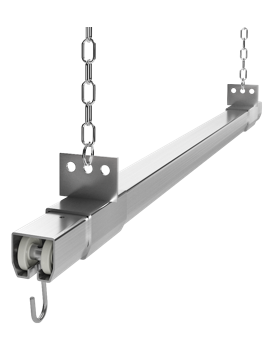
Chain or Cable Curtain Track
Like the threaded rod, a chain supported curtain track is also good for spanning large distances. Both chain or cable can be used to hold up the track.
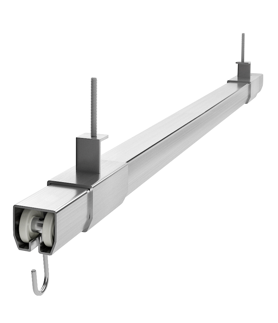
Threaded Rod Curtain Track
If the distance between the anchor points above is higher than where you want the curtain track, then a threaded rod mount might work well. Steel rods support the track and span the distance between the track and the ceiling.
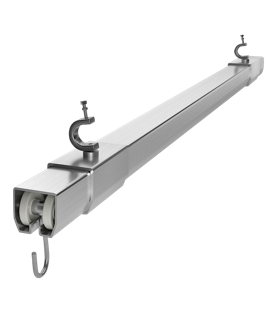
I-Beam Curtain Track
When connecting to a truss, I-Beam or any other horizontal steel support this style of mount works best. Once connected, you simply tighten down the set screw.
Recommended Overhead Track Solutions for Jig & Fixture Applications
Once the advantages of overhead positioning are clear, the next step is choosing the right system for your environment. The following overhead trolley solutions support structured jig positioning while maintaining organized and adaptable work areas.
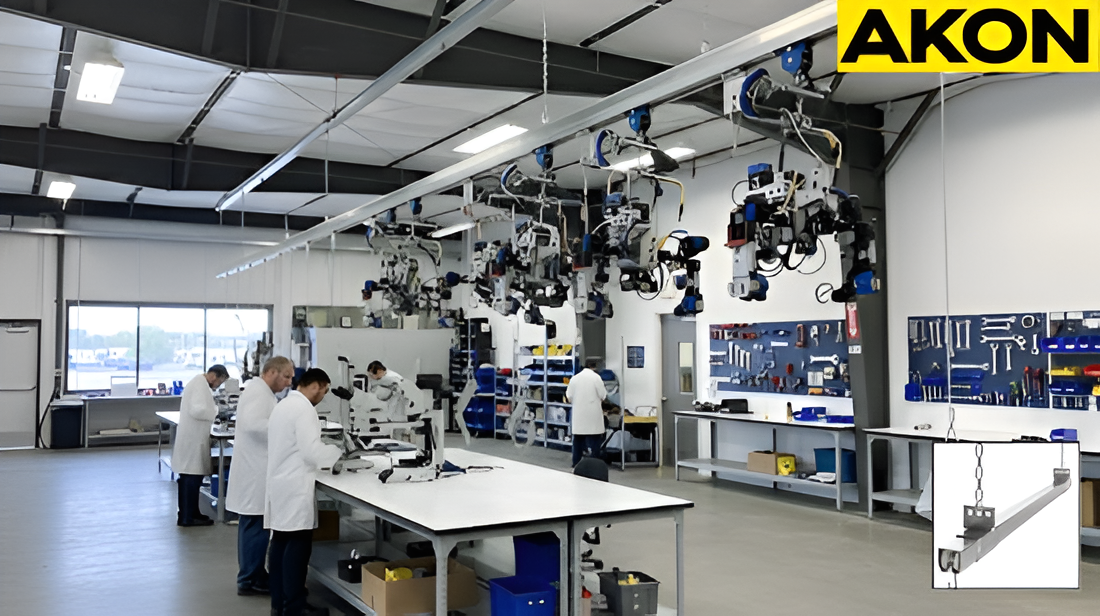
Ceiling Trolley
The Ceiling Trolley is a heavy-duty overhead rail system built for direct structural mounting. It creates a dedicated overhead path for sliding jigs into position across workstations.
• Galvanized steel construction for industrial durability
• Enclosed rail design for stable trolley travel
• Compatible with ceiling or beam mounting structures
• Suitable for repetitive fixture positioning workflows
Hose Festoon System
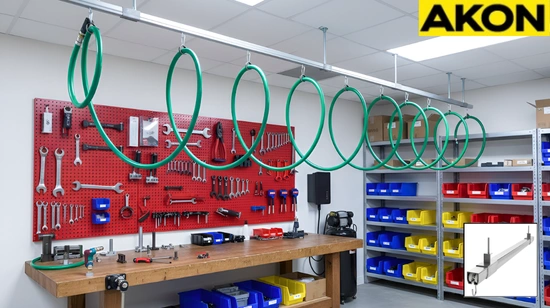
The Hose Festoon System organizes air and fluid lines along an overhead support structure. It integrates utility management with positioning systems to maintain operational consistency.
• Keeps compressed air and utility hoses elevated
• Maintains organized routing along defined track paths
• Supports fabrication and assembly environments
• Minimizes interference between utilities and equipment
Overhead Electrical Cord Trolley
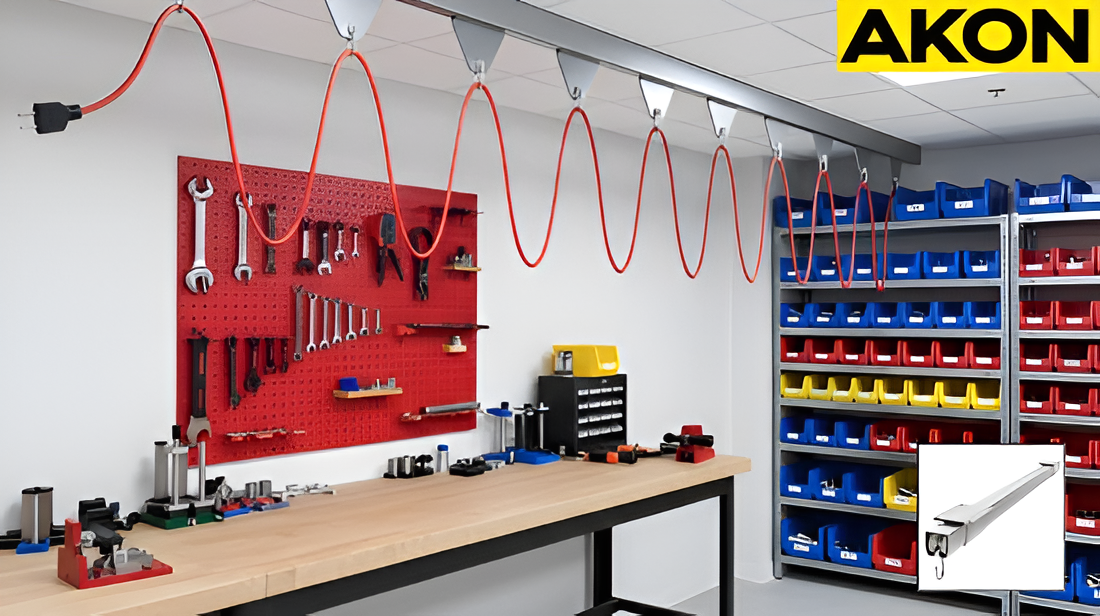
The Overhead Electrical Cord Trolley manages power cables along an elevated track path. It keeps electrical lines aligned with fixture movement without interfering with workstation layout.
• Suspends extension cords above active production zones
• Reduces cord entanglement during fixture repositioning
• Supports tool-powered stations requiring overhead access
• Designed for frequent movement and industrial use
Frequently Asked Questions
FAQs About Overhead Jig & Fixture Track
How smoothly can jigs be slid into position on an Overhead Jig & Fixture Track?
An Overhead Jig & Fixture Track allows jigs to move along an enclosed rail using rolling trolleys designed for guided travel. When properly aligned, the motion is consistent and controlled, supporting accurate workstation placement.
What load capacity does an Overhead Jig & Fixture Track support?
Load capacity depends on rail size, trolley configuration, and mounting structure. A properly specified Ceiling Trolley or Free Standing Trolley system can be matched to light, medium, or heavier fixture requirements.
Can an Overhead Jig & Fixture Track maintain alignment during positioning?
Yes. The fixed overhead rail path helps maintain directional stability during movement. This supports consistent jig placement between repeated production cycles.
What mounting options are available for an Overhead Jig & Fixture Track?
An Overhead Jig & Fixture Track can be mounted to ceilings, beams, or structural supports. In facilities without adequate ceiling capacity, a Free Standing Trolley configuration can provide independent support.
Can the layout of an Overhead Jig & Fixture Track be expanded later?
Many Overhead Jig & Fixture Track systems are modular. Additional rail sections can often be added as workstation layouts evolve.
How does an Overhead Jig & Fixture Track compare to traditional trolley tracks?
An Overhead Jig & Fixture Track is configured specifically for controlled positioning rather than general material movement. This makes it more suitable for applications requiring consistent fixture alignment.
What materials are used in an Overhead Jig & Fixture Track system?
Most systems use galvanized steel rails and industrial-grade trolley components. This provides durability and corrosion resistance in manufacturing environments.
Is professional installation recommended for an Overhead Jig & Fixture Track?
Installation requirements depend on structural conditions and load demands. Many facilities consult experienced installers to ensure proper mounting and alignment.
Can curved sections be integrated into an Overhead Jig & Fixture Track layout?
Yes. Straight runs, corners, and looped paths can be incorporated to match facility layout and workstation sequencing.
What industries commonly use an Overhead Jig & Fixture Track?
Overhead Jig & Fixture Track systems are commonly used in manufacturing, fabrication, assembly, and service operations where consistent positioning is required.
Is movement on an Overhead Jig & Fixture Track manual or powered?
Most Overhead Jig & Fixture Track systems operate manually for controlled positioning. Depending on the application, certain configurations may support powered movement.
How is smooth sliding performance maintained over time?
Routine inspection of trolley wheels, fasteners, and rail alignment helps maintain smooth operation. Proper maintenance supports long-term system performance.
Can electrical cords be integrated with an Overhead Jig & Fixture Track?
Yes. An Overhead Electrical Cord Trolley can be paired with an Overhead Jig & Fixture Track to manage power cables along the same overhead path.
Can air or fluid hoses be managed alongside an Overhead Jig & Fixture Track?
Yes. A Hose Festoon system can organize air or utility lines overhead, keeping them aligned with fixture positioning systems.
What structural factors should be evaluated before installing an Overhead Jig & Fixture Track?
Ceiling height, beam strength, and load capacity should be assessed before installation. This ensures safe and stable support for the selected track configuration.
Can multiple jigs operate on a single Overhead Jig & Fixture Track?
Yes. Multiple trolley units can run along the same rail path when load limits and spacing guidelines are followed.
Is a Free Standing Trolley suitable for retrofit projects?
A Free Standing Trolley configuration is often selected when ceiling mounting is not feasible. It provides overhead positioning without structural modification to the building.
How do I choose between a Ceiling Trolley and a Free Standing Trolley?
The choice depends on structural support availability and facility layout. A Ceiling Trolley mounts directly overhead, while a Free Standing Trolley provides independent structural framing.
Does an Overhead Jig & Fixture Track reduce wear on fixtures?
Guided overhead movement can limit abrupt handling during repositioning. This may help maintain fixture stability over repeated use.
How do I determine if an Overhead Jig & Fixture Track is right for my facility?
A facility layout review and load evaluation help determine the appropriate configuration. Matching fixture weight, travel distance, and mounting conditions ensures proper system selection.
Photo Gallery
Is an Overhead Jig & Fixture Track the Right Fit?
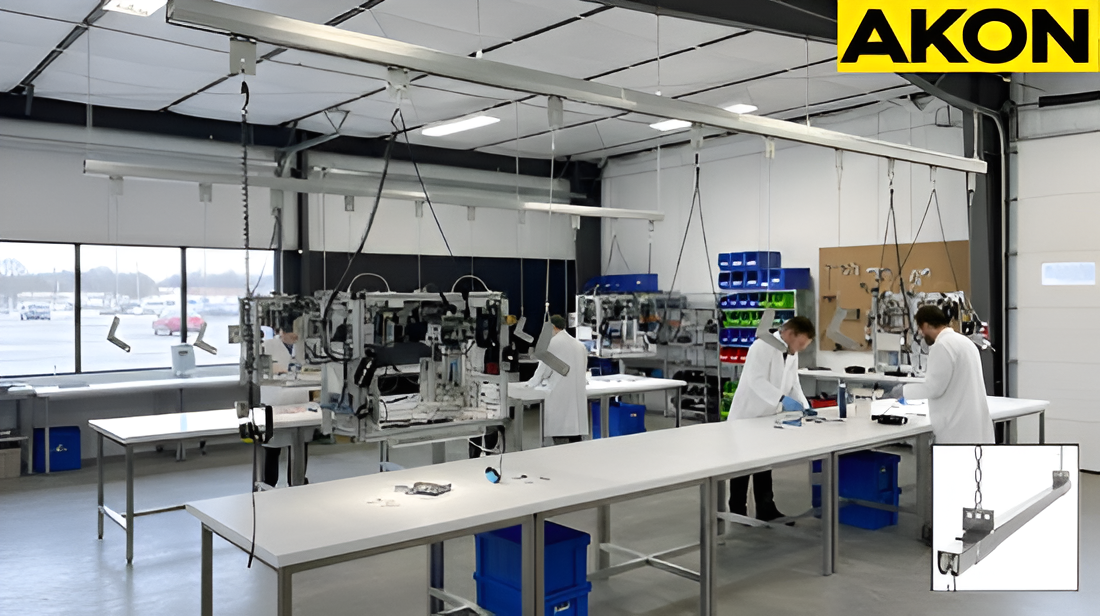
An Overhead Jig & Fixture Track is well suited for facilities that require consistent and accurate jig positioning between workstations. It supports structured production flow, improves use of available space, and adapts as layouts evolve over time. Rather than serving as simple transport, it provides reliable overhead positioning that helps maintain precision, efficiency, and long-term operational flexibility.
Overhead Rail System Layout for Fixture Alignment
