
Pendant Light Trolley Track
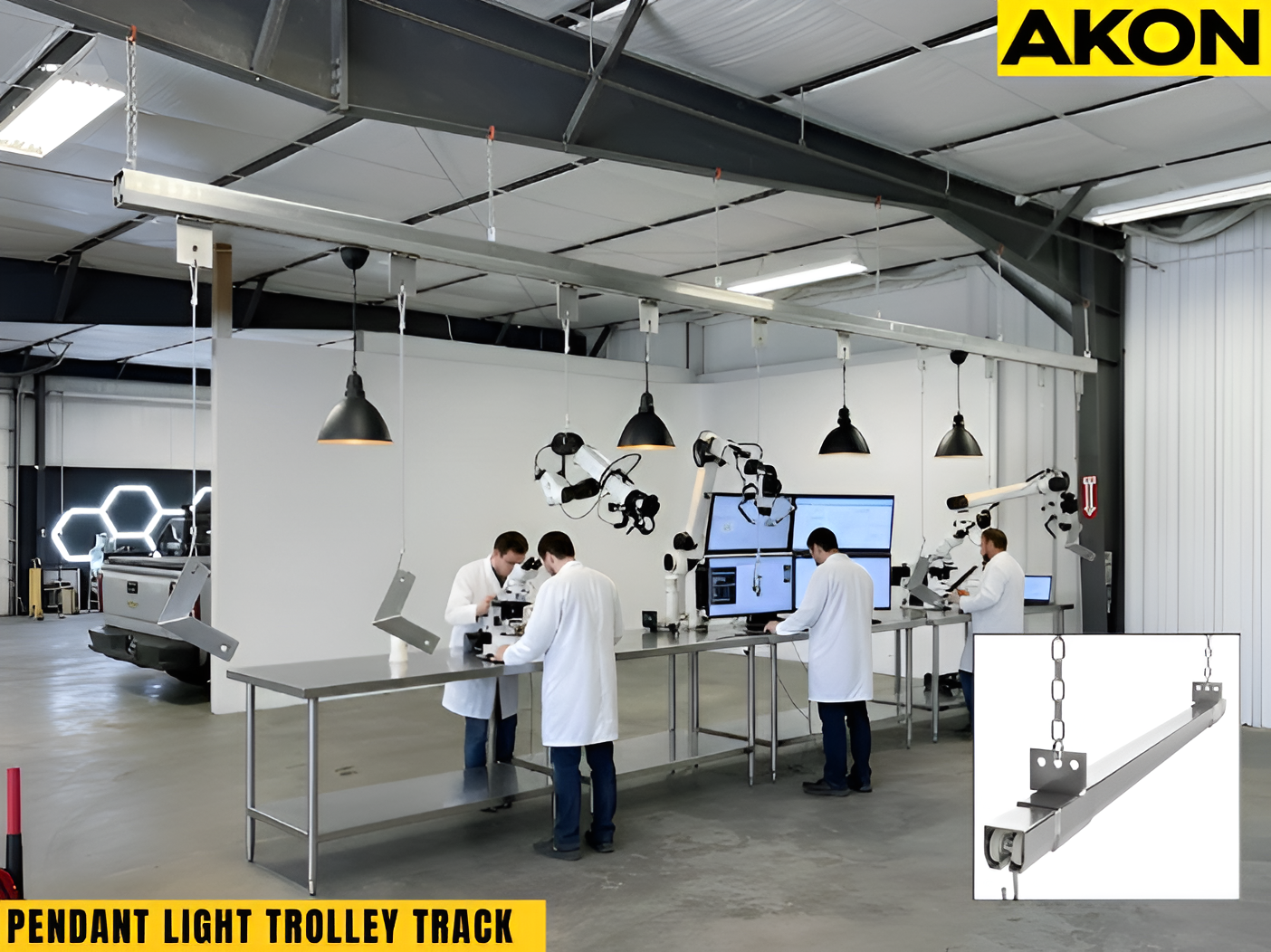
A Pendant Light Trolley Track is an overhead lighting system that allows pendant fixtures to move along a rail rather than remain permanently fixed. Built for industrial and commercial environments, it supports adaptable lighting layouts as spaces evolve. This article covers how it works, its key advantages, and which systems best fit dynamic facilities.
How a Pendant Light Trolley Track Works
Now that you know what a Pendant Light Trolley Track is, it helps to understand how the system is built overhead. Each component is designed to guide, support, and align lighting fixtures within a structured track pathway.
Enclosed Rail and Trolley Assembly
The system is built around an enclosed galvanized steel rail mounted above the workspace. This rail forms the structural channel that houses the internal trolley mechanism.
Inside the track, rolling trolley carriers travel within the channel to support attached pendant fixtures. End stops are installed to define travel limits and maintain controlled positioning.
Mounting Structure and Track Configuration
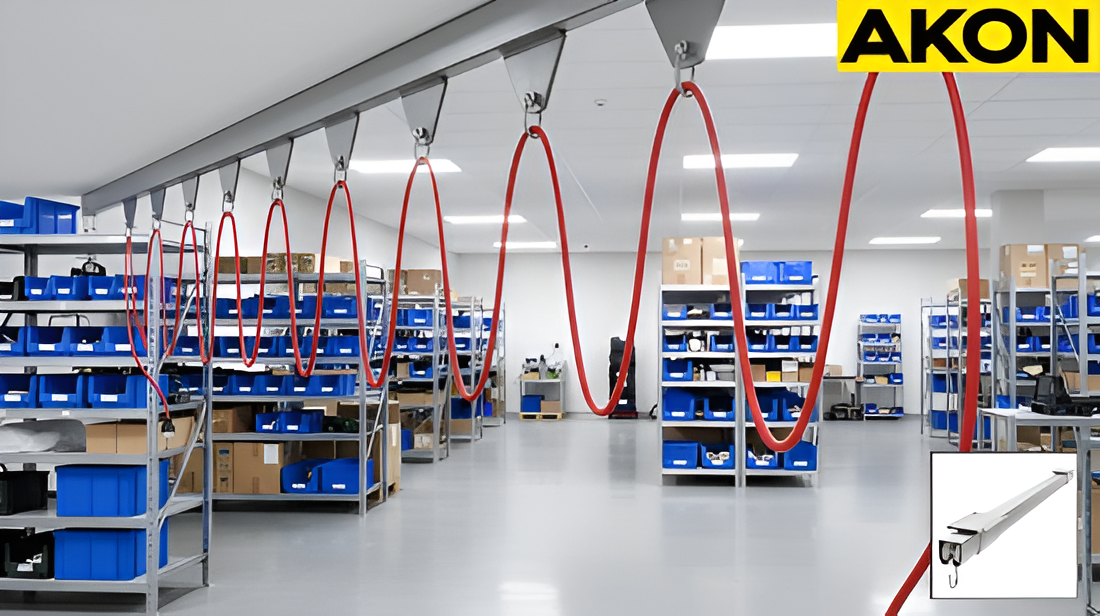
The rail is secured using ceiling-mounted brackets or suspended with threaded rods or chain supports depending on structural requirements. Proper mounting ensures the track remains level and aligned across the span.
Track sections connect using splice hardware to create continuous runs tailored to the layout. Together, these mounting components and connectors form a stable overhead framework for guided fixture placement.
Make Shapes
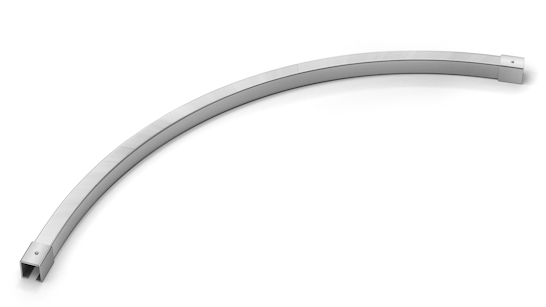
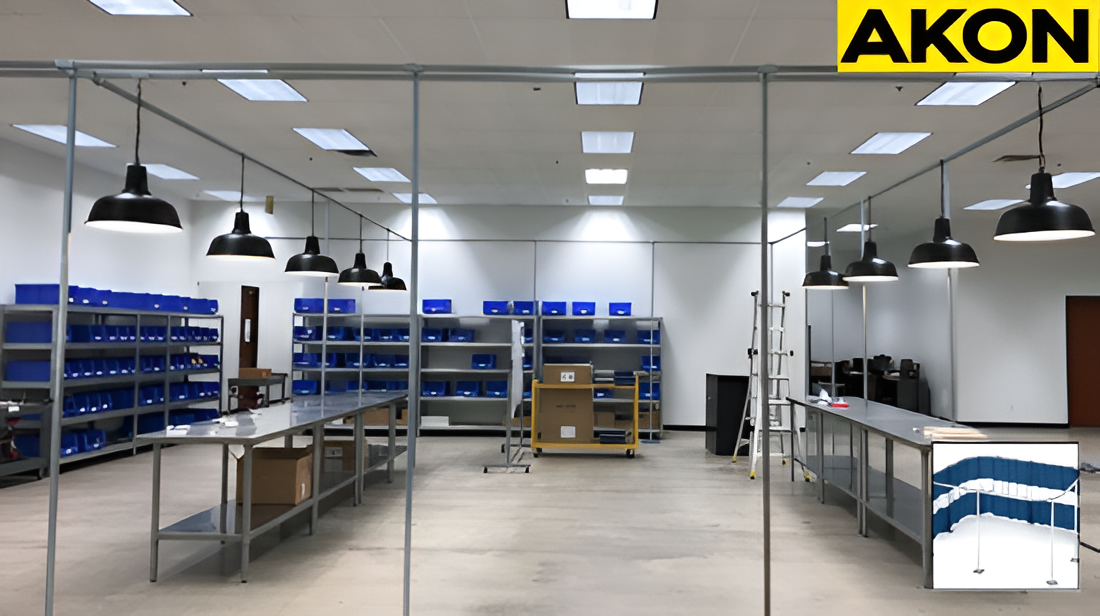
Radius Corner
By using a 90 degree radius corner you can go around obstructions or make shapes. The 24" radius corner quickly attaches and detaches as needed. Use 1 radius for an L-Shape design, 2 radius corners for a C-Shape and 4 radius corners for a complete enclosure.

Key Benefits of a Pendant Light Trolley Track
Once the structure is in place, the real value shows in how it supports day-to-day operations. A Pendant Light Trolley Track helps businesses maintain consistent lighting performance while reducing the limitations of fixed installations.
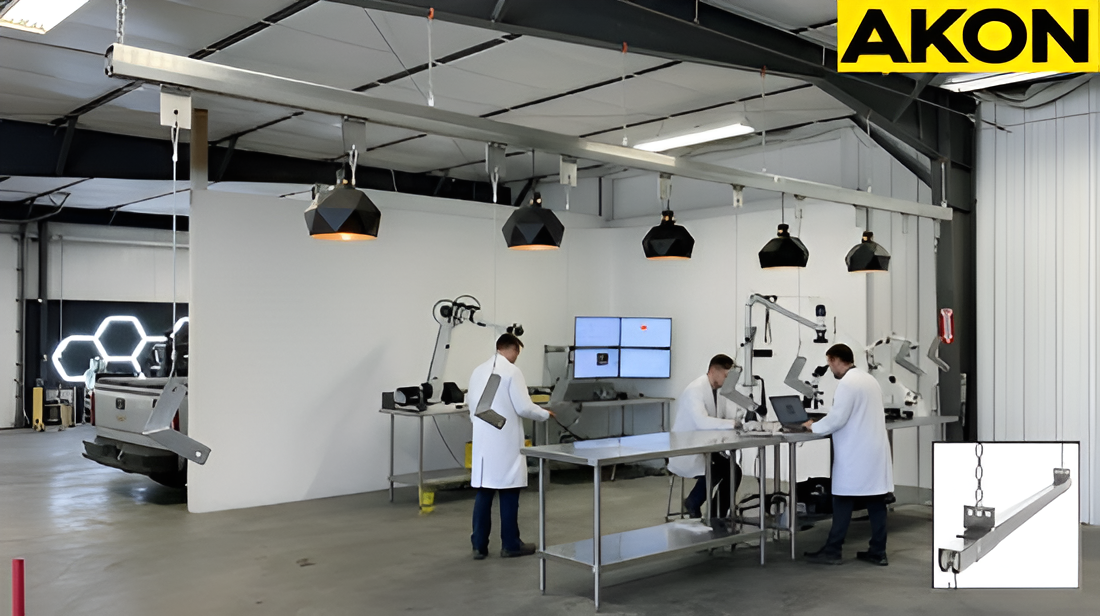
• Quicker adjustment during reconfiguration. Lighting can be repositioned to match new equipment placement or workflow updates. This allows teams to respond efficiently without pausing operations for major electrical changes.
• Improved lighting consistency across work zones. Proper illumination can be maintained as departments expand or shift. This supports better visibility, safer conditions, and more efficient task execution.
• Better long term infrastructure planning. Lighting becomes part of a scalable system rather than a fixed ceiling decision. This makes future upgrades or facility expansion easier to manage and more predictable in cost.
Reduced Facility Disruption
Helps minimize downtime when lighting adjustments are required.
Operational Flexibility
Allows lighting placement to align with shifting work areas and production needs.
Structural Reliability
Delivers dependable fixture stability in demanding commercial and industrial environments.
Fixed Pendant Lighting vs. Trolley Track System
By this point, the question becomes practical. Which lighting approach makes more sense for your facility? The answer depends on how often your space changes and how much flexibility you need over time.
| Decision Factor | Fixed Pendant Mount | Pendant Light Trolley Track |
|---|---|---|
| Layout Flexibility | Static placement | Adjustable positioning along track |
| Adaptability Over Time | Limited to original configuration | Supports evolving workspace needs |
| Installation Changes | Electrical relocation required | Reposition fixtures without rewiring |
| Long Term Efficiency | Suitable for stable layouts | Better suited for active environments |
| Best For | Permanent floor plans | Commercial and industrial facilities with changing demands |
If your layout rarely changes and lighting remains in the same location year after year, a fixed pendant mount may be adequate. However, if your facility experiences equipment shifts, workflow adjustments, or expansion over time, a guided trolley-based system provides greater operational control. The right solution depends on how dynamic your environment is today and how much flexibility you expect in the future.
Types of Curtain Track Mounts
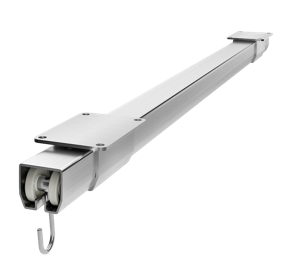
Ceiling Mount Curtain Track
Choose this mounting style if you want your industrial curtain track to mount to the ceiling with only a few inches of open gap.
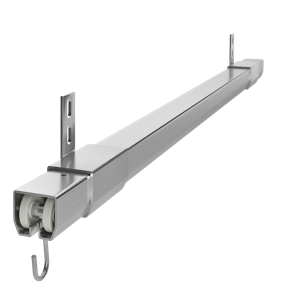
Wall Mount Curtain Track
This curtain track mount is designed for mounting the track next to a vertical wall or stud. This can be parallel to the wall, or perpendicular.
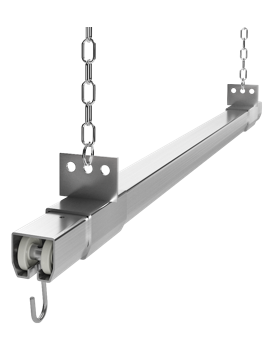
Chain or Cable Curtain Track
Like the threaded rod, a chain supported curtain track is also good for spanning large distances. Both chain or cable can be used to hold up the track.
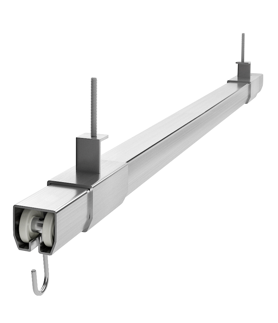
Threaded Rod Curtain Track
If the distance between the anchor points above is higher than where you want the curtain track, then a threaded rod mount might work well. Steel rods support the track and span the distance between the track and the ceiling.
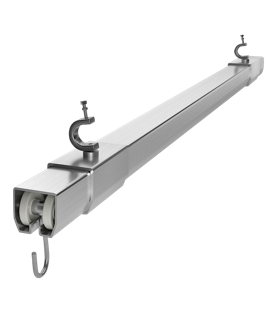
I-Beam Curtain Track
When connecting to a truss, I-Beam or any other horizontal steel support this style of mount works best. Once connected, you simply tighten down the set screw.
Recommended Overhead Trolley Track Systems
After knowing the lighting approaches, the next step is selecting a configuration that fits your facility structure and usage level. The following systems from the overhead trolley track family align well with lighting-related applications in commercial and industrial spaces.
Ceiling Trolley
The Ceiling Trolley is designed for direct installation into supported ceiling structures. It is commonly selected in facilities that require a clean, integrated overhead solution within permanent building frameworks.
• Works well with reinforced ceiling systems
• Suitable for steady, long-span overhead runs
• Ideal for warehouses and production areas
• Maintains a streamlined overhead profile
Free Standing Trolley
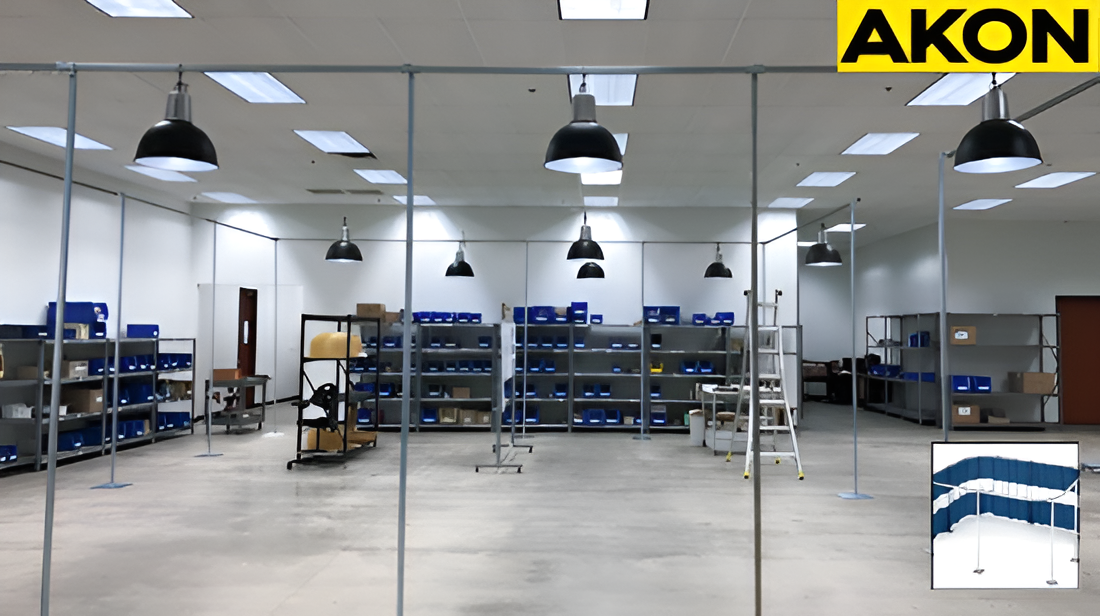
The Free Standing Trolley provides an independent support structure when direct ceiling attachment is not practical. It allows overhead track installation in facilities with structural limitations or clearance constraints.
• Designed for open floor layouts
• Useful in temporary or modular work zones
• Eliminates the need for ceiling modification
• Adapts well to changing commercial environments
Overhead Electrical Cord Trolley
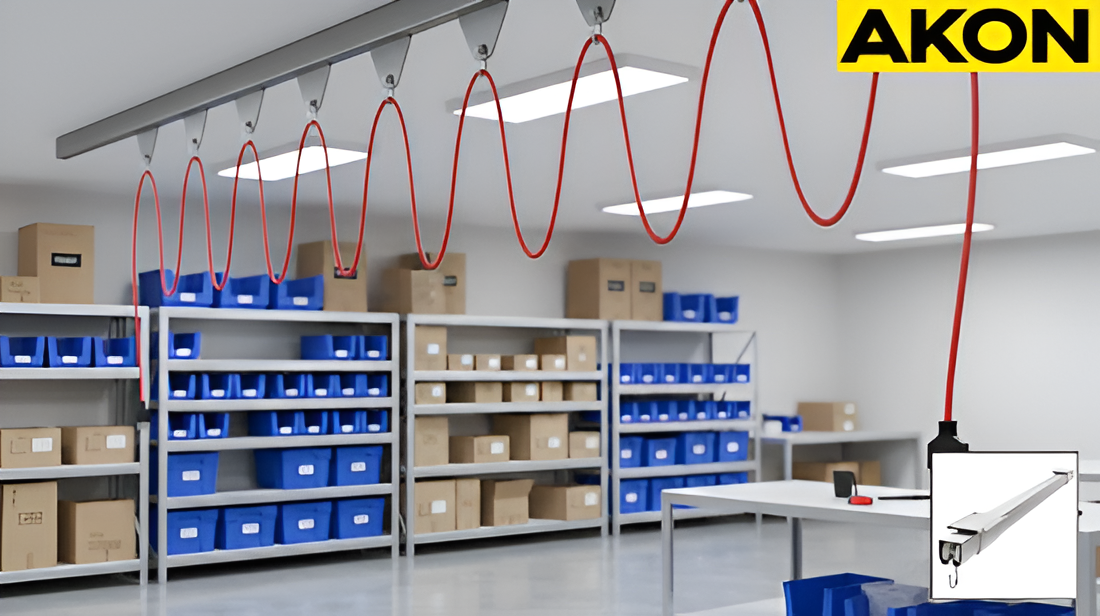
The Overhead Electrical Cord Trolley supports organized power routing alongside lighting installations. It helps maintain a safer and more controlled overhead environment in active facilities.
• Keeps electrical cords elevated and managed
• Reduces floor-level cable congestion
• Supports structured power distribution
• Complements guided overhead systems
Frequently Asked Questions
FAQs About Pendant Light Trolley Track
What is a Pendant Light Trolley Track system typically used for?
A Pendant Light Trolley Track system is used in commercial and industrial facilities to guide suspended lighting along a structured overhead path. It is common in warehouses, production floors, studios, and showrooms where lighting alignment must match active work zones.
How much weight can a Pendant Light Trolley Track support?
Weight capacity depends on the configuration selected. A Ceiling Trolley system is often chosen for heavier commercial fixtures, while other configurations support lighter suspended loads.
How is a Pendant Light Trolley Track different from decorative track lighting?
Decorative track lighting is typically designed for residential or light-duty use. A Pendant Light Trolley Track system is built for commercial environments where structured overhead support and higher load capacity are required.
Can a Pendant Light Trolley Track be installed in an existing building?
Yes. Many facilities integrate the system into existing structures using a Ceiling Trolley setup or a Free Standing Trolley when direct ceiling attachment is limited.
Is a Free Standing Trolley suitable for lighting applications?
Yes. A Free Standing Trolley can support lighting installations in spaces where structural ceiling mounting is restricted or not feasible.
Can the system be used in warehouses and manufacturing environments?
Yes. Industrial facilities often use guided overhead systems to maintain organized lighting alignment in active work areas.
Does the system require frequent maintenance?
Routine inspection of hardware and connections is recommended. However, commercial-grade configurations are designed for long-term durability in active environments.
Can multiple pendant fixtures be supported along one track run?
Yes. Multiple fixtures can be positioned along a continuous track layout, depending on spacing and load requirements.
Is the system customizable for long spans or large spaces?
Yes. Track sections can be configured to match the length and layout requirements of large commercial facilities.
Can lighting be repositioned without major electrical work?
Yes. Fixtures can be adjusted along the system without relocating wiring infrastructure.
What industries commonly use overhead trolley systems for lighting?
Manufacturing, warehousing, automotive facilities, studios, and commercial display environments commonly use structured overhead systems.
Can the system support both lighting and power management?
Yes. An Overhead Electrical Cord Trolley can be paired with lighting installations to organize power routing above the workspace.
Is the Ceiling Trolley system suitable for heavy commercial fixtures?
Yes. The Ceiling Trolley configuration is commonly selected when stronger overhead support is required for larger suspended lighting units.
How does a Pendant Light Trolley Track help growing facilities?
It allows facilities to adjust lighting alignment as departments expand or operational layouts change over time.
Can this system be used in showrooms or staging areas?
Yes. Adjustable overhead configurations are well suited for display environments and studio applications.
Does the trolley remain stable during daily operations?
Yes. When properly installed, the system maintains consistent alignment during normal commercial activity.
Is professional installation recommended?
In most commercial environments, professional installation helps ensure proper alignment and structural compliance.
Can it reduce long-term facility modification costs?
Yes. Structured overhead systems can reduce repeated structural adjustments when lighting needs change.
What makes a commercial trolley system more reliable than residential track lighting?
Commercial systems are designed for structured overhead support in active environments, while residential systems prioritize aesthetics over load capacity.
How do I choose between a Ceiling Trolley and a Free Standing Trolley?
The decision depends on your ceiling structure and facility layout. Ceiling Trolley systems integrate directly into supported structures, while Free Standing Trolley systems are ideal when overhead attachment is limited.
Photo Gallery
Is a Pendant Light Trolley Track Right for Your Facility?
If your facility requires organized, dependable overhead lighting, a Pendant Light Trolley Track provides a structured long-term solution. It supports consistent lighting alignment while allowing smarter layout planning over time. Review your space needs and explore the Overhead Trolley Track systems to find the configuration that fits your facility best.
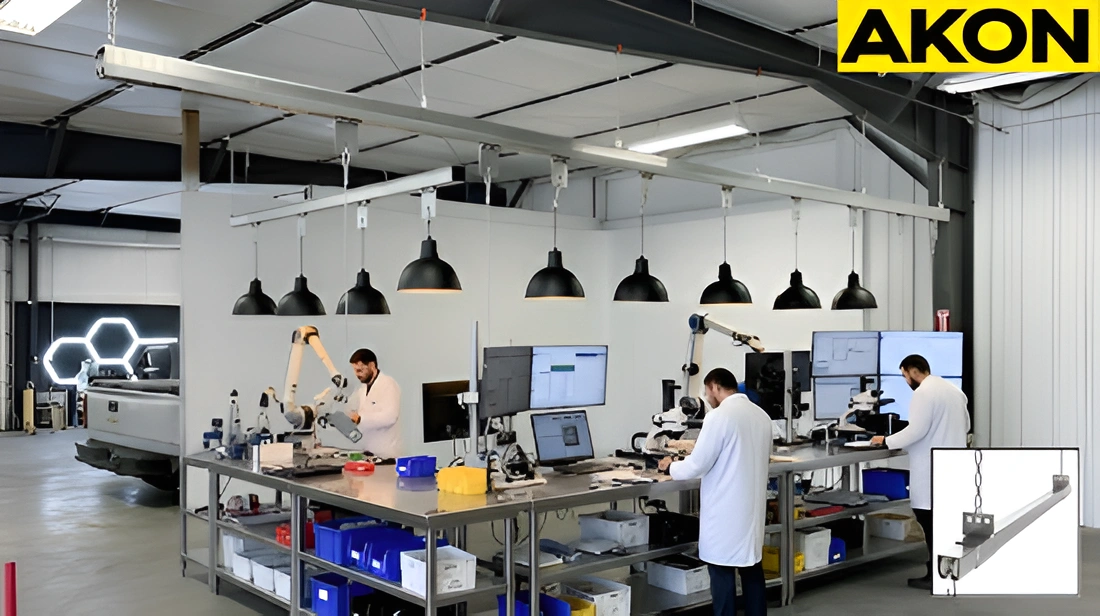
Overhead Rail System Layout for Fixture Alignment
