
Sliding Artwork Track
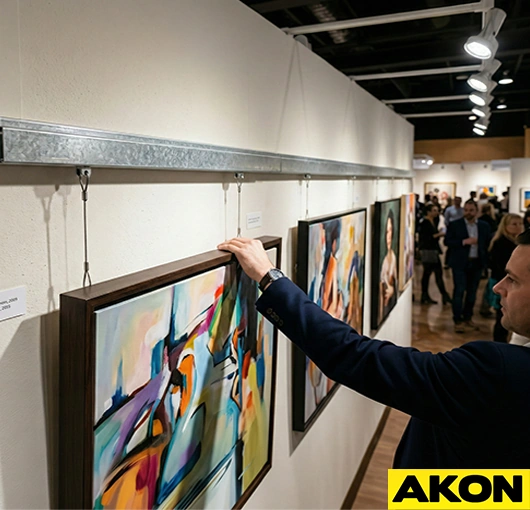
A sliding artwork track is a ceiling-mounted rail system that allows artwork or display panels to move along an overhead trolley track. Commonly used in galleries, offices, healthcare, and retail spaces, it enables guided overhead positioning. In this article, we’ll examine display limitations, system benefits, applications, product options, and key FAQs.
Why Fixed Display Systems Fall Short
Now that we know what a sliding artwork track is, it helps to see why many traditional display methods create challenges over time. As layouts change and spaces evolve, fixed systems often become harder to manage and adjust.
Wall-Mounted Displays Restrict Layout Changes
Wall-mounted artwork may look straightforward, but it secures each piece in a fixed position. Rearranging the layout usually requires removing hardware and repairing wall surfaces.
Even simple updates can take time and interrupt daily operations. Over time, this approach limits how easily a space can adapt to new display needs.

Floor-Based Displays Consume Valuable Space
Freestanding display stands and partitions take up usable floor area, especially in high-traffic settings. They can disrupt movement and reduce how efficiently a room functions.
Adjusting their placement often involves lifting, shifting, and reorganizing surrounding elements. Without a more adaptable system, refreshing a layout can become slow and impractical.

Make Shapes
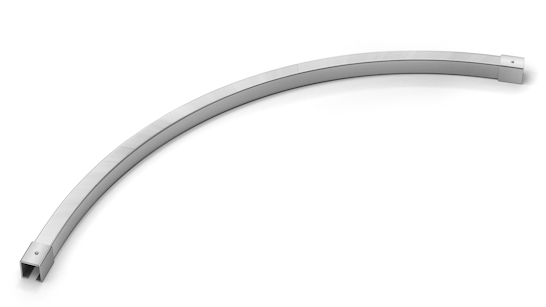
Radius Corner
By using a 90 degree radius corner you can go around obstructions or make shapes. The 24" radius corner quickly attaches and detaches as needed. Use 1 radius for an L-Shape design, 2 radius corners for a C-Shape and 4 radius corners for a complete enclosure.

Key Benefits of a Sliding Artwork Track System
After knowing the limits of fixed and floor-based displays, the next step is choosing a system designed for movement and adaptability. A sliding artwork track offers a structured solution that supports repositioning without constant disruption.

• Cleaner Visual Presentation. The track system keeps hardware aligned within the rail for a streamlined appearance. This reduces visible clutter compared to multiple wall brackets or stands. The result is a more organized and professional display setting.
• Faster Display Adjustments. Repositioning artwork becomes straightforward and manageable. Staff can update layouts without removing fixtures or repairing surfaces. This makes regular changes more practical and less disruptive.
• Long-Term Layout Flexibility. Display needs naturally evolve over time. A sliding track allows adjustments without structural changes to the space. This supports ongoing adaptability without starting over.
Overhead Space Optimization
The ceiling-mounted rail keeps display movement elevated and organized above the workspace.
Smooth, Controlled Movement
Artwork glides along enclosed trolley carriers for steady and predictable repositioning.
Reliable Structural Strength
Galvanized steel track systems provide stable support for repeated use in active environments.
Comparing Track Options for Sliding Artwork Displays
After knowing the advantages of a sliding artwork track system, the next step is choosing the right configuration for your space. Different environments have different structural conditions and layout goals. The table below outlines how common track options compare.
| Feature | Ceiling-Mounted Track | Free-Standing Track System | Basic Wall Rail |
|---|---|---|---|
| Mounted overhead | Yes | Yes | No |
| Requires ceiling access | Yes | No | No |
| Supports larger panels | Yes | Yes | Limited |
| Layout customization | High | Moderate | Limited |
| Best for long-term use | Yes | Yes | Moderate |
Ceiling-mounted tracks suit spaces with solid structural support and long-term layout plans. Free-standing systems work well when ceiling installation is not practical. Basic wall rails may handle smaller displays but offer limited flexibility. For spaces that expect regular changes, overhead track systems provide a more scalable solution.
Types of Curtain Track Mounts
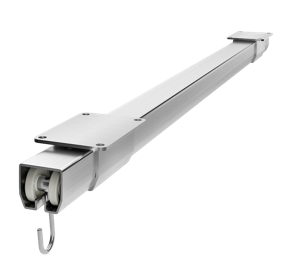
Ceiling Mount Curtain Track
Choose this mounting style if you want your industrial curtain track to mount to the ceiling with only a few inches of open gap.
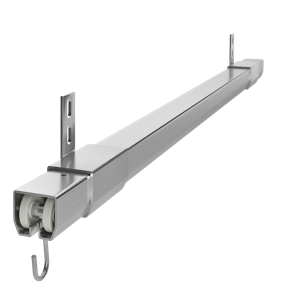
Wall Mount Curtain Track
This curtain track mount is designed for mounting the track next to a vertical wall or stud. This can be parallel to the wall, or perpendicular.
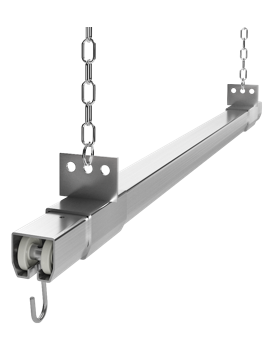
Chain or Cable Curtain Track
Like the threaded rod, a chain supported curtain track is also good for spanning large distances. Both chain or cable can be used to hold up the track.
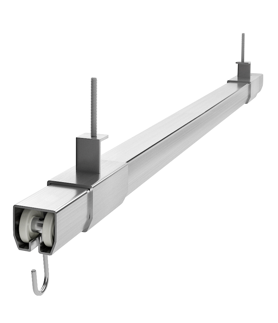
Threaded Rod Curtain Track
If the distance between the anchor points above is higher than where you want the curtain track, then a threaded rod mount might work well. Steel rods support the track and span the distance between the track and the ceiling.
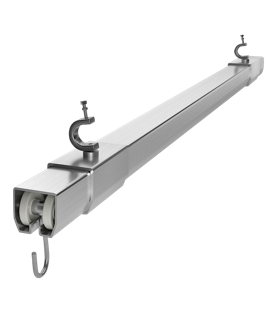
I-Beam Curtain Track
When connecting to a truss, I-Beam or any other horizontal steel support this style of mount works best. Once connected, you simply tighten down the set screw.
Recommended Sliding Artwork Track Products
Once you’ve selected the right track configuration, pairing it with the proper trolley system ensures consistent performance. The following solutions from the overhead trolley track lineup align well with sliding artwork applications.

Ceiling Trolley
The Ceiling Trolley is designed for installations where structural ceiling support is available. It works best in permanent display environments that require guided panel positioning along a defined rail path.
• Engineered to travel smoothly within enclosed track systems
• Supports suspended artwork panels and lightweight display elements
• Ideal for galleries, corporate spaces, and healthcare interiors
• Designed for repeated daily use in structured layouts

Free Standing Trolley
The Free Standing Trolley is suited for spaces where ceiling attachment is not an option. It provides a guided rail solution using a self-supported framework.
• Does not require direct ceiling anchoring
• Suitable for renovated, leased, or temporary environments
• Supports repositionable artwork within defined display zones
• Maintains alignment without altering building structure

Overhead Electrical Cord Trolley
The Overhead Electrical Cord Trolley demonstrates how suspended rail systems manage controlled linear travel. While commonly used for cable organization, the same guided mechanism supports structured display movement.
• Moves consistently along enclosed track systems
• Maintains alignment of suspended elements
• Performs reliably in active commercial settings
• Reinforces the value of structured rail guidance
Frequently Asked Questions
FAQs About Sliding Artwork Track Systems
What is a sliding artwork track system used for?
A sliding artwork track system is used to suspend and reposition artwork or display panels along an overhead trolley track. Systems such as the Ceiling Trolley allow controlled panel movement without removing artwork from its mounted path.
Can a sliding artwork track system support heavy artwork panels?
Yes. Load capacity depends on the overhead trolley track system selected. Options like the Ceiling Trolley and Free Standing Trolley are designed to support structured suspended displays when properly specified.
Is a sliding artwork track system noisy during operation?
High-quality trolley systems are engineered for smooth travel within enclosed rails. When properly installed, systems like the Ceiling Trolley operate with controlled and consistent movement.
Do I need professional installation for a sliding artwork track?
Professional installation is recommended for ceiling-mounted systems to ensure structural alignment. A Free Standing Trolley may offer more flexibility in spaces where ceiling anchoring is limited.
What is the difference between a Ceiling Trolley and a Free Standing Trolley?
A Ceiling Trolley mounts directly to structural supports above, while a Free Standing Trolley operates within a self-supported frame. The right option depends on ceiling access and long-term layout planning.
Can sliding artwork tracks be installed in existing buildings?
Yes. Overhead trolley track systems can often be retrofitted into existing structures, depending on ceiling condition and load requirements. A layout review helps determine compatibility.
How customizable are overhead trolley track systems?
Overhead trolley track systems can be configured to match room dimensions and project goals. Ceiling Trolley and Free Standing Trolley layouts may be adjusted to accommodate specific display zones.
Are sliding artwork track systems suitable for commercial spaces?
Yes. Sliding artwork track systems are commonly used in galleries, healthcare facilities, retail interiors, and corporate environments. They are designed to support repeated display adjustments.
Can artwork be repositioned without removing it from the track?
Yes. Panels remain suspended within the trolley path during repositioning. This reduces handling and supports consistent display updates.
How long do sliding artwork track systems last?
Durability depends on material selection and usage frequency. Galvanized steel overhead trolley track systems are built for long-term structural reliability.
Are these systems compatible with different artwork sizes?
Yes. Trolley selection and load rating determine panel compatibility. Matching the right Ceiling Trolley or Free Standing Trolley ensures safe support.
Can curved or custom layouts be created?
Track configurations may be customized depending on project requirements. Layout planning ensures the overhead trolley track system aligns with the intended display path.
Is maintenance required for trolley track systems?
Routine inspection and basic cleaning help maintain smooth performance. Enclosed trolley systems are designed for consistent long-term operation.
Can lighting or other suspended elements use the same track?
Certain overhead trolley track systems may support additional suspended components within load limits. Proper planning ensures safe integration.
Is the sliding artwork track visible once installed?
The track is mounted along the ceiling and remains structured within its designated path. Visibility depends on ceiling height and architectural design.
Can the system be relocated later?
Relocation depends on installation type. Free Standing Trolley systems are generally easier to reposition than permanently mounted ceiling tracks.
Are sliding artwork track systems suitable for rotating exhibits?
Yes. Sliding artwork track systems are well suited for environments that update displays regularly. Ceiling Trolley systems provide structured guidance for consistent repositioning.
Does installation require structural reinforcement?
Structural requirements vary depending on load and ceiling construction. A site assessment determines whether reinforcement is necessary for a Ceiling Trolley installation.
How do I choose the right overhead trolley track system?
Choosing the right system depends on panel weight, layout goals, and ceiling conditions. Reviewing project details helps determine whether a Ceiling Trolley or Free Standing Trolley is best suited.
How can I request a quote for a sliding artwork track system?
You can request a custom quote through the Industrial Curtain Track team. Providing layout dimensions and panel specifications helps ensure the recommended trolley system matches your application.
Photo Gallery

A Flexible and Professional Display Solution
A sliding artwork track system provides a structured way to manage changing displays with consistency and control. Solutions like the Ceiling Trolley and Free Standing Trolley adapt to different building conditions while keeping panels aligned within an overhead rail system. If you’re planning a new installation or refining an existing layout, request a quote to determine the right overhead trolley track configuration for your space.
Gallery Track System
