
Industrial Track Rails
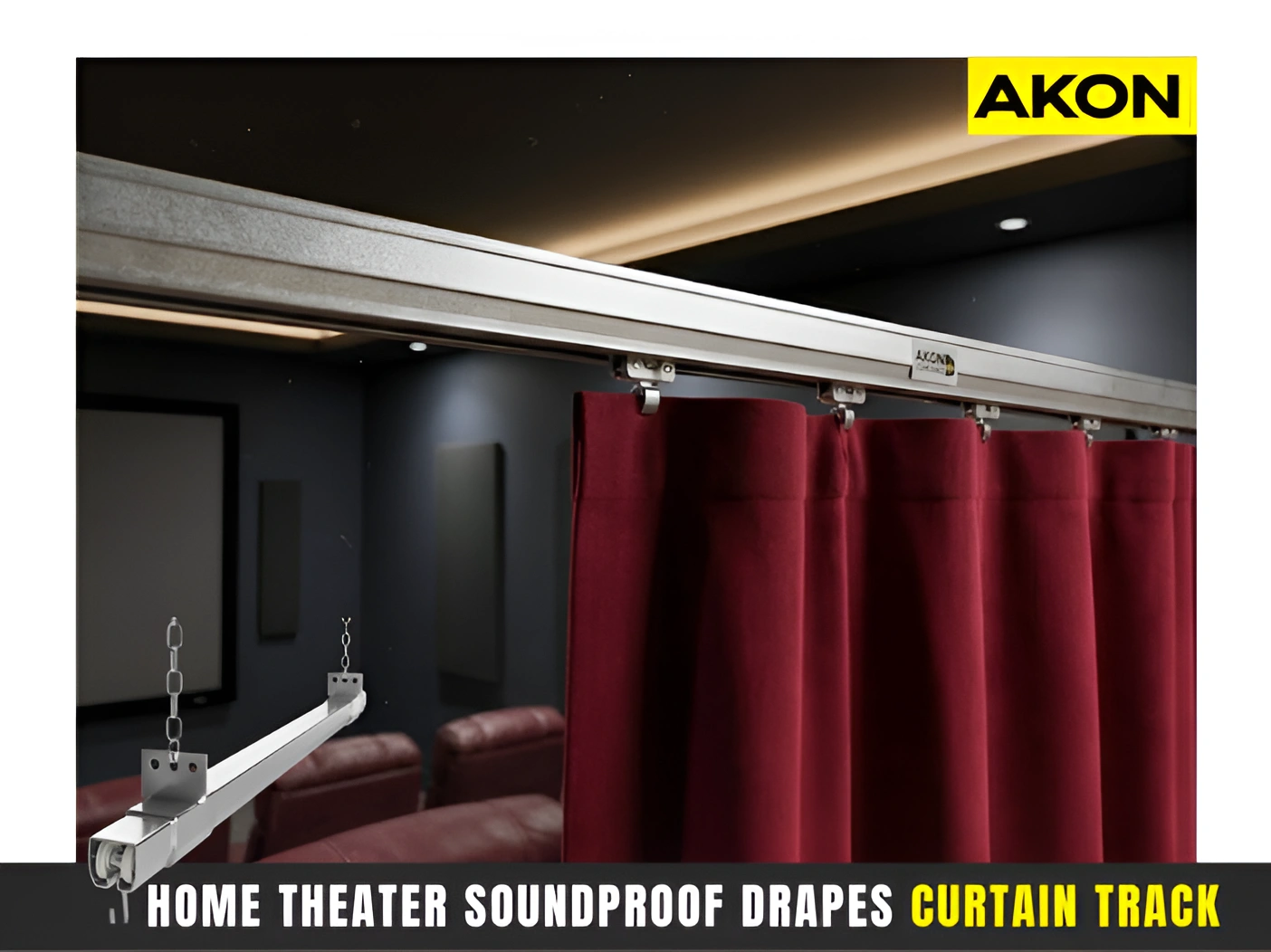
Soundproof drapes are heavier and more dense than regular curtains, requiring specialized track systems. This guide explores the differences in material, typical weight ranges, and the importance of selecting the right hardware. We’ll also discuss how load ratings affect performance, and how to choose and install the right track system for your home theater.
Load Reality: How Heavy Are Home Theater Soundproof Drapes?
Now that know you that soundproof drapes create structural demands, let’s quantify those demands. Before choosing a track system, you need to understand how much load your hardware will actually carry.

Weight per Square Foot of Acoustic Material
• Most acoustic drapery weighs between 1–2 lbs per square foot, depending on fabric density and layering.
• Full-wall coverage in a home theater can easily total 80–150 lbs or more.
• Multi-layer sound-blocking systems significantly increase total curtain weight.
Total Load Across Common Wall Spans
• A 12–14 ft wall may support 40–80 lbs of curtain weight.
• A 15–20 ft span often carries 80–150 lbs or higher.
• As span length increases, structural rigidity becomes more critical to prevent deflection.

Static Load vs Dynamic Load (Movement Stress)
• Static load refers to the curtain’s resting weight on the track.
• Dynamic load occurs during opening and closing, increasing stress on rollers and anchors.
• Movement introduces additional force that compounds over time.
Why Daily Open/Close Cycles Increase Hardware Fatigue
• Repeated use accelerates wear on trolleys, brackets, and mounting points.
• Underrated systems may develop sag, friction noise, or track distortion.
• High-frequency operation demands reinforced hardware or motorized assistance.
Make Shapes
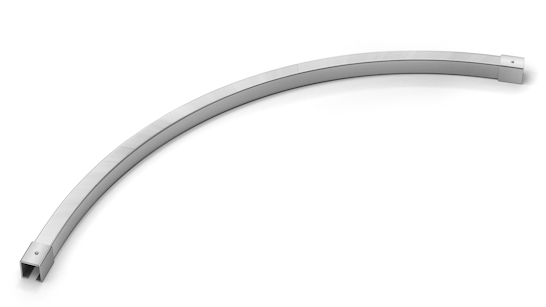
Radius Corner
By using a 90 degree radius corner you can go around obstructions or make shapes. The 24" radius corner quickly attaches and detaches as needed. Use 1 radius for an L-Shape design, 2 radius corners for a C-Shape and 4 radius corners for a complete enclosure.

Engineering Deep Dive: What Makes an Industrial Track Rail Different
Now that you know the load demands, the next step is understanding the hardware engineered to carry them. Industrial track rails are built for structural performance, not decoration.
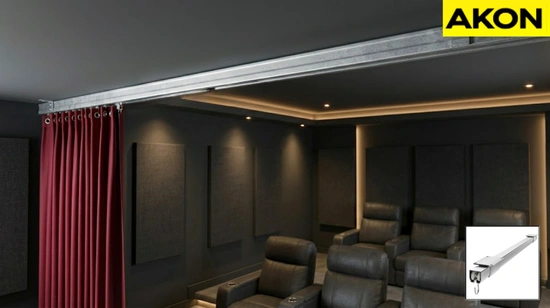
• Galvanized steel provides higher rigidity and long-span stability, while aluminum is lighter but less structurally robust under demanding conditions.
• Reinforced rail profiles and thicker walls minimize bending across wide spans and maintain long-term alignment.
• Bearing-supported trolleys reduce friction and maintain smooth, controlled movement under load.
• Consistent bracket spacing distributes load evenly and protects against concentrated structural stress.
• Secure anchoring into solid framing ensures proper load transfer and long-term track stability.
Industrial track rails differ from decorative systems because they are engineered around load control, structural integrity, and movement precision. With the mechanical foundation understood, the next step is determining which system category best fits your home theater’s specific span, usage frequency, and installation conditions.
Types of Curtain Track Mounts
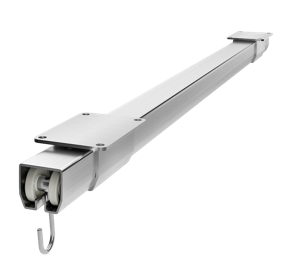
Ceiling Mount Curtain Track
Choose this mounting style if you want your industrial curtain track to mount to the ceiling with only a few inches of open gap.
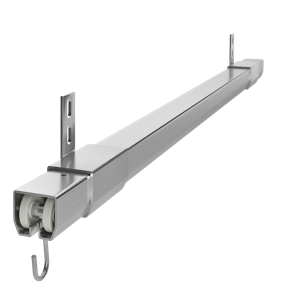
Wall Mount Curtain Track
This curtain track mount is designed for mounting the track next to a vertical wall or stud. This can be parallel to the wall, or perpendicular.
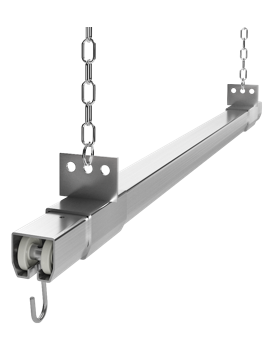
Chain or Cable Curtain Track
Like the threaded rod, a chain supported curtain track is also good for spanning large distances. Both chain or cable can be used to hold up the track.
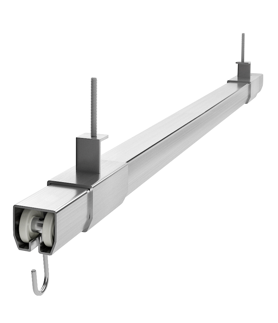
Threaded Rod Curtain Track
If the distance between the anchor points above is higher than where you want the curtain track, then a threaded rod mount might work well. Steel rods support the track and span the distance between the track and the ceiling.
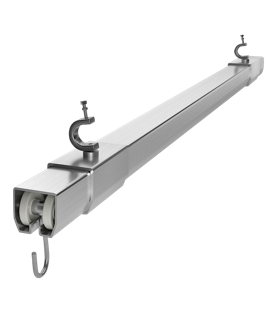
I-Beam Curtain Track
When connecting to a truss, I-Beam or any other horizontal steel support this style of mount works best. Once connected, you simply tighten down the set screw.
System Selection: Choosing the Right Industrial Track Rail for Your Theater
With the structural principles established, the next step is matching your theater’s real-world conditions to the appropriate system category. The right choice depends on span width, total curtain load, movement frequency, and ceiling structure.
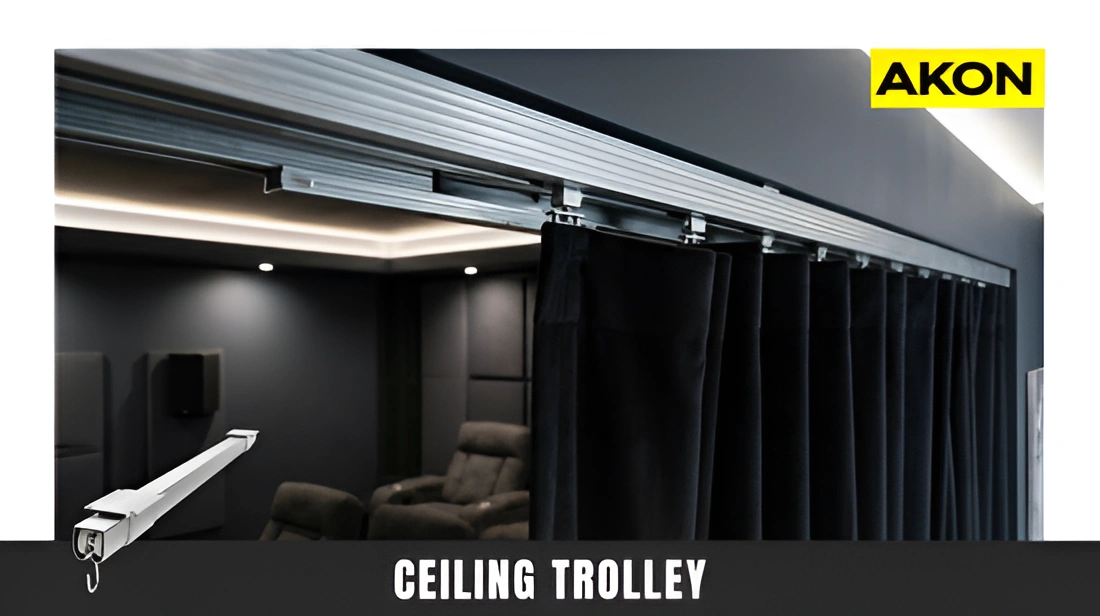
Designed for controlled overhead movement, this system works well in compact theater rooms where span and operational demands are moderate.
• Load Range: Light-to-moderate acoustic curtain setups.
• Span Suitability: Ideal for 10–14 ft walls.
• Installation Considerations: Standard ceiling mounting with evenly spaced brackets.
• Best Mounting Strategy: Direct anchoring into framing members for stable support.

Built for demanding overhead applications, its enclosed trolley design adapts well to heavier drapery systems in mid-to-large theater spaces.
• Load Range: Higher total curtain weight across longer distances.
• Span Suitability: Effective for 15–25 ft installations.
• Installation Considerations: Reinforced bracket spacing recommended to maintain alignment.
• Best Mounting Strategy: Anchoring directly into joists or structural beams.

Engineered for smooth overhead travel, this system performs well in installations requiring frequent curtain movement or adaptable configuration.
• Load Range: Suitable for heavier drapes exceeding typical residential conditions.
• Span Suitability: Ideal for tall ceilings or larger dedicated cinema rooms.
• Installation Considerations: Precision alignment and structural mounting are essential.
• Best Mounting Strategy: Integrated ceiling mounting with optional automated control.
Application Mapping Table: Confirming the Right System
Now that you know your system category, use this quick-reference table to confirm your selection. This structured overview matches room conditions with the appropriate track solution so you can validate your decision with confidence.
| Room Type | Total Drape Weight | Span Width | Support Spacing | Movement Frequency | Recommended System |
|---|---|---|---|---|---|
| Small media room | 20–40 lbs | Under 14 ft | Every 4 ft | Occasional | Moderate load system |
| Mid-size theater | 40–80 lbs | 15–20 ft | Every 3–4 ft | Moderate | Heavy-duty steel rail |
| Dedicated cinema room | 80–150 lbs | 20+ ft | Every 2–3 ft | Frequent | Reinforced industrial system |
| Multi-use theater | 60–120 lbs | Variable | Reinforced ceiling anchors | Daily | Motorized trolley system |
With your room conditions clearly mapped, you now have a practical reference point for selecting the right industrial track rail. Instead of guessing, you can move forward knowing your system choice aligns with your span, usage level, and long-term performance expectations.
Frequently Asked Questions
FAQs About Industrial track rails for home theater soundproof drapes
Q1. How much weight can an industrial overhead trolley track support in a home theater?
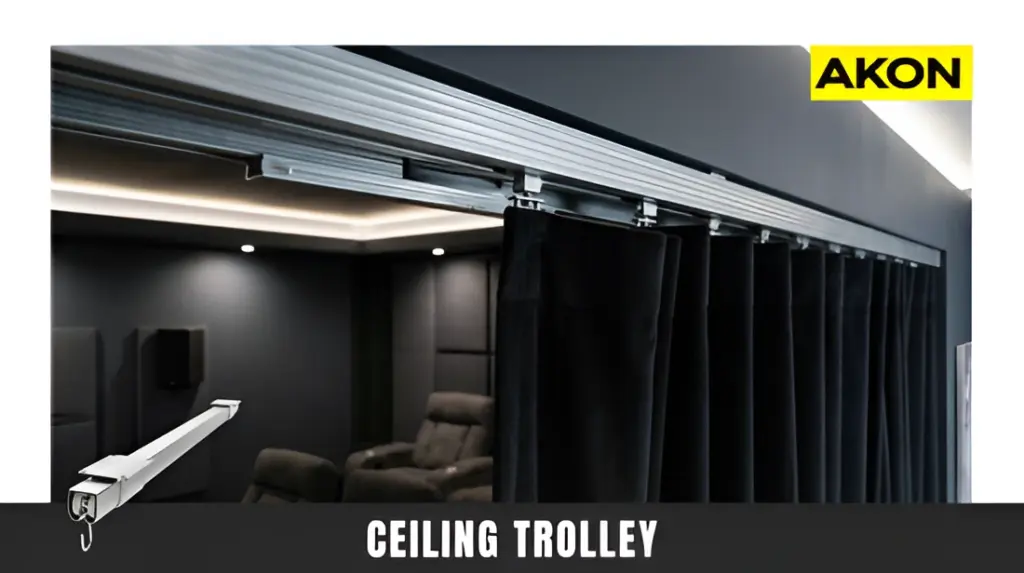
Capacity depends on the specific system and mounting method, but properly installed industrial systems like the Ceiling Trolley are designed to support distributed acoustic curtain loads when anchored into structural framing.
Q2. How far apart should supports be spaced for heavy soundproof drapes?
Support spacing varies by system type, but heavier drapery installations typically require closer bracket intervals to maintain consistent alignment across the span.
Q3. What causes curtain track sagging across long home theater walls?
Sagging is usually caused by insufficient structural support, improper bracket spacing, or selecting hardware not designed for extended overhead spans.
Q4. Can aluminum industrial track rails handle heavy soundproof theater curtains?
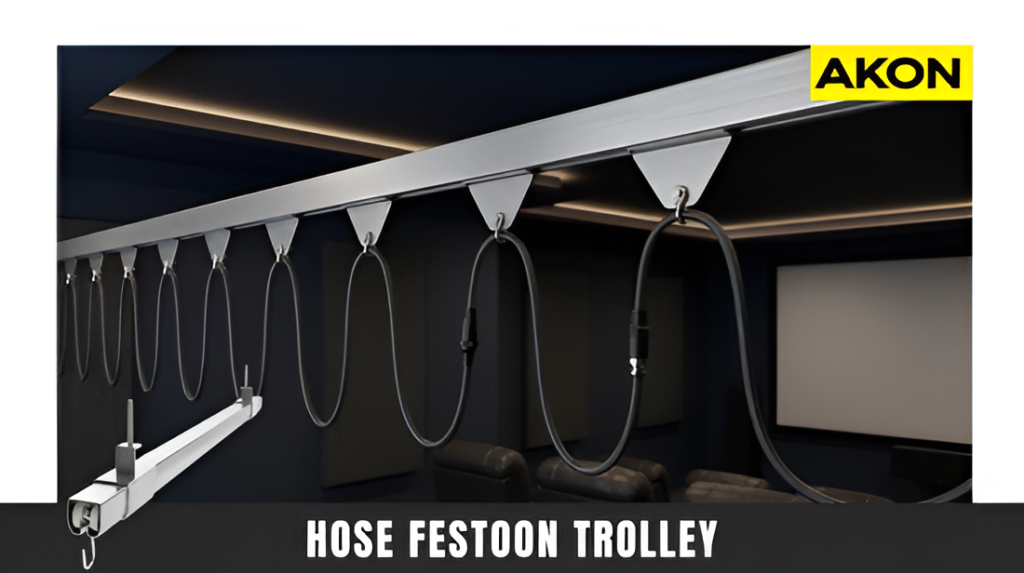
Aluminum systems may work in lighter applications, but for longer spans or heavier drapes, steel-based systems like the Hose Festoon track provide greater structural stability.
Q5. When is motorization structurally recommended for theater curtains?
Motorization becomes beneficial when curtain mass is significant or when daily operation increases strain on manual trolley movement.
Q6. What is the difference between static load rating and operational load rating in an overhead track system?
Static rating measures resting weight capacity, while operational rating accounts for additional forces created during curtain movement.
Q7. Which industrial track rail is best for a 20-foot home theater wall?
For extended spans, a heavy-duty steel system such as the Hose Festoon track is typically more suitable than lighter residential-style rails.
Q8. Should I choose a Ceiling Trolley or a Hose Festoon system for acoustic drapes?
The Ceiling Trolley works well in moderate-span installations, while the Hose Festoon system is better suited for longer spans or higher curtain loads.
Q9. Can drywall anchors support industrial curtain track systems?
No. Industrial track systems must be mounted into structural framing members to ensure proper load transfer and long-term stability.
Q10. How do I calculate the load per linear foot for my track rail?
Divide the total curtain weight by the span length to estimate the distributed load across the rail.
Q11. Does frequent opening and closing affect track lifespan?
Yes. Higher movement frequency increases mechanical wear and may justify selecting a reinforced or motorized system.
Q12. Are industrial track rails suitable for residential home theaters?
Yes. Industrial systems are commonly used in residential environments where higher structural performance is required.
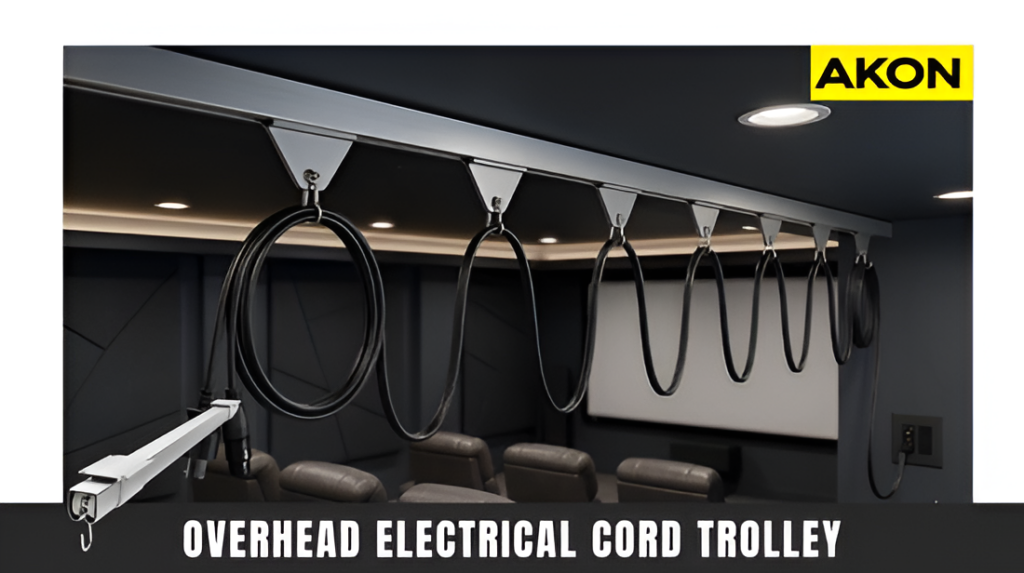
Q13. Can the Overhead Electrical Cord Trolley be adapted for curtain movement?
While designed for overhead travel applications, the Overhead Electrical Cord Trolley system can be adapted for installations requiring smooth, repeatable movement across longer spans.
Q14. What type of ceiling structure is required for overhead trolley installation?
Solid joists, beams, or reinforced structural members provide the most reliable mounting foundation.
Q15. Does curtain stacking impact system selection?
Yes. Concentrated curtain stacking at one end increases localized load and should be considered when choosing a track system.
Q16. Is minimal deflection normal in long-span track installations?
Minor deflection may occur over long distances, but properly engineered industrial rails are designed to minimize visible sag.
Q17. How do I know if I need a reinforced industrial system?
If your installation involves extended spans, frequent use, or heavier acoustic drapes, a reinforced system provides greater long-term performance stability.
Q18. Can these systems be installed on high ceilings?
Yes. High ceilings require precise alignment and secure structural mounting to ensure consistent track performance.
Q19. What maintenance is required for an industrial overhead trolley track?
Periodic inspection of mounting brackets, trolley wheels, and connection points helps maintain smooth operation.
Q20. How do I select the right industrial track rail for my home theater?
Evaluate span width, usage frequency, and installation structure, then match those conditions to a Ceiling Trolley, Hose Festoon, or reinforced overhead system designed for your environment.
Design for Load Performance, Not Just Appearance
Home theater soundproof drapes place real structural demands on any overhead system, and long-term performance depends on matching the track to your span, curtain weight, and usage frequency. Proper support spacing and accurate load ratings protect against premature wear and alignment issues while ensuring smooth, quiet operation. Choose a track system engineered for your span, load, and usage frequency.
Acoustic Theater Enclosures

Photo Gallery