
Heavy-Duty Track Hardware
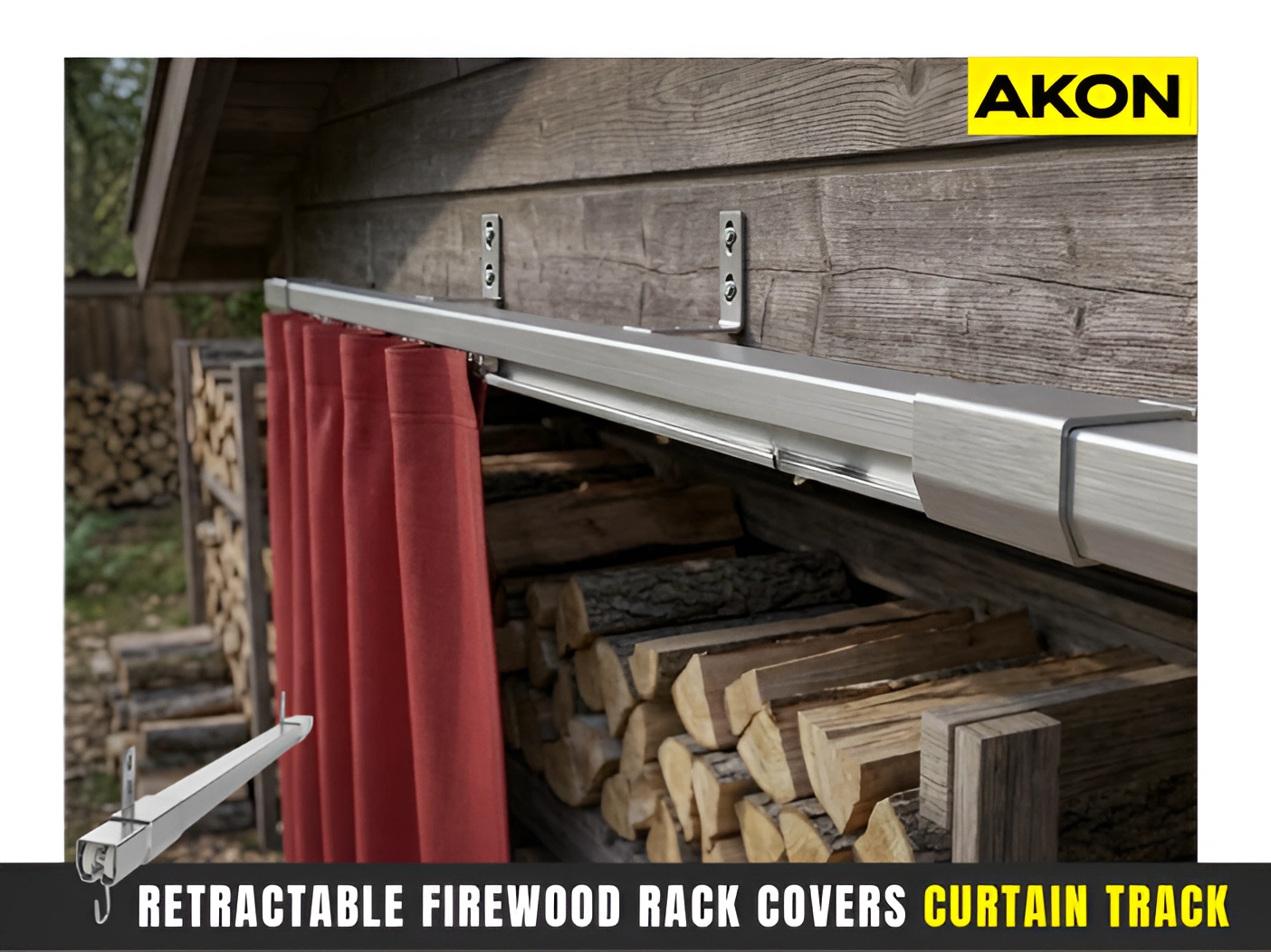
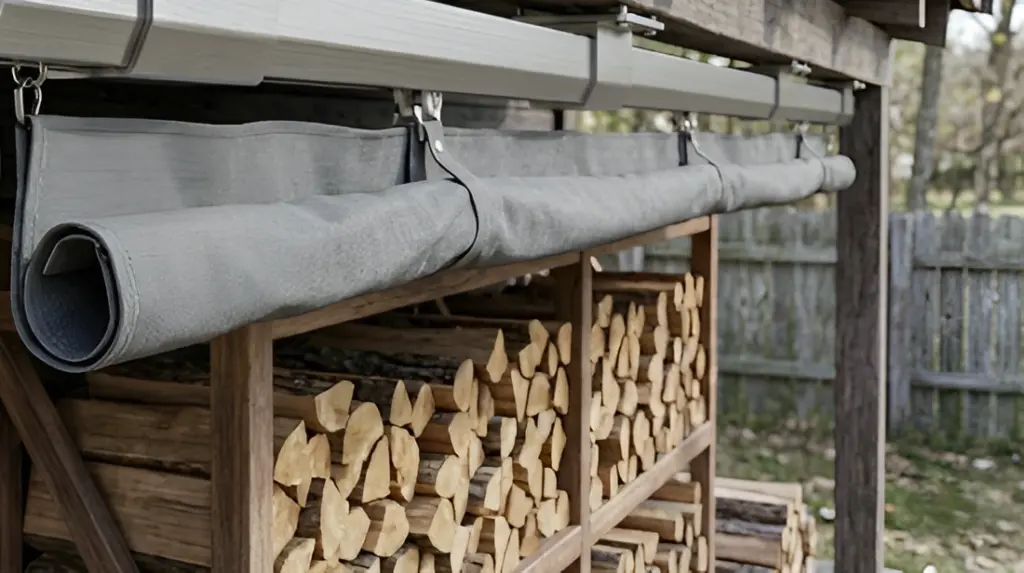
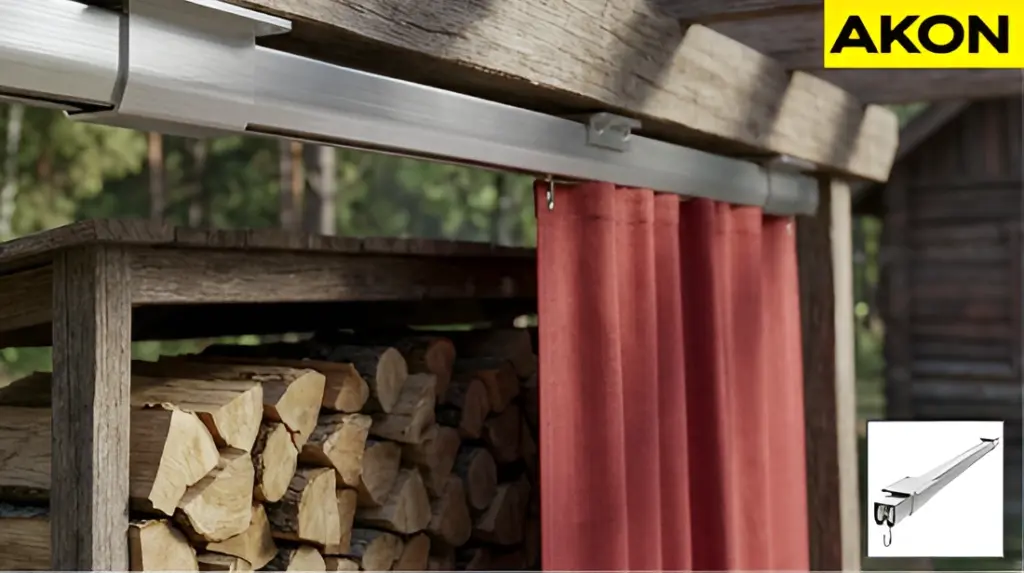
Heavy-duty track hardware for retractable firewood rack covers is engineered for outdoor spans exposed to moisture, snow, and repeated movement. This article defines environmental load conditions, models real-world weight demands, and outlines track configurations that prevent deflection, corrosion, and trolley binding. Designed for contractors and property owners building reliable seasonal retraction systems.
Application Profile: What Environment Are We Designing For?
Before selecting heavy-duty track hardware, the operating conditions must be defined clearly. A retractable outdoor firewood rack cover functions as a suspended moving system installed in an exposed environment, where structural performance depends on span, load behavior, and seasonal exposure.

Use Case
• Retractable outdoor firewood rack cover for seasonal wood protection
• System operates repeatedly through opening and closing cycles
• Installed on residential or light-commercial exterior rack structures
Exposure Conditions
• Direct rainfall and wind-driven moisture
• Snow accumulation in colder climates
• Long-term humidity and temperature fluctuation
Load Type
• Suspended horizontal load supported by overhead trolleys
• Dynamic force introduced during movement
• Variable weight depending on moisture absorption and environmental buildup

Typical Span Range
• Most rack installations span between 4 ft and 16 ft
• Structural demand increases as unsupported distance grows
• Longer spans require greater rigidity control
Structural Stress Points
• Unsupported span tension across the track length
• Long-term exposure at bracket and mounting interfaces
• Alignment sensitivity within moving trolley assemblies
Make Shapes
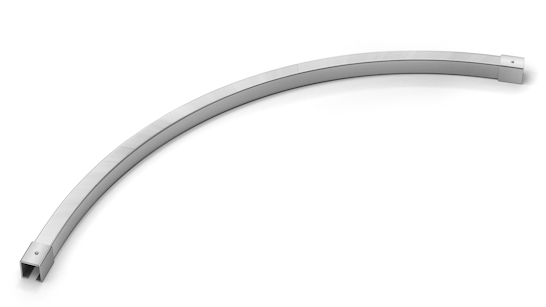
Radius Corner
By using a 90 degree radius corner you can go around obstructions or make shapes. The 24" radius corner quickly attaches and detaches as needed. Use 1 radius for an L-Shape design, 2 radius corners for a C-Shape and 4 radius corners for a complete enclosure.

Load Modeling: Estimating Real-World Weight Demands
With the operating profile defined, the next step is calculating the actual suspended load the track must support. Hardware selection should be based on measurable weight demand rather than assumptions.

• Step 1: Calculate Base Cover Weight
Determine the dry material weight across the full span of the tarp. This establishes the minimum structural load before any environmental adjustments.
• Step 2: Adjust for Moisture-Related Weight Increase
Outdoor covers gain weight when exposed to rainfall or sustained humidity. This increase directly affects the load carried by the track and trolley system.
• Step 3: Evaluate Regional Snow Influence
In snow-prone climates, temporary accumulation can introduce additional load stress. Even light buildup can increase force across the span.
Load modeling turns hardware selection into a measurable decision. Once the adjusted weight and safety factor are defined, you have a clear load target. The next step is choosing a track configuration engineered to support that demand consistently.
Types of Curtain Track Mounts
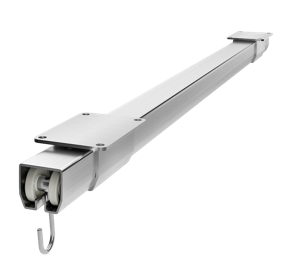
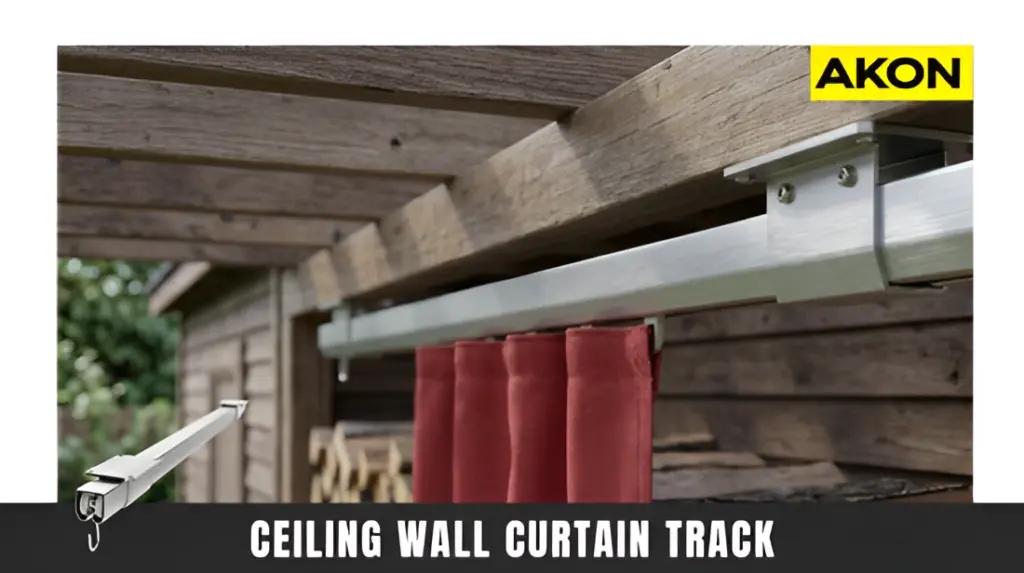
Ceiling Mount Curtain Track
Choose this mounting style if you want your industrial curtain track to mount to the ceiling with only a few inches of open gap.
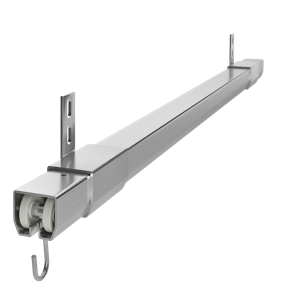
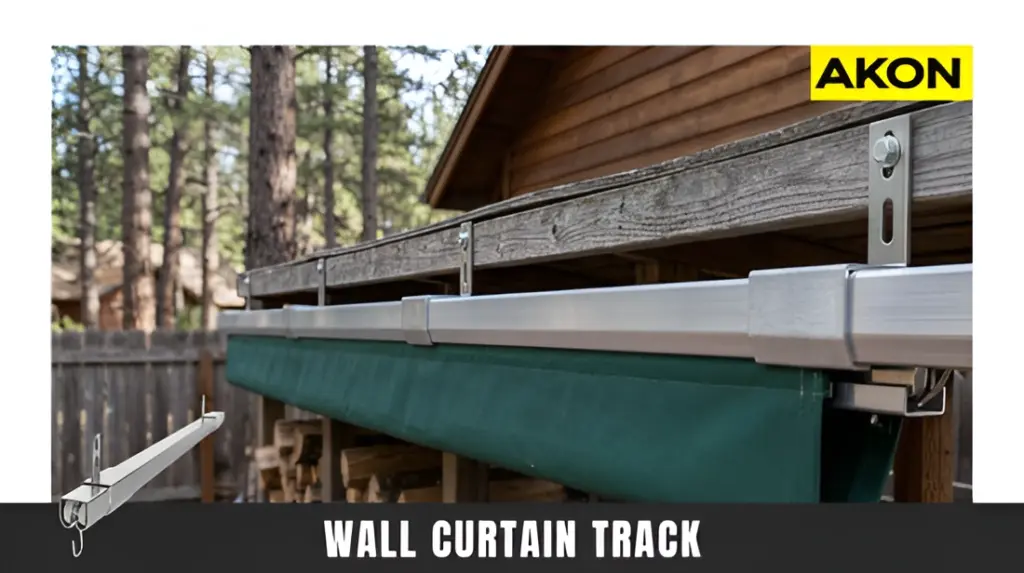
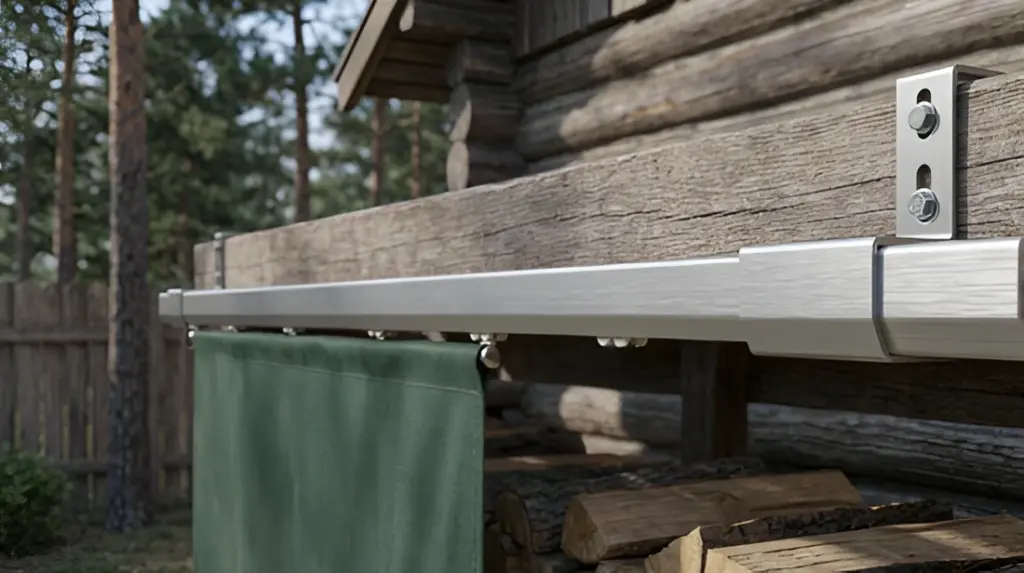
Wall Mount Curtain Track
This curtain track mount is designed for mounting the track next to a vertical wall or stud. This can be parallel to the wall, or perpendicular.
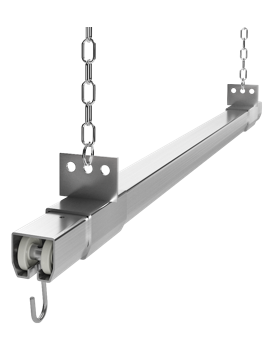
Chain or Cable Curtain Track
Like the threaded rod, a chain supported curtain track is also good for spanning large distances. Both chain or cable can be used to hold up the track.
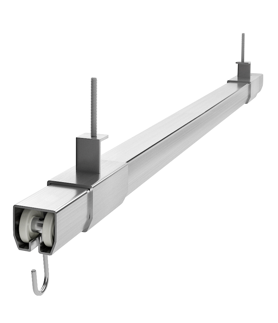
Threaded Rod Curtain Track
If the distance between the anchor points above is higher than where you want the curtain track, then a threaded rod mount might work well. Steel rods support the track and span the distance between the track and the ceiling.
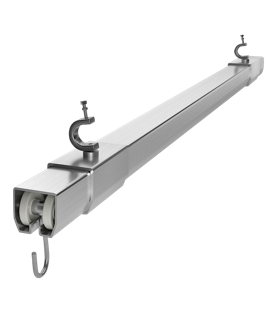
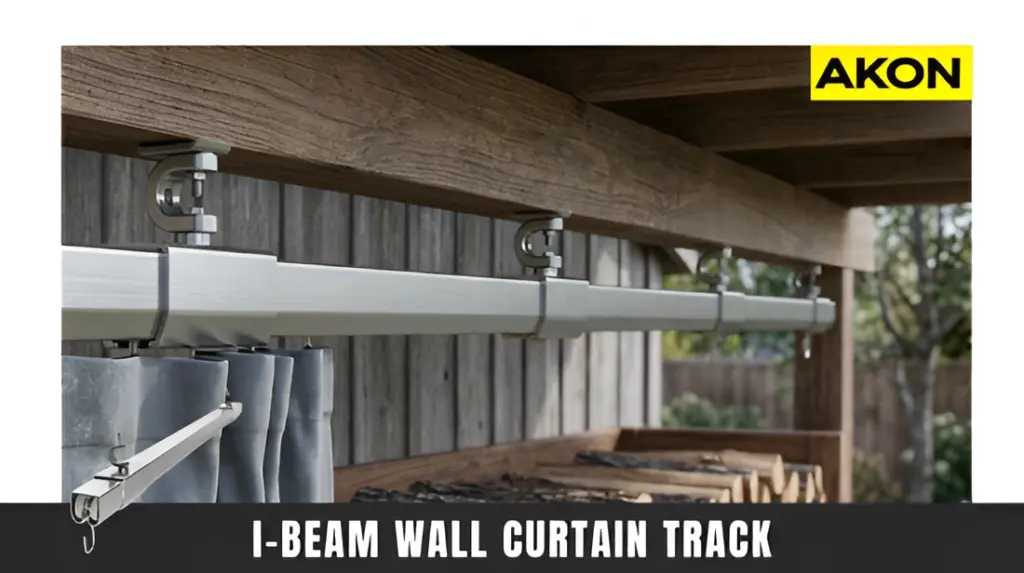
I-Beam Curtain Track
When connecting to a truss, I-Beam or any other horizontal steel support this style of mount works best. Once connected, you simply tighten down the set screw.
System Architecture: What Track Configuration Matches This Load?
With a defined load target established, the next step is selecting a track system engineered to carry that demand consistently. The correct configuration depends on span layout, mounting structure, and structural alignment requirements.

The Ceiling Curtain Track system is designed for direct overhead mounting across straight structural spans. It provides stablestable alignment and controlled curtaincurtain movement for suspended cover systemcover systems.
• Load Suitability: Supports moderate suspended loads across straightstraight spans
• Mounting Type: Flush-mounted directly into ceiling joists or structural beams
• Best For: RRack installations where overhead framing is accessible and ceiling mountingceiling mounting is ppreferferred

The Wall Curtain Track system is designed for installations where the track must be mounted directly to a vertical surface instead of the ceiling. It provides stable guided curtain movement while allowing retractable covers to operate along rack structures or wall-supported spans.
• Load Suitability: Suitable for light to moderate suspended curtain loads
• Mounting Type: Wall-mounted brackets anchored into structural framing or masonry
• Best For: Firewood rack covers or divider systems where overhead mounting is not available

The I-Beam Curtain Track system is built for heavy-duty structural applications where maximum load support and rigidity are required. Its steel beam profile provides high strength and minimal deflection across longer spans.
• Load Suitability: Designed for heavy suspended loads and high structural demand
• Mounting Type: Mounted directly to structural beams or integrated into steel framing
• Best For: Large rack spans or outdoor installations requiring maximum structural stability
Structural Performance Comparison Matrix
After knowing a system architecture, it helps to evaluate how different hardware categories perform under structural demand. The matrix below compares performance tiers based on measurable engineering characteristics rather than appearance.
| Performance Metric | Light-Duty Rod | Standard Track | Heavy-Duty Overhead Trolley |
|---|---|---|---|
| Max Recommended Span | Short | Moderate | Long |
| Deflection Control | Poor | Moderate | High |
| Outdoor Corrosion Resistance | Low | Medium | High (galvanized option) |
| Wet Load Tolerance | Minimal | Limited | Engineered |
| Bracket Spacing Requirement | Wide gaps cause sag | Moderate support needed | Engineered interval spacing |
| Long-Term Structural Reliability | Low | Moderate | High |
This matrix illustrates a clear structural progression. Light-duty hardware is suited for minimal suspended demand, while standard tracks offer moderate performance within controlled conditions. Heavy-duty overhead trolley systems operate at a higher structural tier, designed for sustained load transfer, alignment stability, and consistent mechanical performance over time.
Frequently Asked Questions
FAQs: Heavy-Duty Track Hardware for Retractable Firewood Rack Covers
Q1. How do I prevent mid-span sag in heavy-duty track hardware for retractable firewood rack covers?
Use a load-rated curtain track system with engineered bracket spacing. I-beam curtain track and ceiling curtain track systems provide the rigidity needed to support retractable firewood rack covers across suspended spans.
Q2. What bracket spacing prevents deflection in curtain track systems?
Bracket spacing should follow manufacturer load recommendations rather than visual estimation. Properly spaced brackets help ceiling curtain track and I-beam curtain track systems maintain alignment and structural stability.
Q3. Does snow load affect curtain track performance?
Yes. Snow accumulation can temporarily increase suspended load and place additional stress on the track system. Heavy-duty curtain track hardware, especially I-beam curtain tracks, helps maintain smooth movement under variable outdoor conditions.
Q4. Can I mount a heavy-duty curtain track directly into wood framing?
Yes, provided the fasteners engage structural framing members such as beams or joists. Proper anchoring ensures safe load transfer and stable track operation.
Q5. What happens if the curtain track flexes over time?
Track flex can cause alignment issues, increased rolling resistance, and premature hardware wear. Structural-grade curtain track systems are designed to minimize long-term deformation.
Q6. When should I choose a ceiling curtain track instead of a rod curtain track?
Choose a ceiling curtain track when overhead framing allows direct mounting and greater load support. A rod curtain track is typically used for lighter suspended covers where structural demand is lower.
Q7. Is a heavy-duty curtain track system necessary for a 10-foot firewood rack?
If the rack span and cover weight create moderate structural demand, a ceiling curtain track or I-beam curtain track system will provide better durability and smoother long-term operation.
Q8. What load rating should I look for in curtain track hardware?
The minimum load rating should exceed your calculated working load after applying a safety factor. I-beam curtain track systems are often selected when higher structural capacity is required.
Q9. Are steel rollers better than lighter-duty curtain hardware?
Steel rollers generally provide better durability and consistent movement under sustained suspended loads. They are commonly used in heavier curtain track systems.
Q10. Can rod curtain tracks be used for retractable firewood rack covers?
Yes. Rod curtain tracks can support lighter retractable covers, though larger racks or heavier materials often require ceiling curtain track or I-beam curtain track systems.
Q11. How do I maintain proper track alignment during installation?
Ensure mounting brackets are level and evenly spaced across the span. Proper alignment during installation helps maintain smooth curtain movement.
Q12. What causes curtain rollers to bind during operation?
Binding usually results from track misalignment, insufficient support spacing, or structural flex within the mounting system.
Q13. Can curtain track systems be cut to fit rack width?
Most curtain track systems can be field-cut to match the rack span when installed with proper support brackets and hardware.
Q14. Are I-beam curtain track systems reliable for outdoor firewood racks?
Yes. I-beam curtain tracks provide high structural rigidity and minimal deflection, making them ideal for larger racks or heavy retractable covers.
Q15. Does repeated seasonal use weaken curtain track hardware?
Properly sized systems maintain structural integrity even with repeated seasonal use. Durability depends on selecting a track system rated for the expected load.
Q16. What is the most common installation mistake with curtain track systems?
The most common mistake is spacing mounting brackets too far apart or attaching them to non-structural surfaces.
Q17. How do I know if my curtain track system is undersized?
Signs include visible track deflection, increased rolling resistance, or uneven curtain movement during operation.
Q18. Are modular curtain tracks structurally reliable?
Yes. When installed with proper bracket spacing and connections, modular curtain tracks provide consistent structural performance.
Q19. Can I retrofit a ceiling curtain track onto an existing firewood rack?
Yes, as long as the rack structure can safely support the load transfer. Many installations retrofit a ceiling curtain track system onto existing framing.
Q20. When should I upgrade from rod curtain track to an I-beam curtain track system?
Upgrade when rack spans increase, cover materials become heavier, or long-term structural stability becomes more critical.
Design for Load, Not Appearance
Retractable firewood rack covers operate under shifting structural demand, so hardware selection must prioritize measurable performance over visual simplicity. Track rigidity, engineered support intervals, and structural-grade materials determine whether the system maintains alignment and smooth travel over time. Choose heavy-duty overhead trolley hardware built for sustained load transfer and long-term structural stability.
Structural Layout of a Retractable Firewood Rack Cover

Photo Gallery