
Ceiling Track Rails
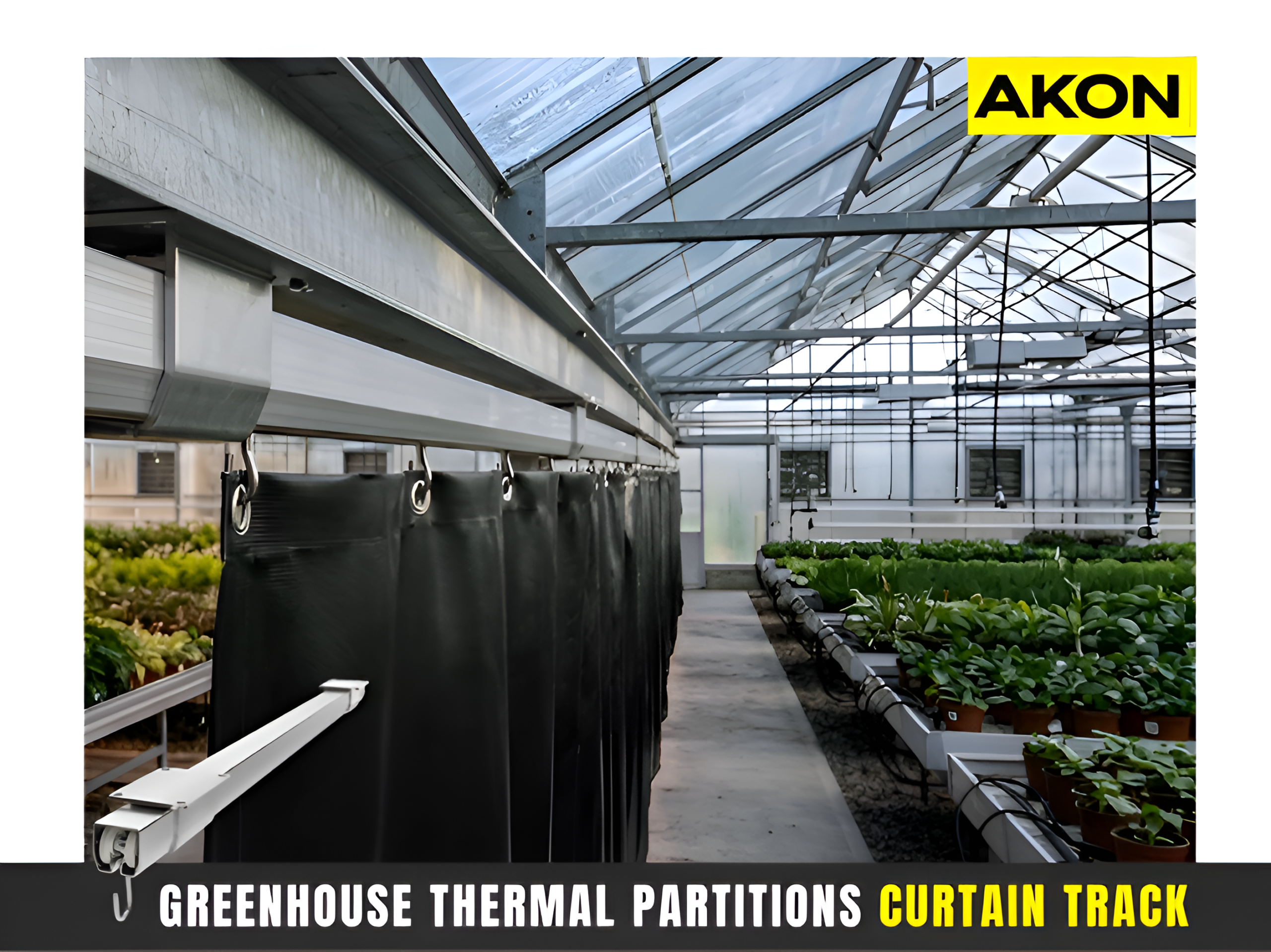
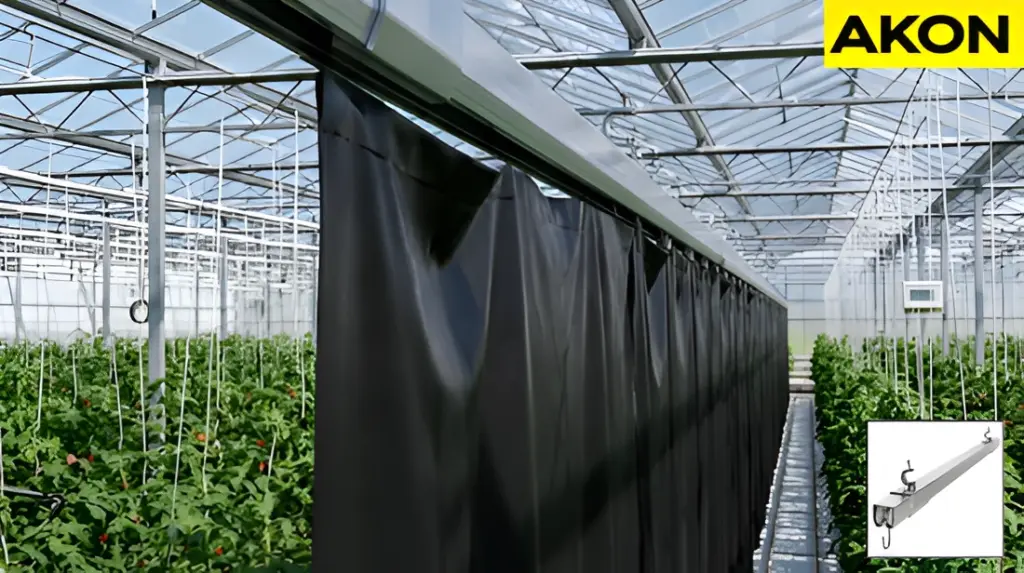
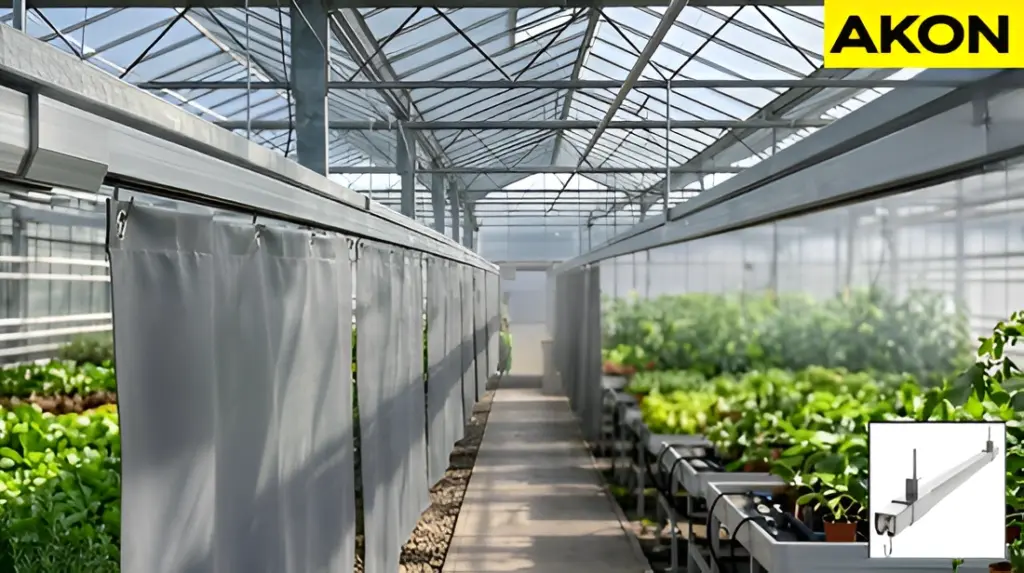
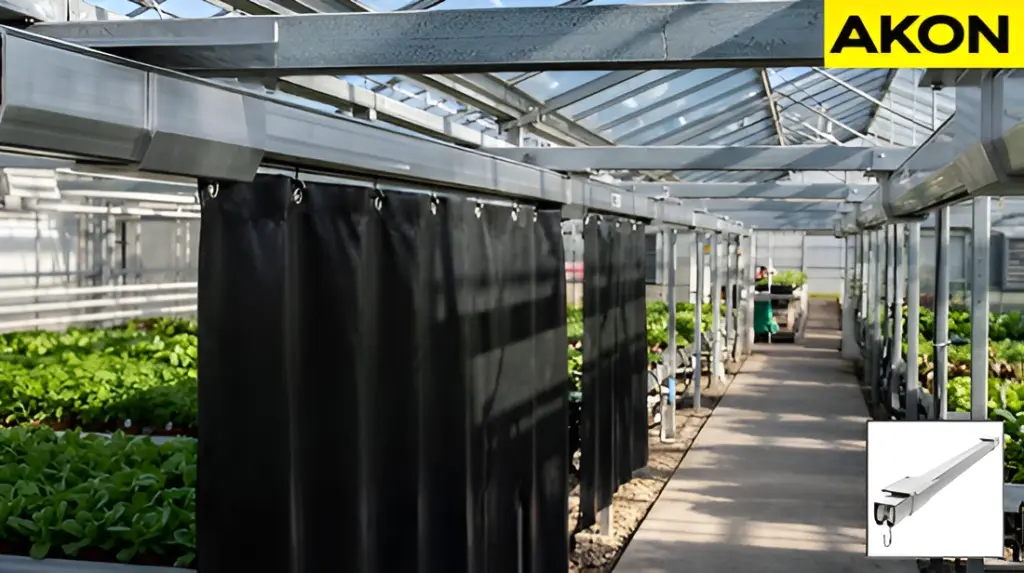
Ceiling track rails support sliding curtain systems used to create greenhouse thermal partitions. These partitions divide large growing spaces into climate-controlled zones, helping growers manage temperature, airflow, and heating efficiency. This article explains when greenhouse partitions are needed, how curtain track systems are designed, and how to choose the right track setup for different greenhouse environments.
When Greenhouses Actually Need Thermal Partition Curtain Systems
After knowing what ceiling track rails do, the next question growers often ask is when a greenhouse actually needs thermal partition curtains. In many operations, the need appears when different growing areas must be managed separately or when the greenhouse layout needs to adapt to changing production demands.

Multi-Crop Greenhouse Operations
• Different crops often require separate growing environments within the same structure.
• A greenhouse partition curtain system helps organize crop areas without installing permanent barriers.
• Curtain sections can be repositioned easily as planting schedules or crop layouts change.
Large Commercial Greenhouse Bays
• Very large greenhouse bays can be difficult to manage as a single growing area.
• Partition curtains allow operators to separate active growing zones from unused sections.
• This helps focus resources and environmental control where crops are currently being produced.

Seasonal Growing Adjustments
• Greenhouse production needs often shift throughout the year.
• Curtain partitions allow operators to expand or reduce active growing areas when needed.
• Sliding curtain systems make these layout adjustments possible without major structural changes.
Make Shapes
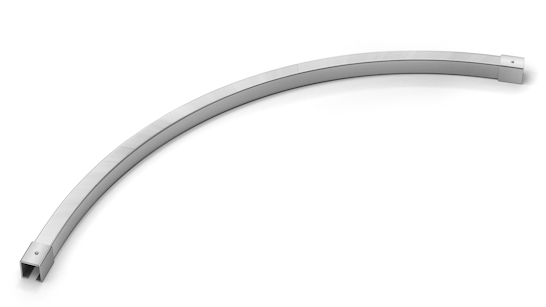
Radius Corner
By using a 90 degree radius corner you can go around obstructions or make shapes. The 24" radius corner quickly attaches and detaches as needed. Use 1 radius for an L-Shape design, 2 radius corners for a C-Shape and 4 radius corners for a complete enclosure.

Engineering Breakdown: Track System Design for Greenhouse Environments
Once growers determine where partitions are needed, the next step is selecting a track system designed for greenhouse conditions. Track materials, load capacity, mounting style, and support spacing all influence how smoothly the curtain system operates.

• Track materials must withstand humidity and constant greenhouse exposure. Galvanized steel provides strong corrosion resistance, while stainless steel works well in high-moisture environments.
• Curtain weight affects how much load the track must support. Proper trolley distribution helps prevent track deflection and ensures smooth curtain movement.
• Track systems can be installed in several ways depending on greenhouse construction. Common setups include ceiling-mounted tracks, threaded rod suspended systems, and wall-mounted installations.
• Correct support spacing helps maintain track stability across long greenhouse spans. It also keeps trolley movement smooth and curtain panels properly aligned.
Well-designed curtain track systems combine the right materials, load support, and mounting method. These engineering factors ensure reliable curtain movement and long-term performance in greenhouse environments.
Types of Curtain Track Mounts
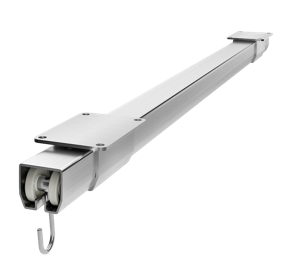
Ceiling Mount Curtain Track
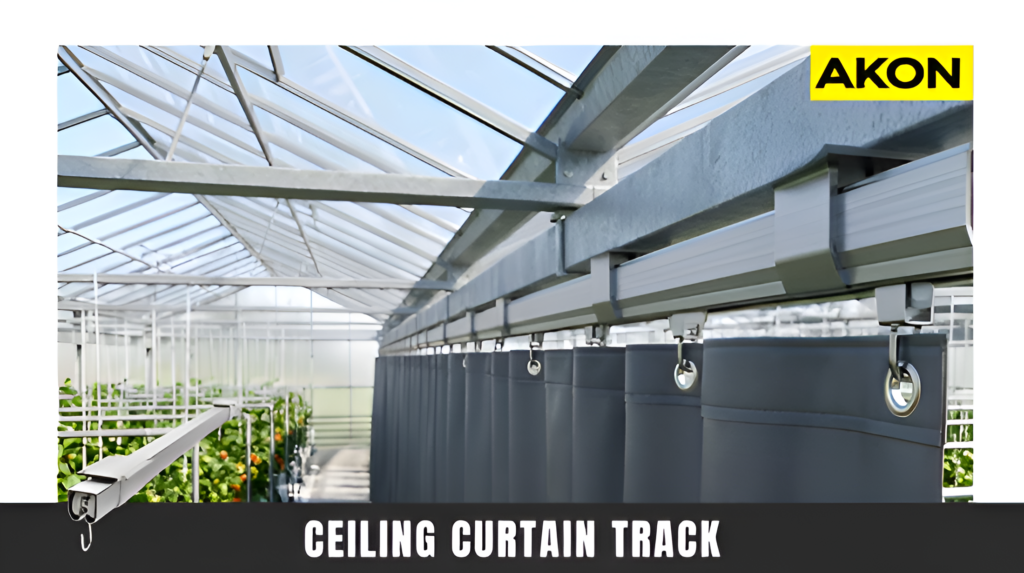
Choose this mounting style if you want your industrial curtain track to mount to the ceiling with only a few inches of open gap.
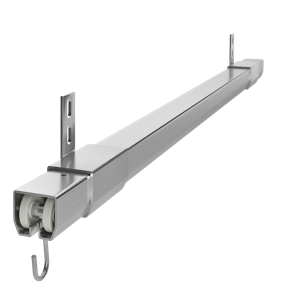
Wall Mount Curtain Track
This curtain track mount is designed for mounting the track next to a vertical wall or stud. This can be parallel to the wall, or perpendicular.
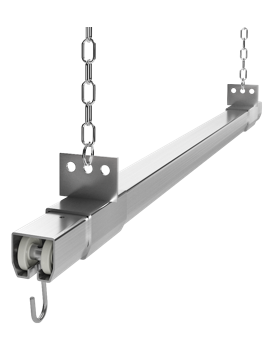
Chain or Cable Curtain Track
Like the threaded rod, a chain supported curtain track is also good for spanning large distances. Both chain or cable can be used to hold up the track.
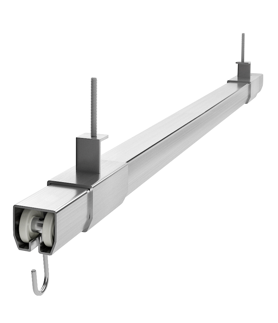
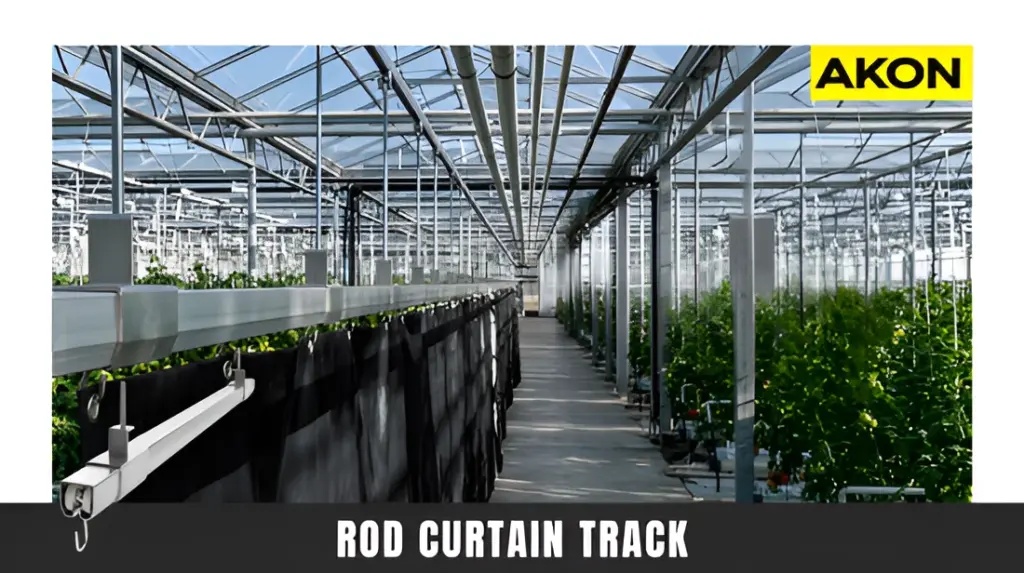
Threaded Rod Curtain Track
If the distance between the anchor points above is higher than where you want the curtain track, then a threaded rod mount might work well. Steel rods support the track and span the distance between the track and the ceiling.
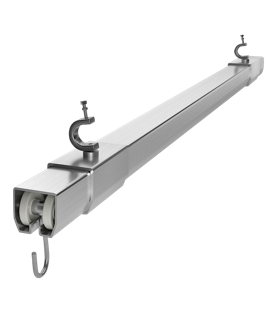
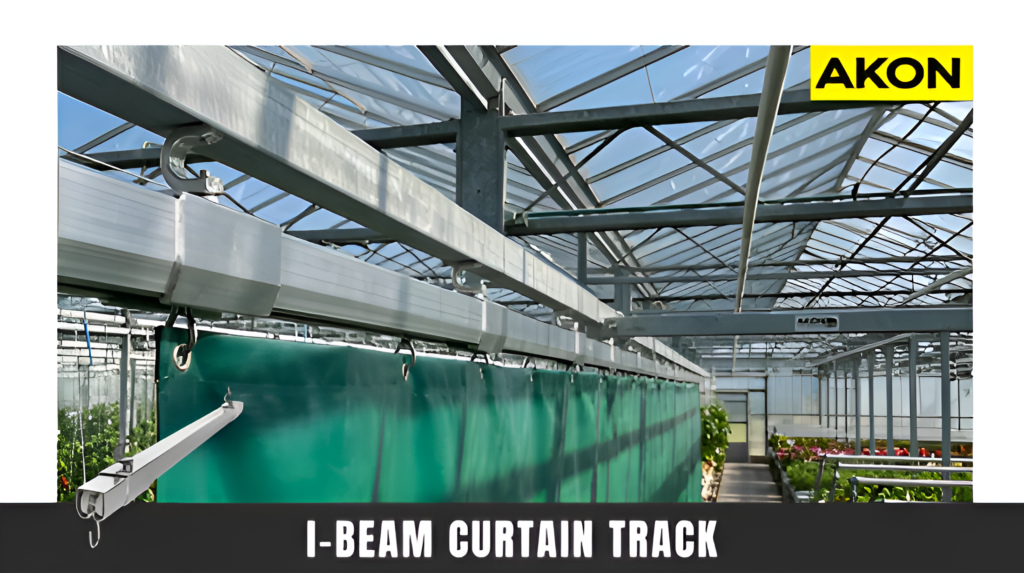
I-Beam Curtain Track
When connecting to a truss, I-Beam or any other horizontal steel support this style of mount works best. Once connected, you simply tighten down the set screw.
Track Systems Commonly Used for Greenhouse Thermal Curtain Installations
Once the engineering requirements are clear, the next step is selecting a curtain track system that matches the greenhouse structure. The right configuration depends on how the partition will be mounted and how the curtain needs to move within the growing space.

A ceiling curtain track attaches directly to structural beams or supports above the growing area. This setup keeps the track aligned with the greenhouse structure while allowing curtain panels to slide smoothly along overhead rails.
• Direct mounting to greenhouse ceiling beams
• Straight curtain runs across greenhouse bays
• Overhead thermal partition installations

An I-beam curtain track mounts directly to an existing steel beam. Roller carriers move along the beam-mounted rail, making this system well suited for greenhouses that already use steel structural framing.
• Greenhouses with exposed structural I-beams
• Heavier curtain partitions
• Installations requiring strong beam support

A rod curtain track uses threaded rods to suspend the track below the ceiling structure. This allows installers to position the curtain track at the proper height so partitions align correctly with greenhouse bays or growing zones.
• Tall greenhouse structures
• Installations below roof trusses
• Partitions requiring adjustable track height
Greenhouse Curtain Track System Selection Guide
Once the appropriate track configurations are identified, the next step is matching them to the specific conditions inside the greenhouse. Factors such as structure size, ceiling height, and curtain weight often influence which track system works best. The table below provides a quick reference to help select a suitable curtain track setup.
| Greenhouse Condition | Recommended Track System | Why |
|---|---|---|
| Large commercial greenhouse | I-Beam Curtain Track | Attaches directly to steel beams and supports larger curtain partitions |
| Standard greenhouse bays | Ceiling Curtain Track | Mounts easily to overhead beams and works well for typical greenhouse layouts |
| High ceiling greenhouse | Rod Curtain Track | Suspended installation allows the track to sit at the correct operating height |
| Lightweight curtain partitions | Chain Curtain Track | Flexible suspension system suited for lighter curtain setups |
This simple guide helps greenhouse operators quickly match their facility layout with a curtain track system that fits the structure and installation requirements.
Frequently Asked Questions
FAQs About Ceiling Track Rails for Greenhouse Thermal Partitions
Q1. What are ceiling track rails for greenhouse thermal partitions?
Ceiling track rails are overhead rails that allow thermal curtain panels to slide across greenhouse sections. A Ceiling Curtain Track is commonly used for this type of installation because it mounts directly to greenhouse ceiling beams.
Q2. How much weight can greenhouse curtain track systems support?
Weight capacity depends on the track design and support spacing. Heavier curtain partitions are often installed using an I-Beam Curtain Track, which is designed to support larger curtain loads.
Q3. Are galvanized curtain tracks corrosion resistant in greenhouses?
Yes. Galvanized curtain tracks are designed to resist corrosion in humid greenhouse environments. Many Ceiling Curtain Track and I-Beam Curtain Track systems use galvanized steel for long-term durability.
Q4. How far apart should curtain track supports be installed?
Support spacing depends on curtain weight and track configuration. Systems such as a Rod Curtain Track or Ceiling Curtain Track are typically supported at regular intervals to maintain stability and alignment.
Q5. What type of curtain track works best for tall greenhouses?
A Rod Curtain Track is commonly used in tall greenhouse structures. The threaded rod suspension allows the track to hang below roof trusses so the curtain partition aligns properly with the growing area.
Q6. Can greenhouse curtain tracks be installed on existing structures?
Yes. Retrofit greenhouse installations often use a Ceiling Curtain Track or I-Beam Curtain Track because these systems can attach directly to existing structural beams.
Q7. What curtain track system works best for large greenhouse bays?
Large greenhouse bays often use an I-Beam Curtain Track. This beam-mounted system provides strong structural support for wider curtain partitions.
Q8. Do greenhouse curtain track systems require regular maintenance?
Most systems require minimal maintenance. Occasional inspection of rollers and mounting hardware helps ensure smooth operation of systems like Ceiling Curtain Track or Rod Curtain Track installations.
Q9. Can curtain partitions be expanded or repositioned later?
Yes. Sliding curtain systems installed on tracks such as a Ceiling Curtain Track allow greenhouse operators to reposition partitions as greenhouse layouts change.
Q10. What curtain materials are typically used with greenhouse thermal partition systems?
Greenhouse thermal curtains are commonly used with track systems to help manage growing environments. These curtain panels are compatible with tracks such as Ceiling Curtain Track and Rod Curtain Track installations.
Q11. Can curtain track systems be automated in greenhouses?
Yes. Curtain partitions can be connected to automated systems that open or close curtains based on environmental conditions. These automation systems can work with track configurations such as Ceiling Curtain Track installations.
Q12. What curtain track system works best for lightweight greenhouse partitions?
For lighter curtain installations, a Chain Curtain Track can provide a flexible suspension option. This type of system works well when curtain weight is lower and the installation requires adaptable mounting.
Q13. Are curtain track systems suitable for greenhouse retrofit projects?
Yes. Many greenhouse upgrades install curtain partitions using Ceiling Curtain Track or Wall Curtain Track systems because they can integrate with existing greenhouse structures.
Q14. Can curtain tracks run across multiple greenhouse bays?
Yes. Track systems such as I-Beam Curtain Track or Ceiling Curtain Track can be installed across multiple bays depending on the structural layout of the greenhouse.
Q15. What is the difference between ceiling curtain track and rod curtain track systems?
A Ceiling Curtain Track mounts directly to overhead beams, while a Rod Curtain Track suspends the track below the structure using threaded rods. Both options allow curtain partitions to slide smoothly across greenhouse sections.
Q16. When should a wall curtain track be used in a greenhouse?
A Wall Curtain Track is typically used when curtain partitions need to run along the perimeter of the greenhouse structure rather than across ceiling beams.
Q17. Can curtain tracks improve greenhouse workflow?
Yes. Sliding curtain partitions installed on systems such as Ceiling Curtain Track or I-Beam Curtain Track allow greenhouse operators to adjust growing zones and manage production areas more efficiently.
Q18. How long do industrial curtain track systems last in greenhouse environments?
Durability depends on installation and materials. Galvanized Ceiling Curtain Track and I-Beam Curtain Track systems are designed for long-term use in demanding environments.
Q19. Do greenhouse curtain tracks require special installation tools?
Most systems can be installed using standard mounting hardware. Installation requirements vary depending on whether the system uses Ceiling Curtain Track, Rod Curtain Track, or Wall Curtain Track configurations.
Q20. How do growers choose the best curtain track system for their greenhouse?
Growers typically choose based on greenhouse height, structural supports, and curtain size. Systems such as Ceiling Curtain Track, I-Beam Curtain Track, and Rod Curtain Track are selected depending on the installation conditions.
Choosing the Right Ceiling Track System for Greenhouse Climate Control
Thermal curtain partitions help greenhouse operators manage growing zones more efficiently while maintaining stable environmental conditions. Choosing a ceiling track system that fits the greenhouse structure, curtain weight, and installation layout helps ensure reliable curtain movement and consistent climate control throughout the growing space.
Greenhouse Climate Control Curtain Track

Photo Gallery