
Air/Power Hose Trolley Track
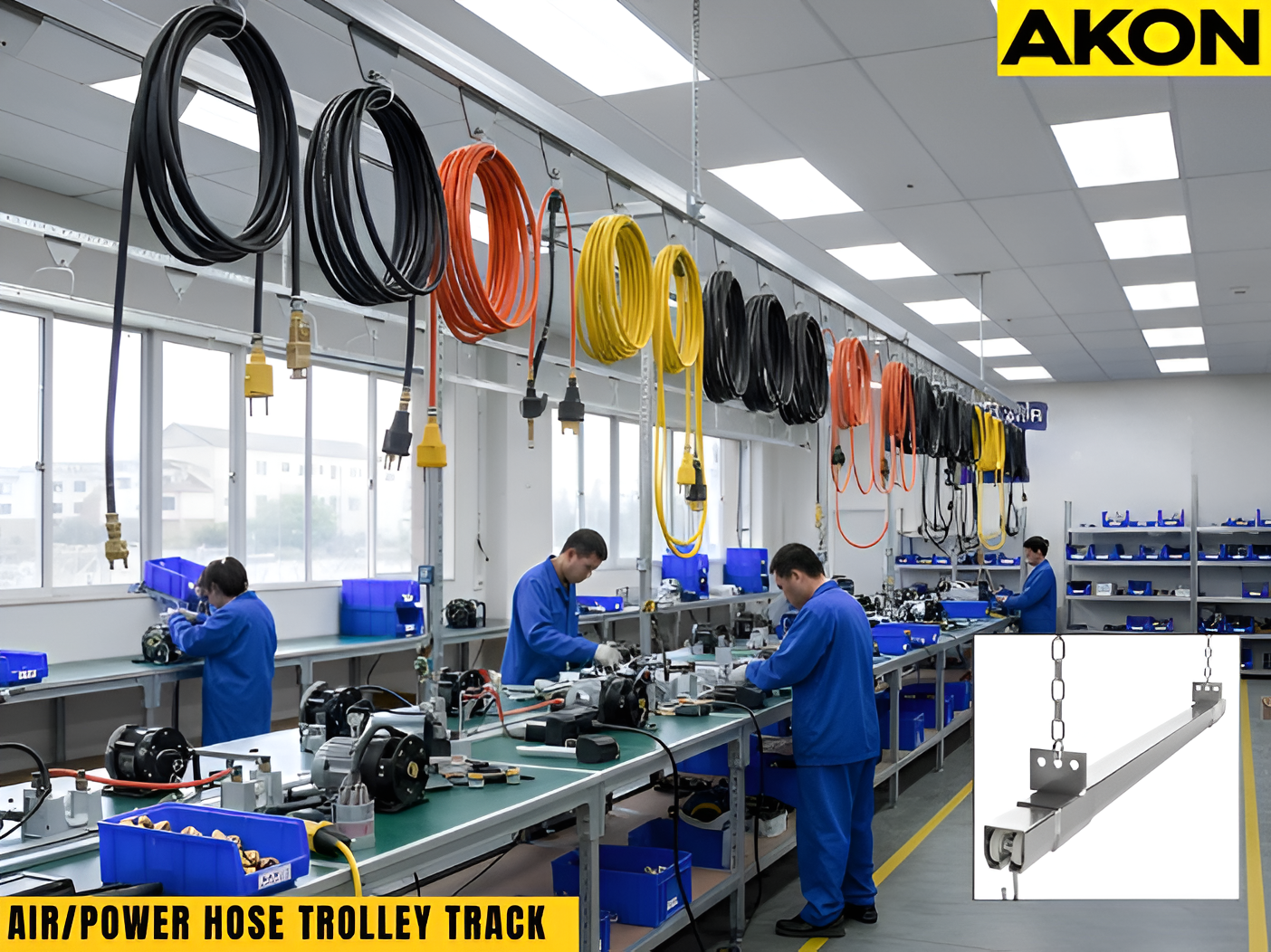
An Air/Power Hose Trolley Track is an overhead rail system that supports sliding hose drops along a ceiling-mounted track, allowing air and power lines to follow technicians across a workspace. Designed for industrial shops, manufacturing floors, and service bays, it reduces floor clutter and improves workflow, safety, and hose management.
The Real Operational Challenge of Floor-Laid Hoses
In many industrial settings, hoses and power lines are positioned wherever they are needed and adjusted as tasks change throughout the day. Over time, this reactive setup begins to create friction across the workspace. What seems convenient at first can slowly interfere with daily operations. The impact is often gradual but noticeable in both productivity and equipment performance.
Workflow Disruptions in Active Work Zones
When hoses stretch across the floor, they compete for space in already busy areas. Technicians must step over lines, shift equipment, or pause to reposition cables before continuing their work.
In multi-station layouts, limited reach often forces repeated adjustments instead of smooth movement between tasks. These small interruptions accumulate throughout the day and reduce overall operational efficiency.
Safety Concerns and Accelerated Equipment Wear
Floor-laid hoses also introduce avoidable safety concerns in high-traffic environments. As walk paths intersect with utility lines, the likelihood of slips and trips increases during routine activity.
At the same time, dragging hoses across concrete or metal surfaces creates ongoing abrasion and structural stress. Over time, this results in weakened outer layers, tighter bends, and more frequent replacement costs.
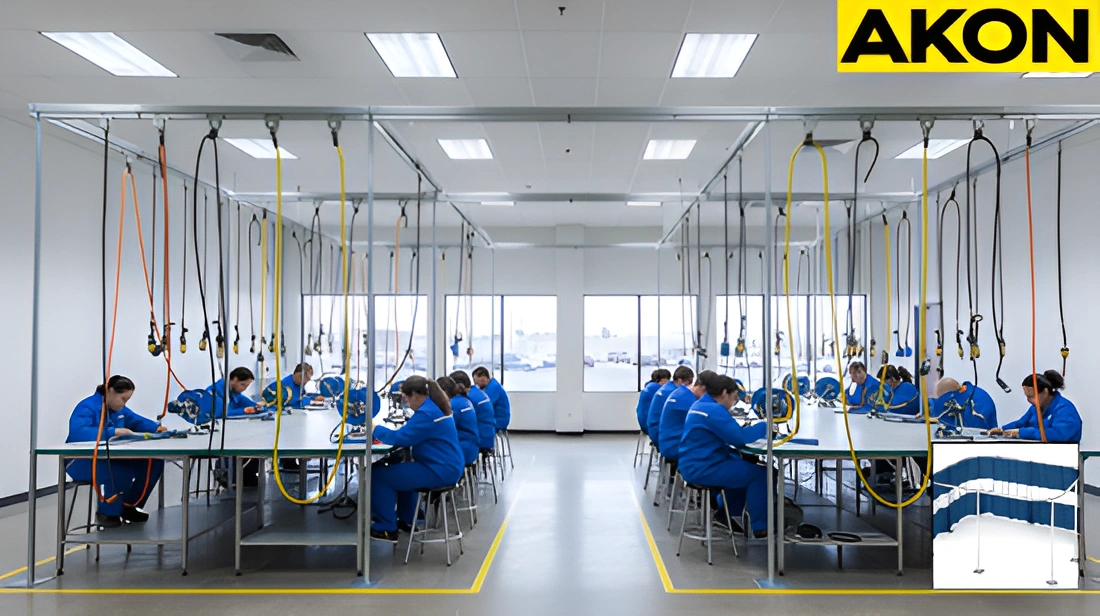
Make Shapes
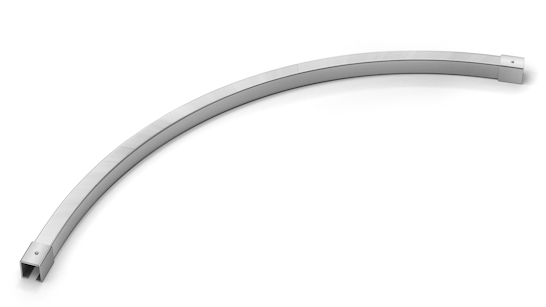
Radius Corner
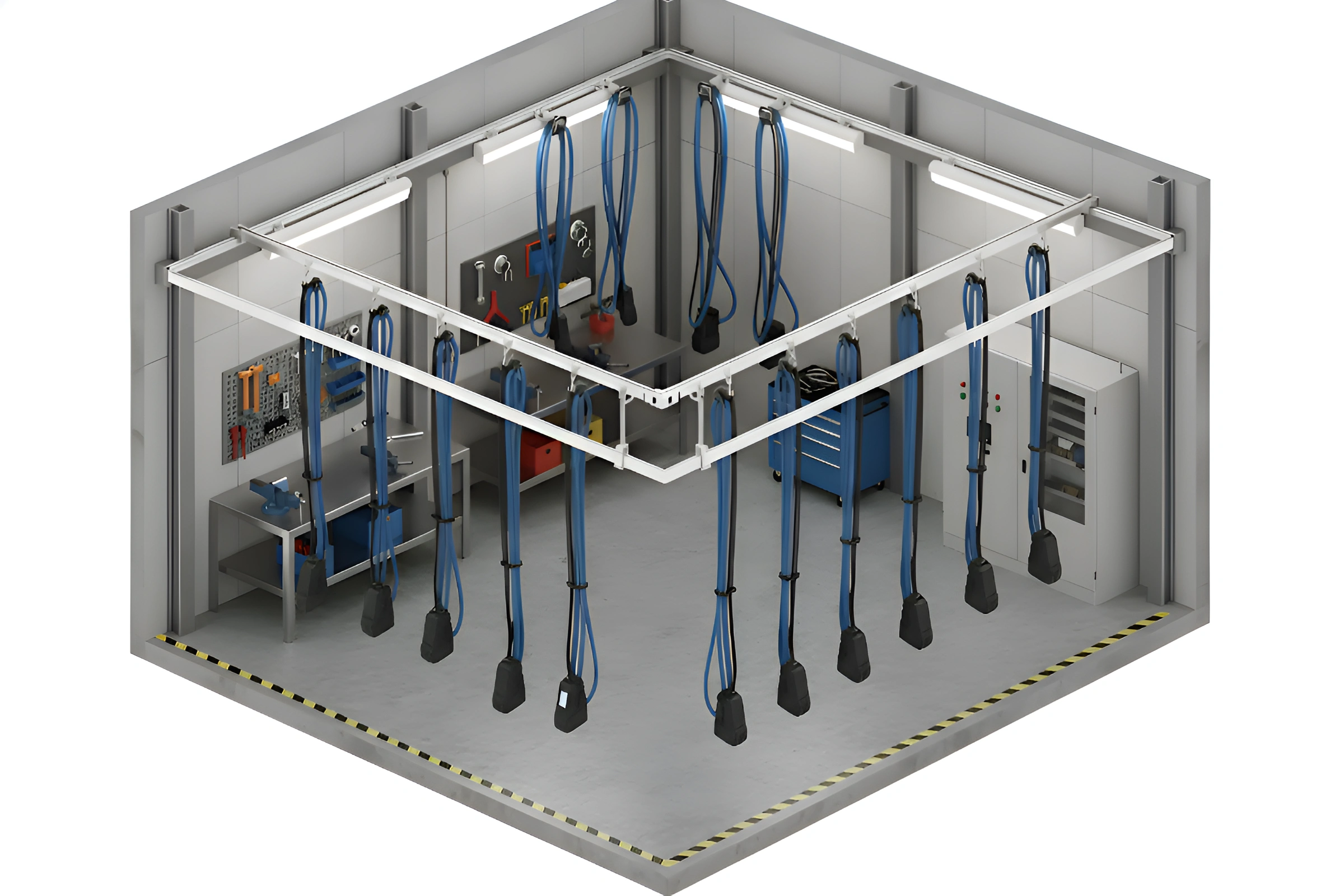
By using a 90 degree radius corner you can go around obstructions or make shapes. The 24" radius corner quickly attaches and detaches as needed. Use 1 radius for an L-Shape design, 2 radius corners for a C-Shape and 4 radius corners for a complete enclosure.

Key Benefits of Sliding Hose Drops Along a Ceiling
Once utility routing moves overhead, the workspace shifts from reactive adjustments to controlled movement. Sliding hose drops along a ceiling introduce consistency into environments that depend on speed, coordination, and repeatability. Instead of adapting to limitations, teams operate within a more structured system.
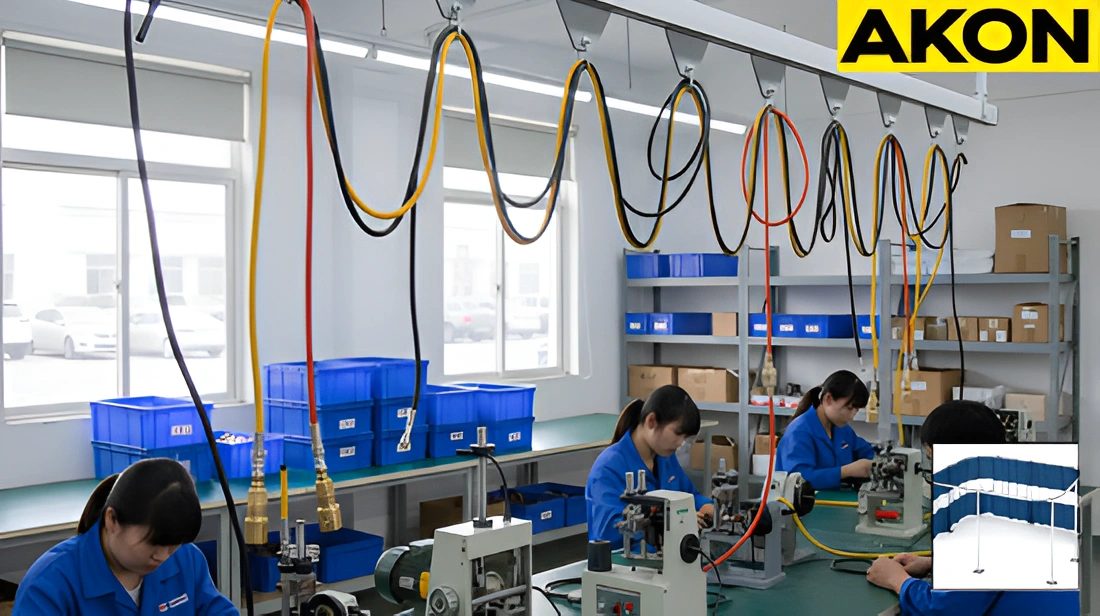
• Supports Operational Scaling. Overhead routing allows facilities to expand workstations without reconfiguring ground-level utilities. As production needs increase, the system adapts more easily to new layouts. This flexibility supports long-term growth without major infrastructure disruption.
• Enhances Layout Consistency. Defined ceiling paths help standardize how utilities move through the space. This improves coordination between teams and simplifies facility planning. Consistency in routing leads to smoother day-to-day execution.
• Reinforces Professional Standards. Organized overhead systems reflect intentional facility management. A structured workspace supports accountability and operational discipline. In customer-facing environments, it also strengthens overall professional presentation.
Defined and Controlled Work Zones
Ceiling-mounted routing creates clearer spatial boundaries and more predictable movement patterns.
Seamless Station-to-Station Movement
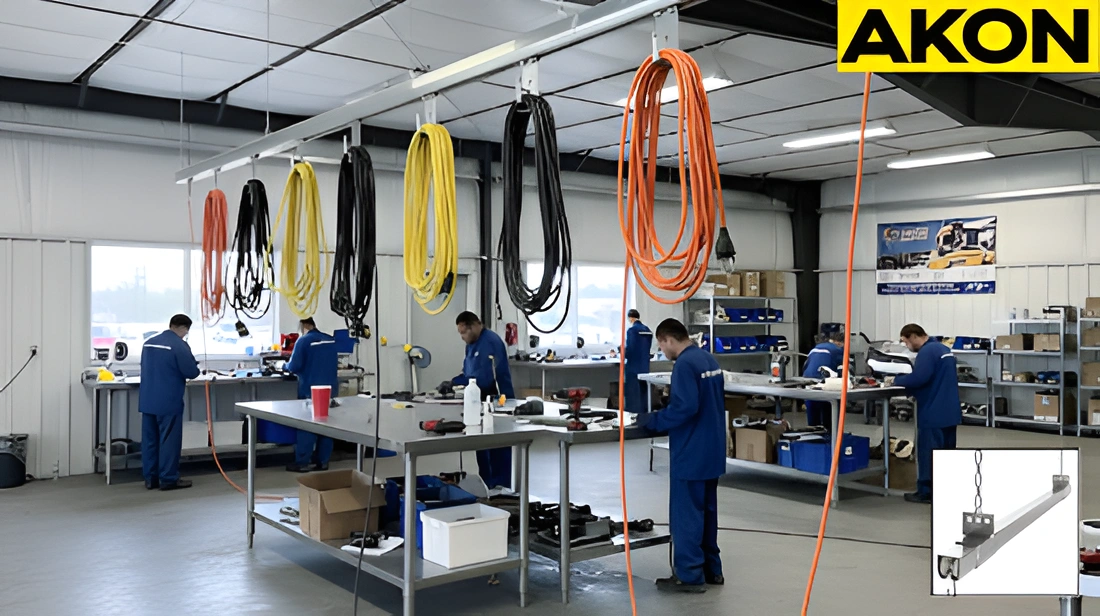
The hose drop glides along the track, supporting continuous motion across active work areas.
Improved Equipment Longevity
Suspended lines maintain their shape and flexibility under daily use.
Common Applications and Track Options
Once the advantages of sliding hose drops along a ceiling are clear, the next step is determining how the system fits within your specific environment. Different facilities require different track configurations based on ceiling structure, span length, load demands, and daily usage patterns. Choosing the right setup ensures dependable performance and smooth integration into your layout.
| Application | Recommended Track Type | Why It Works |
|---|---|---|
| Automotive Service Bays | Ceiling-Mounted Trolley Track | Supports continuous technician movement across multiple vehicle positions |
| Manufacturing Floors | Enclosed Overhead Track | Protects internal components while allowing extended horizontal travel |
| Wash Bays | Corrosion-Resistant Track System | Designed for moisture exposure and routine cleaning environments |
| Fabrication Shops | Heavy-Duty Track | Handles higher load requirements in active production settings |
| Facilities with Limited Ceiling Access | Free-Standing Track System | Provides sliding functionality without direct ceiling attachment |
Selecting the appropriate configuration depends on your structural layout, operational intensity, and long-term expansion plans. Open-span buildings often favor ceiling-mounted systems, while retrofit or height-restricted facilities benefit from free-standing options. When properly matched to the space, the system integrates seamlessly and supports consistent performance across daily operations.
Types of Curtain Track Mounts
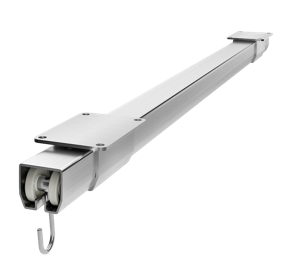
Ceiling Mount Curtain Track
Choose this mounting style if you want your industrial curtain track to mount to the ceiling with only a few inches of open gap.
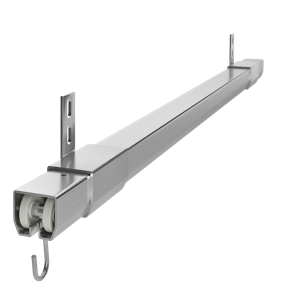
Wall Mount Curtain Track
This curtain track mount is designed for mounting the track next to a vertical wall or stud. This can be parallel to the wall, or perpendicular.
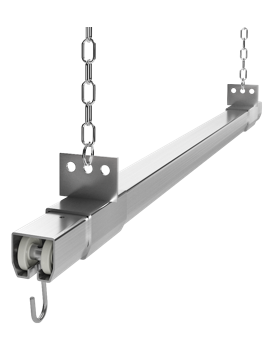
Chain or Cable Curtain Track
Like the threaded rod, a chain supported curtain track is also good for spanning large distances. Both chain or cable can be used to hold up the track.
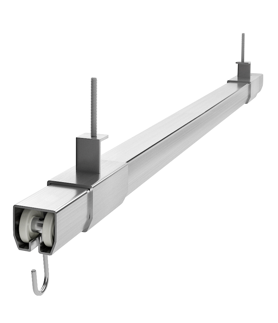
Threaded Rod Curtain Track
If the distance between the anchor points above is higher than where you want the curtain track, then a threaded rod mount might work well. Steel rods support the track and span the distance between the track and the ceiling.
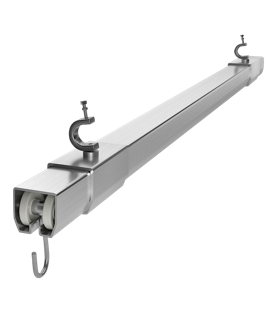
I-Beam Curtain Track
When connecting to a truss, I-Beam or any other horizontal steel support this style of mount works best. Once connected, you simply tighten down the set screw.
Recommended Overhead Track Configurations
After knowing application requirements and structural considerations, the next step is selecting a system built specifically for sliding overhead routing. Each configuration below supports ceiling-based hose and power line travel while aligning with different mounting conditions and operational demands.
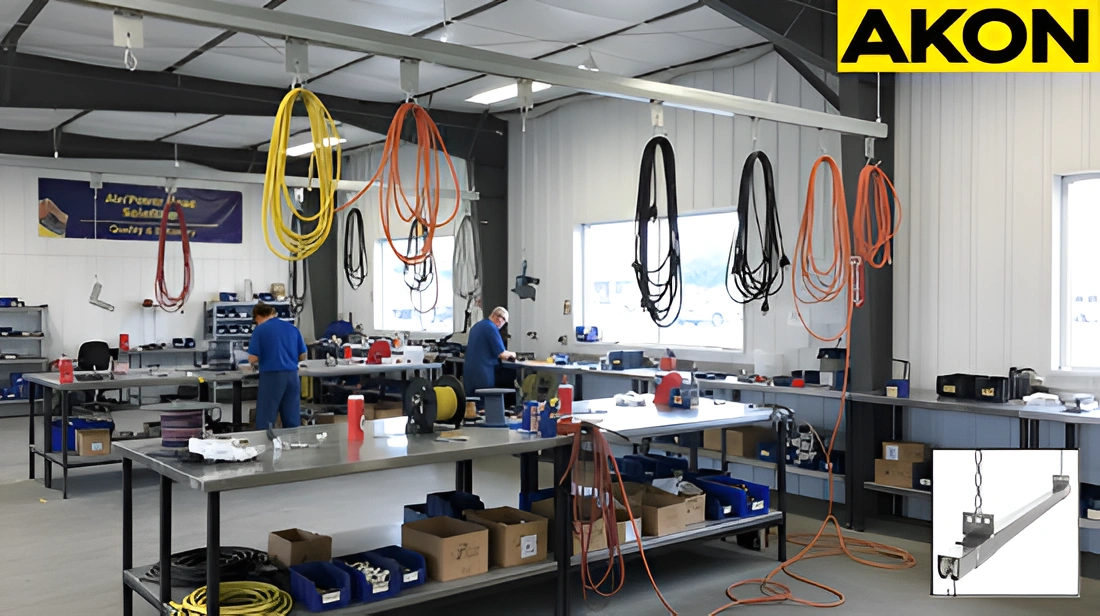
Ceiling Trolley
The Ceiling Trolley is designed for permanent overhead installations where structural support is readily available. It establishes a fixed ceiling path for sliding hose drops across defined work zones.
• Enclosed galvanized steel rail for stable trolley travel
• Supports long, uninterrupted ceiling spans
• Compatible with multi-bay and production layouts
• Designed for consistent overhead alignment
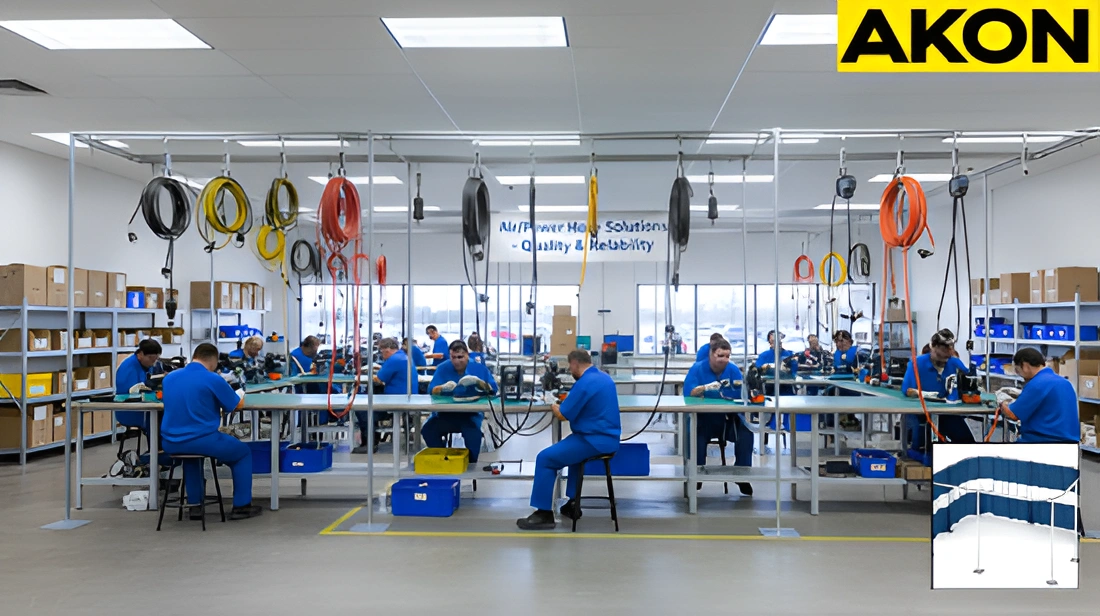
Free Standing Trolley
The Free Standing Trolley offers sliding functionality without requiring ceiling attachment. It creates an independent overhead path where structural mounting is limited.
• Self-supporting frame for retrofit environments
• Suitable for leased or height-restricted facilities
• Adaptable layout configuration
• Designed for consistent sliding movement along framed spans

Overhead Electrical Cord Trolley
The Overhead Electrical Cord Trolley is built to manage powered lines along a sliding ceiling track. It provides structured routing for electrical cords across active work areas.
• Ideal for extension cords and powered equipment feeds
• Modular clamp-together sections for flexible routing
• Heavy-duty steel construction for industrial use
• Integrates cleanly across multi-station environments
Frequently Asked Questions
FAQs About Air/Power Hose Trolley Track
How do sliding hose drops along a ceiling improve workflow?
Sliding hose drops allow air and power lines to travel with the technician instead of being manually repositioned. An Air/Power Hose Trolley Track creates consistent horizontal movement across stations. This improves coordination in multi-bay environments.
Can the system handle both air hoses and power cords?
Yes. The Ceiling Trolley and Overhead Electrical Cord Trolley are designed to support both air hoses and electrical cables when properly configured. Load capacity and carrier spacing should match the utility type.
What is the best Air/Power Hose Trolley Track for automotive service bays?
For permanent installations with beam access, the Ceiling Trolley is typically the best fit. It supports long-span travel across multiple vehicle positions. Facilities needing powered tool routing may pair it with an Overhead Electrical Cord Trolley.
When should I choose a Free Standing Trolley instead of a Ceiling Trolley?
A Free Standing Trolley is ideal when ceiling attachment is not possible. It provides sliding overhead routing without relying on structural beams. This makes it suitable for retrofit or leased facilities.
What ceiling structure is required for installation?
Ceiling-mounted systems require structural beams or joists capable of supporting the track load. Span length and utility weight determine mounting intervals. A structural review ensures proper alignment.
Can the track length be customized?
Yes. An Air/Power Hose Trolley Track can be configured using modular sections to match facility dimensions. Extended runs or segmented layouts are both possible. Custom spans are common in manufacturing floors.
How does an overhead trolley system compare to hose reels?
Hose reels limit movement to a fixed pull radius. A Ceiling Trolley allows horizontal travel across a larger workspace. This makes trolley systems better suited for multi-station operations.
Can multiple hose drops operate on one track?
Yes. Multiple carriers can be installed along a single rail. This supports coordinated routing across several work zones. Proper spacing ensures balanced distribution.
Is the system suitable for wash bays?
Yes. Corrosion-resistant configurations are available for moisture-exposed environments. Material selection should align with cleaning frequency and exposure levels. The correct specification ensures long-term durability.
What industries commonly use an Air/Power Hose Trolley Track?
Automotive shops, fabrication facilities, manufacturing plants, and maintenance bays commonly use these systems. Any operation requiring organized overhead routing can benefit. Usage depends on workflow complexity.
Can the Overhead Electrical Cord Trolley support powered equipment?
Yes. The Overhead Electrical Cord Trolley is designed specifically for routing extension cords and powered lines. It integrates with ceiling-mounted tracks for controlled movement. This is ideal for tool-intensive workstations.
What load capacity should I plan for?
Load requirements depend on hose diameter, cable weight, and span length. Heavy-duty track configurations are available for higher capacity needs. Matching specifications to application prevents overloading.
Is professional installation required?
While some facilities handle installation internally, structural alignment is critical. Proper mounting ensures smooth trolley travel. Many operations consult suppliers for layout planning.
Can the layout be modified later?
Yes. Modular sections allow expansion or reconfiguration as needs change. Additional track segments can be integrated into an existing Air/Power Hose Trolley Track system. This supports long-term flexibility.
Does the system interfere with lighting or overhead equipment?
Track routing is planned around existing ceiling elements. Careful layout design prevents conflicts with lighting or ventilation systems. Pre-installation assessment ensures proper spacing.
How long does a Ceiling Trolley system typically last?
Industrial-grade components are built for extended service life. Lifespan depends on usage intensity and environmental conditions. Proper installation contributes to long-term reliability.
Can I combine air hoses and power cords on the same track?
Yes, when load capacity allows. A properly configured Air/Power Hose Trolley Track can support mixed utilities. Carrier selection ensures stable routing.
Is a Free Standing Trolley stable enough for industrial environments?
Yes. Free Standing Trolley systems are engineered with structural frames designed for consistent sliding movement. They provide dependable overhead routing when ceiling mounting is restricted.
What is the best configuration for manufacturing floors?
Large-span production areas often benefit from a Ceiling Trolley system for uninterrupted travel. For powered tool stations, pairing with an Overhead Electrical Cord Trolley enhances utility routing. Configuration depends on span and load requirements.
How do I choose the right overhead trolley system for my facility?
Start by evaluating structural support, span length, utility type, and daily usage intensity. Matching these factors to either a Ceiling Trolley, Overhead Electrical Cord Trolley, or Free Standing Trolley simplifies selection. Consultation helps confirm the best fit.
Photo Gallery
Improve Utility Management with Overhead Sliding Solutions
An Air/Power Hose Trolley Track guides sliding hose drops along a structured ceiling path for more controlled utility routing. This supports smoother technician movement and improved layout organization. With options like the Ceiling Trolley, Overhead Electrical Cord Trolley, and Free Standing Trolley, systems can match your facility needs. Consult a supplier to determine the right configuration for your space.
Multi-Drop Utility Routing