
Conveyor Trolley Track for Light Loads
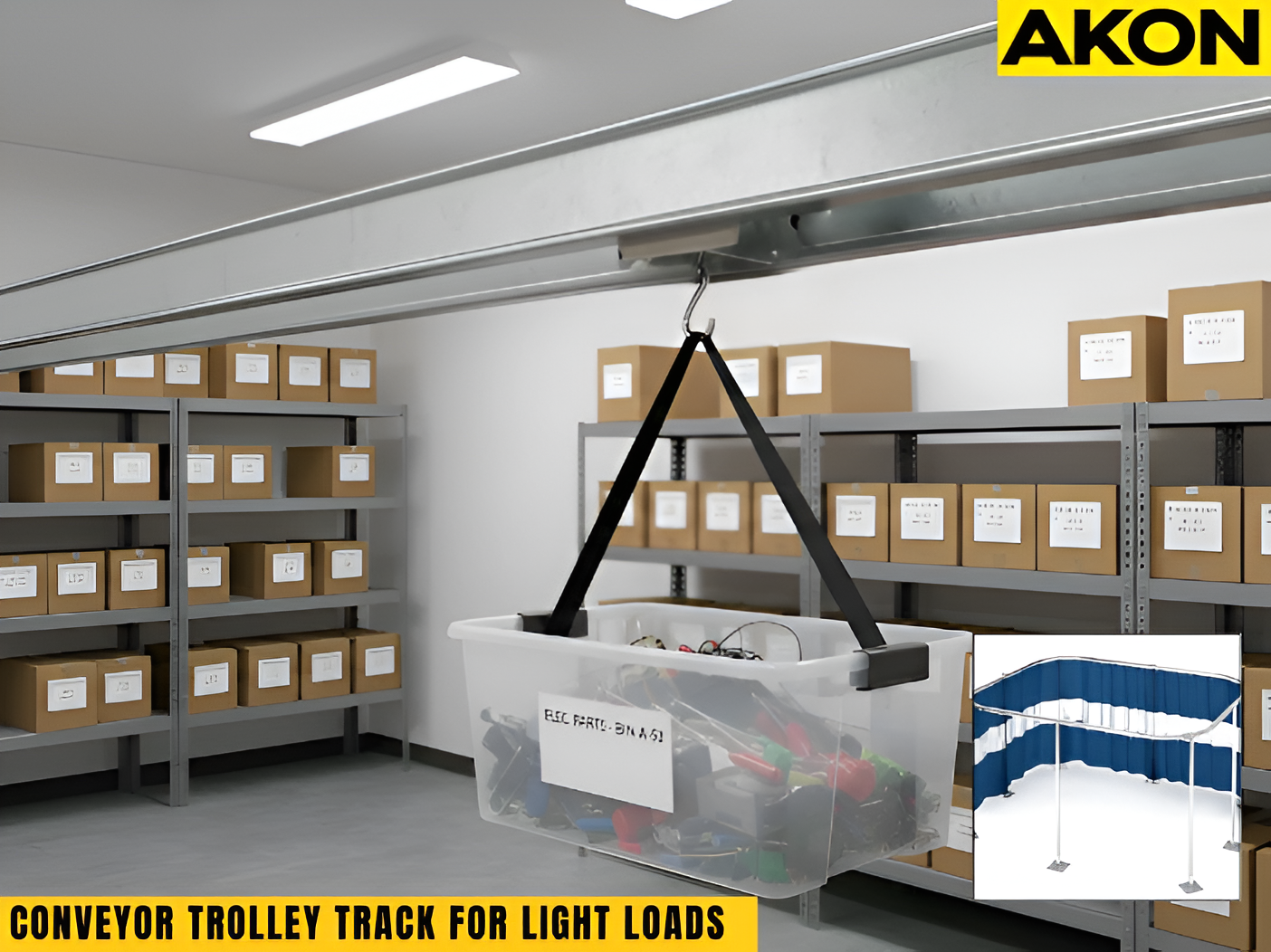
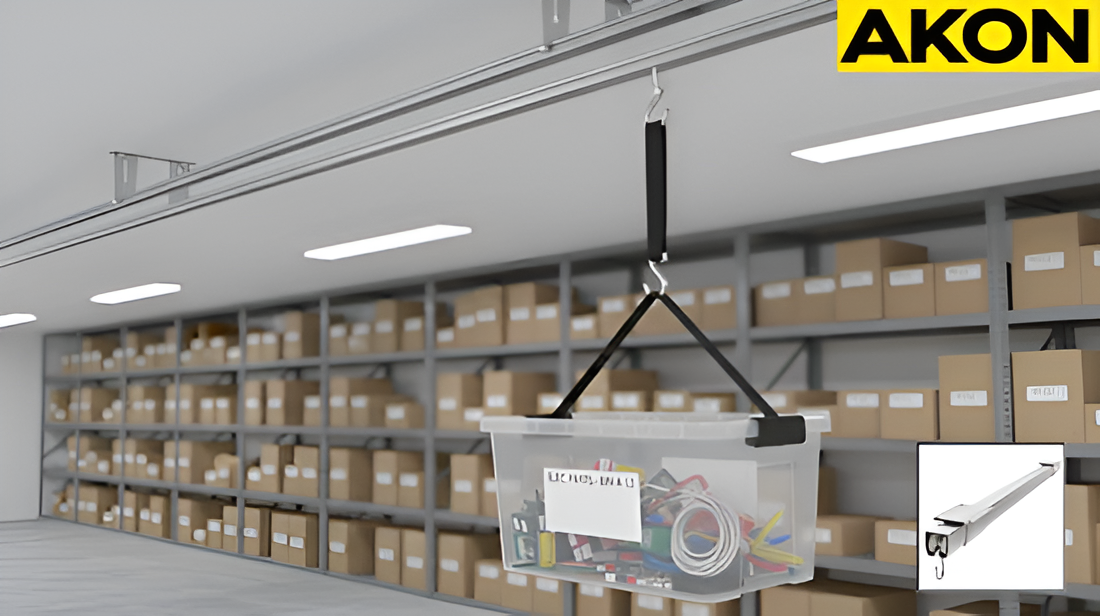
A Conveyor Trolley Track for Light Loads is an overhead enclosed galvanized steel rail system used to move lightweight materials along a fixed path. Light loads typically include small parts, tools, or packaged items. The system operates with manual push trolleys mounted to ceiling supports. This guide explains how it works and how to select the right configuration.
When a Light-Duty Conveyor Trolley Track Is the Right Fit
Determining whether it matches your workflow is the next. A light-duty conveyor trolley track is designed for specific operating conditions. Reviewing the criteria below can help you quickly assess whether this configuration aligns with your material handling requirements.
When This System Makes Practical Sense
This system is a strong fit when you are moving small components, cartons, tools, or lightweight assemblies between stations. It works well in environments where controlled overhead transfer is preferred over floor-based routing.
Operations that do not require powered automation often benefit from this simpler configuration. It is also appropriate when the facility layout supports overhead installation and when movement frequency remains within a light-duty operating range.

When This System Makes Practical Sense
If your operation involves larger assemblies, higher weight thresholds, or continuous transport demands, a light-duty setup may not provide sufficient capacity. Powered conveyor systems are often better suited for automated workflows that require steady speed and minimal manual input.
Facilities lacking adequate structural support may require alternative solutions. In applications where load stress is consistently elevated, heavy-duty track systems are generally the more suitable option.
Make Shapes
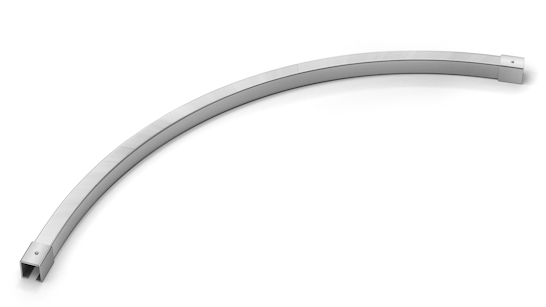
Radius Corner
By using a 90 degree radius corner you can go around obstructions or make shapes. The 24" radius corner quickly attaches and detaches as needed. Use 1 radius for an L-Shape design, 2 radius corners for a C-Shape and 4 radius corners for a complete enclosure.

Key Operational Benefits of Conveyor Trolley Track for Light Loads
If the system aligns with your workflow requirements, the next step is understanding how it improves daily operations. Once properly installed, a light-duty overhead trolley system delivers measurable performance advantages:
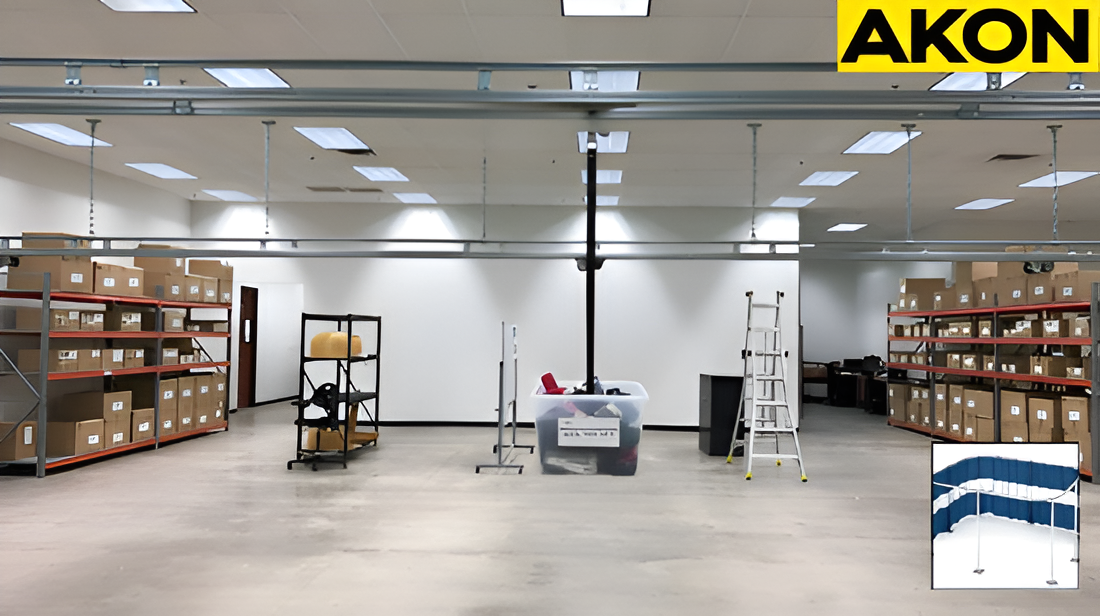
• Improved Process Visibility. Defined overhead routing makes movement patterns easier to monitor. Supervisors can quickly track where materials are within the workflow. This supports better coordination between stations.
• More Organized Work Zones. Separating transport paths from active work areas reduces cross-traffic and confusion. Teams can focus on task execution rather than navigating around moving materials. The result is a cleaner, more structured layout.
• Adaptable Workflow Adjustments. Track layouts can be modified as operational needs change. Additional sections or routing adjustments can be incorporated without major floor disruption. This makes future process changes easier to implement.
Clears Valuable Floor Space
Relocates material movement overhead to free up active production and staging areas.
Improves Transfer Control
Keeps items moving along a guided path to support steady and predictable workflow.
Reduces Physical Strain
Minimizes the need for manual carrying between stations.
Selecting the Right Configuration
After knowing the operational advantages, the next step is selecting the configuration that best fits your facility layout and structural conditions. While each option operates within light-duty ranges, the mounting method and intended environment differ.
| Feature | Ceiling Mounted Track | Free-Standing Track | Warehouse Pick-Line Track |
|---|---|---|---|
| Best For | Fixed overhead layouts | Facilities without ceiling support | Faster pick environments |
| Mounting | Ceiling or structural beam | Floor-supported frame system | Ceiling-mounted structure |
| Load Type | Light to moderate | Light to moderate | Light |
| Flexibility | Straight or curved routing | Modular frame layouts | Optimized for picking paths |
Ceiling mounted systems are typically selected when existing structural beams allow direct installation. Free-standing track systems are used when ceiling support is limited or unavailable. Warehouse pick-line configurations are structured to organize movement within designated picking zones.
Types of Curtain Track Mounts
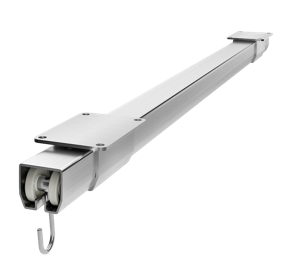
Ceiling Mount Curtain Track
Choose this mounting style if you want your industrial curtain track to mount to the ceiling with only a few inches of open gap.
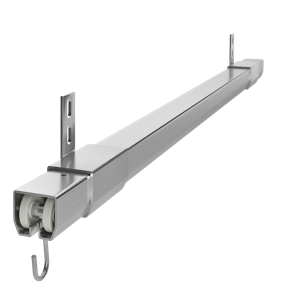
Wall Mount Curtain Track
This curtain track mount is designed for mounting the track next to a vertical wall or stud. This can be parallel to the wall, or perpendicular.
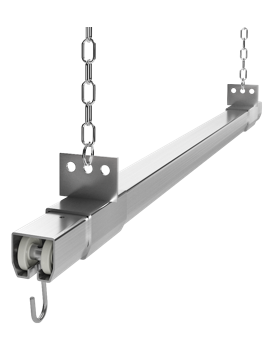
Chain or Cable Curtain Track
Like the threaded rod, a chain supported curtain track is also good for spanning large distances. Both chain or cable can be used to hold up the track.
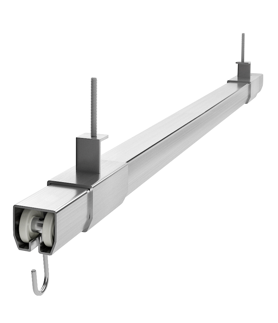
Threaded Rod Curtain Track
If the distance between the anchor points above is higher than where you want the curtain track, then a threaded rod mount might work well. Steel rods support the track and span the distance between the track and the ceiling.
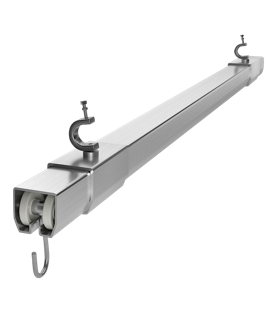
I-Beam Curtain Track
When connecting to a truss, I-Beam or any other horizontal steel support this style of mount works best. Once connected, you simply tighten down the set screw.
Recommended Product Options for Light-Load Applications
After knowing the configuration types, the next step is selecting the specific trolley system that integrates with your chosen layout.
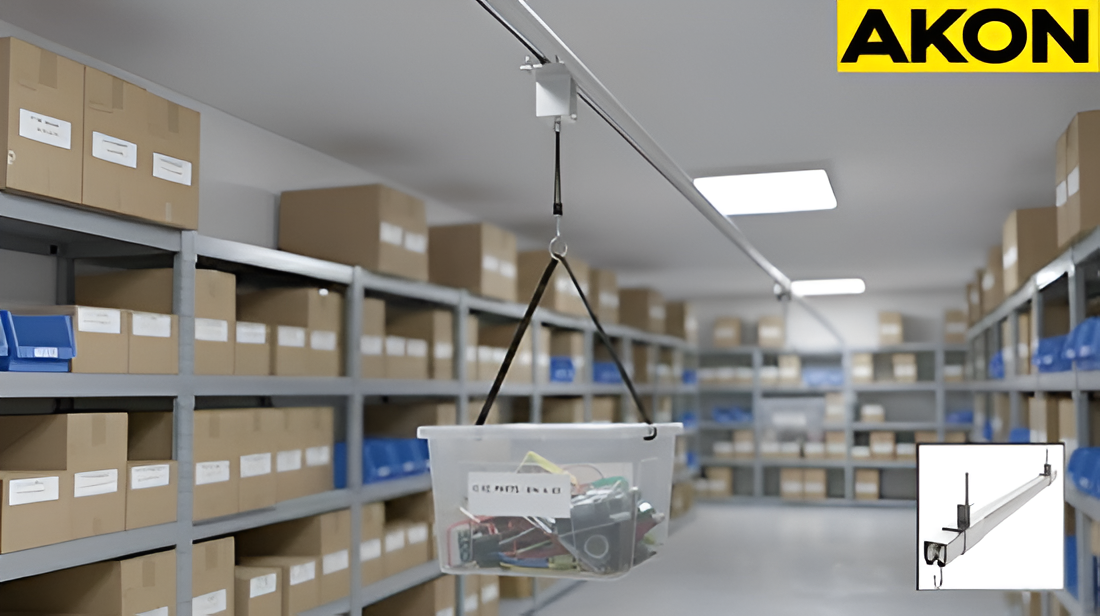
Ceiling Trolley
The Ceiling Trolley is designed for integration within enclosed overhead track systems mounted to structural supports. It provides guided movement within fixed ceiling-installed layouts.
• Engineered to operate inside enclosed galvanized track systems
• Designed for smooth rolling along defined routing paths
• Compatible with multiple ceiling-mounted configurations
• Built for consistent performance within light-duty track environments
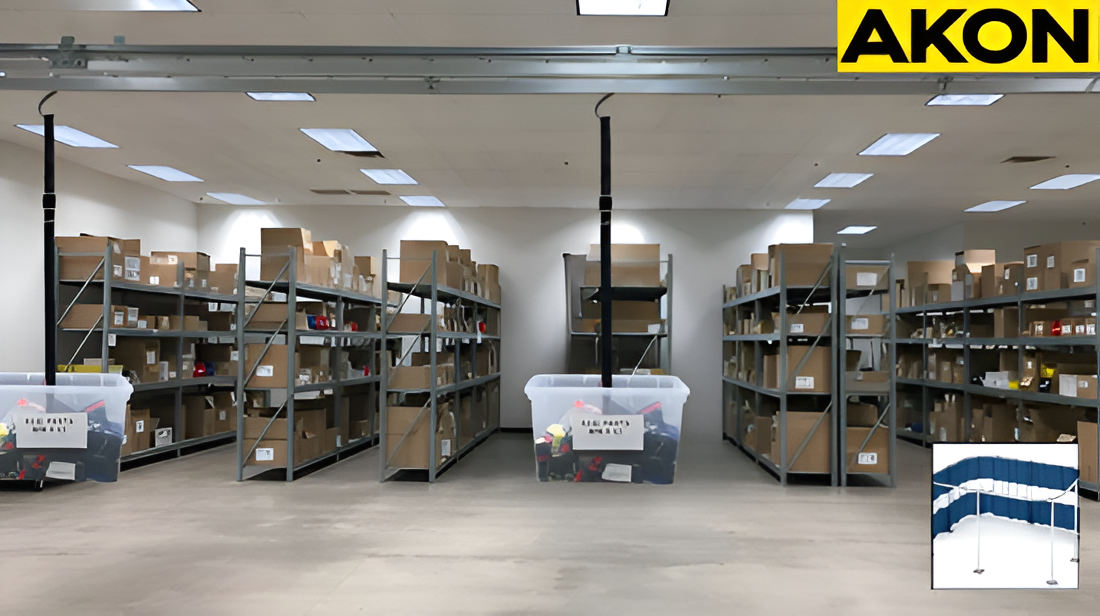
Free Standing Trolley
The Free Standing Trolley operates within independently supported track frames. It is suited for installations where building structure does not allow direct ceiling attachment.
• Functions within modular frame-supported track systems
• Does not rely on existing ceiling beams for stability
• Suitable for retrofits and flexible facility layouts
• Designed to integrate with structured overhead routing systems
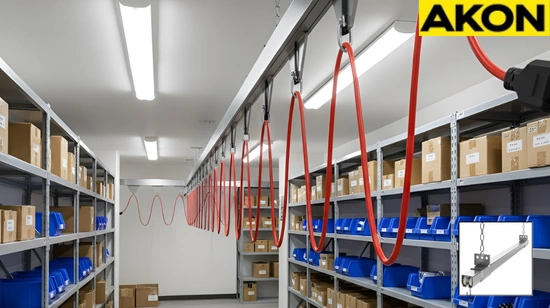
Overhead Electrical Cord Trolley
The Overhead Electrical Cord Trolley is designed to manage suspended power cords within overhead track systems. It supports organized electrical routing while maintaining guided movement across work zones.
• Carries extension cords within enclosed overhead track
• Reduces floor-level cable interference
• Designed for controlled overhead cord travel
• Compatible with light-duty enclosed rail systems
Frequently Asked Questions
FAQs About Conveyor Trolley Track for Light Loads
What qualifies as a light load for a conveyor trolley track system?
A light load refers to materials that fall within the rated capacity of light-duty trolley systems. Load limits depend on the specific Ceiling Trolley or Free Standing Trolley model selected. Always verify manufacturer load ratings before installation.
How much weight can each trolley support?
Weight capacity varies by trolley design, wheel material, and track rating. Each Ceiling Trolley and Free Standing Trolley configuration has a specified per-unit load limit. Refer to product specifications to confirm safe operating ranges.
Is a conveyor trolley track system manual or powered?
Standard light-duty systems are manual push configurations. Ceiling Trolley and Free Standing Trolley setups do not require motors for operation. Powered systems fall into separate heavy-duty or automated categories.
Can a conveyor trolley track system include curved sections?
Yes. Enclosed track systems can incorporate curved components when matched to the correct track profile. Curved routing must align with the selected trolley type and manufacturer specifications.
What material is the track made from?
Most enclosed trolley track systems are constructed from galvanized steel. This provides structural durability and corrosion resistance for industrial environments.
Does a Ceiling Trolley system require structural ceiling support?
Yes. Ceiling Trolley installations require adequate structural beams or framing to support suspended track loads. Structural capacity should always be verified prior to mounting.
Can I install a trolley system without ceiling attachment?
Yes. A Free Standing Trolley operates within an independent support frame system. This configuration is suitable when direct ceiling mounting is not feasible.
How far apart should mounting brackets be spaced?
Bracket spacing depends on track type and expected load distribution. Manufacturer guidelines for the selected trolley and track system should always be followed to maintain safety and performance.
What maintenance does a light-duty trolley track require?
Routine inspection of wheels, fasteners, and track alignment is recommended. Periodic cleaning of enclosed track channels helps maintain smooth trolley travel.
What is the difference between light-duty and heavy-duty trolley tracks?
Light-duty systems are designed for moderate load ranges and manual movement. Heavy-duty systems support higher weight capacities and more demanding operating cycles.
Can multiple Ceiling Trolleys operate on the same track?
Yes. Multiple trolleys can run on a single enclosed track section if load spacing and total capacity limits are respected. System planning should account for combined weight.
Is lubrication required for trolley wheels?
Most light-duty trolley systems require minimal lubrication. Maintenance needs depend on wheel material and operating conditions.
Are custom track lengths available?
Yes. Enclosed trolley track sections can be configured to match specific layout dimensions. Track length planning should align with routing requirements.
Can the system be expanded after installation?
In many cases, additional track sections can be added to extend routing paths. Expansion capability depends on the original layout and structural planning.
Does the Overhead Electrical Cord Trolley require power?
The Overhead Electrical Cord Trolley itself does not require power. It is designed to manage suspended cords within the track system while allowing controlled overhead movement.
Can this system be used in warehouse environments?
Yes. Light-duty trolley track systems are commonly installed in warehouse, assembly, and staging operations within rated load limits.
What wheel types are used in light-duty trolley systems?
Light-duty trolleys often use nylon or composite wheels. Wheel material influences rolling resistance and wear characteristics.
Is professional installation recommended?
Professional installation is recommended to ensure structural compliance and proper load distribution. Incorrect mounting may impact long-term performance.
How do I determine the correct trolley type for my track?
Trolley selection depends on track profile, load weight, and mounting method. Reviewing specifications for Ceiling Trolley or Free Standing Trolley options ensures compatibility.
When should I consider a Free Standing Trolley instead of a Ceiling Trolley?
A Free Standing Trolley is appropriate when structural ceiling support is limited or unavailable. It allows overhead routing without relying on building-mounted beams.
Photo Gallery
Choosing the Right Conveyor Trolley Track for Light Loads
Choosing the right Conveyor Trolley Track for Light Loads means aligning your layout, structure, and load requirements with the correct configuration. Options like Ceiling Trolley, Free Standing Trolley, or Overhead Electrical Cord Trolley systems allow you to match the right component to your facility. Review specifications or request a quote to determine the best fit for your operation.
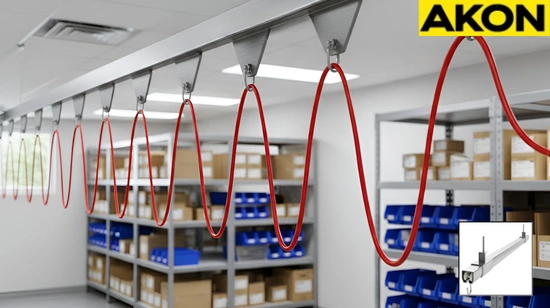
Organizes Compact Warehouse Spaces
