
Curtain Track for Stage Curtains
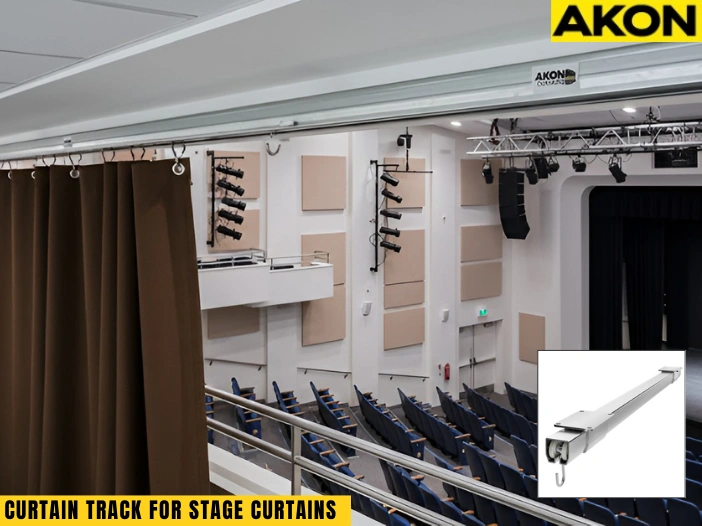
Curtain Track for Stage Curtains refers to a heavy-duty system designed to move large stage curtains smoothly and safely. Unlike standard curtain rods, these tracks support greater weight and frequent use. This guide explains how stage curtain tracks work, their benefits, and how to choose the right solution for theaters, auditoriums, commercial venues, and performance spaces.
How Curtain Tracks Are Used in Stage and Performance Settings
In live performance environments, curtain tracks manage how stage curtains move and align during shows, rehearsals, and events. Their role is functional and precise, helping curtains respond accurately to timing and movement requirements on stage.
How Stage Curtain Tracks Control Curtain Movement
Stage curtain tracks guide curtains as they open and close across the stage during performances. Mounted overhead, the track uses carriers or rollers inside the channel to allow smooth horizontal movement.
This setup helps curtains travel evenly across wide stage openings. Predictable movement makes timing easier to manage during live productions.
Supporting Heavy Curtains and Maintaining Consistent Operation
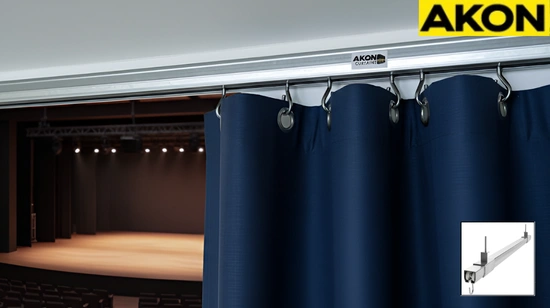
Curtain tracks support large, heavy fabrics commonly used in commercial and public venues. The system distributes the curtain’s weight evenly along the track to maintain proper alignment.
Tracks can be operated manually in smaller spaces or by motor in larger venues. Consistent operation helps ensure clean cues and smooth scene changes.
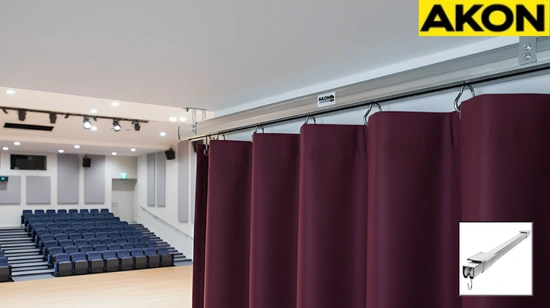
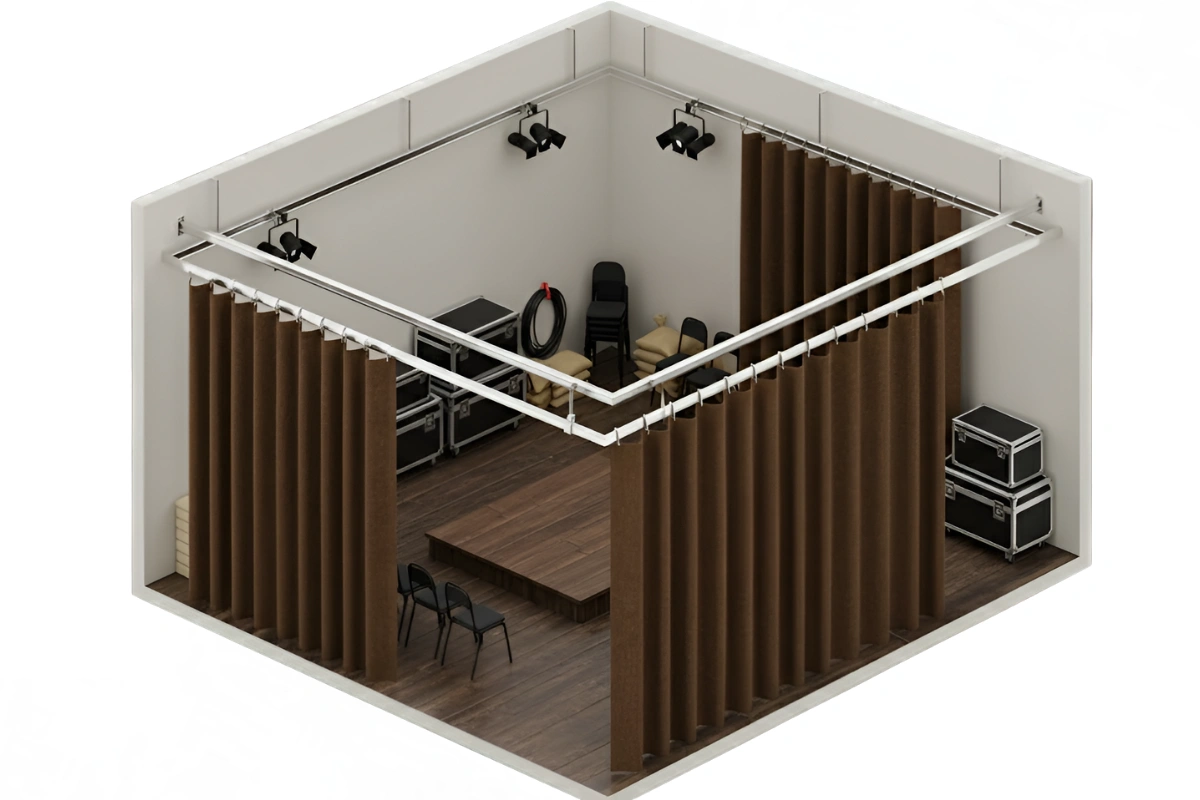
Make Shapes
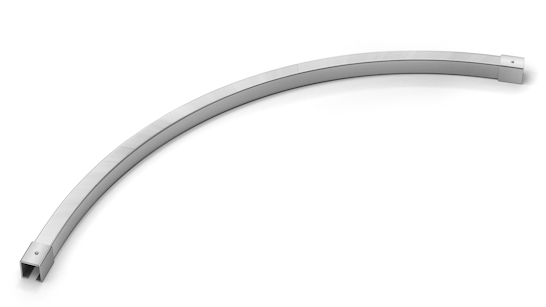
Radius Corner
By using a 90 degree radius corner you can go around obstructions or make shapes. The 24" radius corner quickly attaches and detaches as needed. Use 1 radius for an L-Shape design, 2 radius corners for a C-Shape and 4 radius corners for a complete enclosure.

Key Benefits of Professional Curtain Tracks for Stage Curtains
Building on how curtain tracks function in live settings, these benefits highlight why professional systems are widely used in stage and commercial environments.
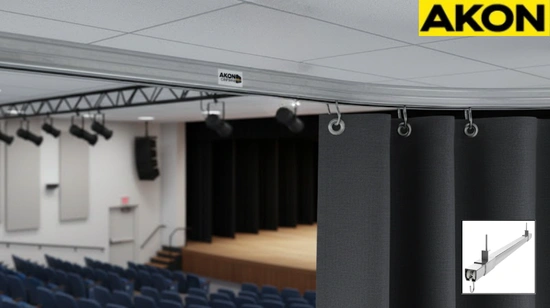
• Reduced fabric wear. Even movement helps prevent pulling and uneven tension on curtain fabric. This reduces stress along the curtain edge over time. Curtains retain their appearance and function longer.
• Easier future adjustments. Modular track sections make layout changes easier to plan and execute. Sections can be modified or expanded without replacing the entire system. This supports evolving stage and venue needs.
• Improved long-term reliability. Professional curtain tracks are designed for frequent use in active venues. Consistent operation reduces ongoing maintenance concerns. This reliability is especially important for spaces with regular performances or events.
Heavy-Duty Support
Built to support the weight of large stage curtains used in commercial venues and performance halls.
Smooth, Quiet Operation
Allows curtains to move smoothly with minimal noise during performances and events.
Flexible Stage Fit
Adapts easily to wide stages and custom layouts across different venue types.
Choosing the Right Curtain Track for Your Stage Setup
With the key benefits outlined, comparing curtain track options side by side helps narrow down the best choice for a specific stage or commercial venue. This table focuses on practical differences that influence selection, without repeating how the systems operate or the benefits already discussed.
| Curtain Track Type | Material | Load Capacity | Movement Smoothness | Customization Options | Best Use Cases |
|---|---|---|---|---|---|
| Heavy-Duty Steel Track | Galvanized steel | High | Smooth with proper rollers | Custom lengths, straight runs | Large stages, performance halls, commercial venues |
| Aluminum Curtain Track | Aluminum alloy | Medium to high | Lightweight and smooth | Long spans, flexible layouts | Auditoriums, multi-use spaces, lighter stage curtains |
| Modular Industrial Track System | Steel or aluminum | High | Consistent for frequent use | Expandable sections, connectors | Wide stages, venues with changing layouts |
Reviewing these options together makes it easier to match curtain weight, stage size, and layout needs. This comparison helps venue managers choose a curtain track system that fits both current requirements and future stage planning.
Types of Curtain Track Mounts
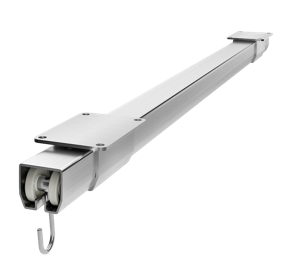
Ceiling Mount Curtain Track
Choose this mounting style if you want your industrial curtain track to mount to the ceiling with only a few inches of open gap.
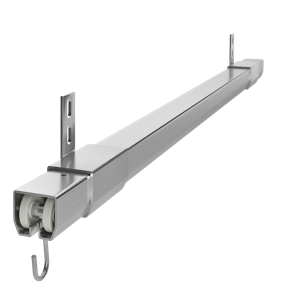
Wall Mount Curtain Track
This curtain track mount is designed for mounting the track next to a vertical wall or stud. This can be parallel to the wall, or perpendicular.
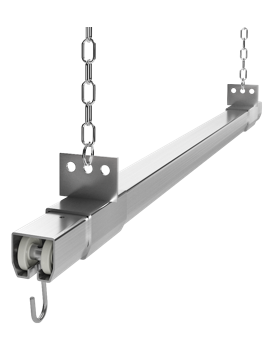
Chain or Cable Curtain Track
Like the threaded rod, a chain supported curtain track is also good for spanning large distances. Both chain or cable can be used to hold up the track.
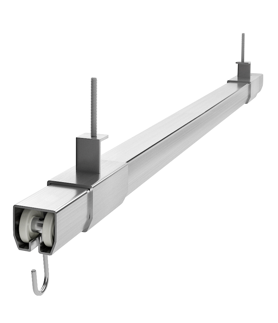
Threaded Rod Curtain Track
If the distance between the anchor points above is higher than where you want the curtain track, then a threaded rod mount might work well. Steel rods support the track and span the distance between the track and the ceiling.
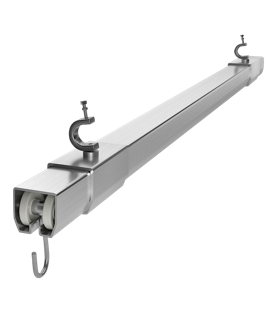
I-Beam Curtain Track
When connecting to a truss, I-Beam or any other horizontal steel support this style of mount works best. Once connected, you simply tighten down the set screw.
Recommended Curtain Track Products for Stage Curtains
Once curtain track options have been compared, selecting a specific product comes down to how your venue is built and how the stage is used. The following curtain track are commonly chosen for stage and commercial performance environments.
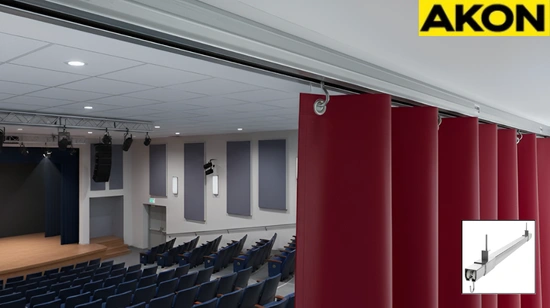
Rod Curtain Track
The Rod Curtain Track is a flexible option for venues that need a straightforward and reliable curtain system. It is well suited for theaters and commercial stages with standard mounting conditions.
• Works well for medium to large stage curtains
• Can be installed on ceilings or structural supports
• Supports smooth curtain travel across stage openings
• Commonly used in theaters and event spaces
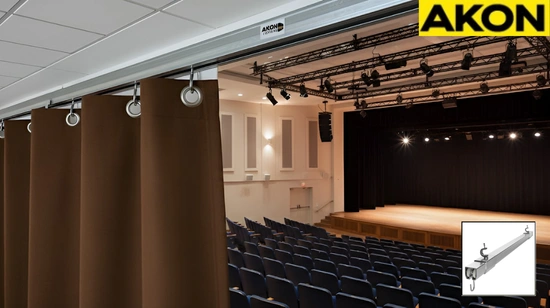
I-Beam Curtain Track
The I-Beam Curtain Track is designed for stages that require added structural support. It is often selected for larger performance venues where heavier curtains are used regularly.
• Built for wide spans and heavier curtain loads
• Attaches directly to I-beams or overhead structures
• Suitable for commercial stages and performance halls
• Handles frequent curtain movement during events
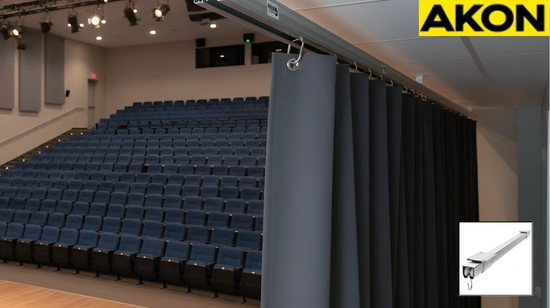
Ceiling Curtain Track
The Ceiling Curtain Track is ideal for venues that prefer a clean, overhead installation. It helps maintain a clear stage area while supporting consistent curtain alignment.
• Mounts directly to ceiling structures
• Keeps curtain hardware out of sight
• Works well in auditoriums and commercial venues
• Supports controlled movement across wide stages
Frequently Asked Questions
FAQs: Curtain Track for Stage Curtains
What is a curtain track for stage curtains?
A curtain track for stage curtains is a system that guides curtains across a stage opening in a controlled way. It is commonly used in theaters, auditoriums, and commercial performance spaces.
Are curtain tracks suitable for commercial venues?
Yes, curtain tracks for stage curtains are widely used in commercial venues such as theaters, event halls, and auditoriums. They are designed to support frequent use in public settings.
How much weight can a curtain track for stage curtains support?
The weight capacity depends on the track type and mounting method. Options like the I-Beam Curtain Track are commonly selected for heavier stage curtain applications.
Can a curtain track for stage curtains be custom sized for wide stages?
Yes, many curtain track systems can be sized to match wide stage openings. Modular options allow tracks to be configured for different commercial venue layouts.
Are stage curtain tracks manual or motorized?
Curtain tracks for stage curtains can be operated manually or with motorized systems. Manual operation is common with Rod Curtain Track and Ceiling Curtain Track setups, while motorized systems are often paired with I-Beam Curtain Track installations.
What accessories are needed for proper curtain track installation?
Typical accessories include carriers or rollers, mounting brackets, connectors, and end stops. The required accessories depend on whether the track is ceiling mounted, beam mounted, or wall mounted.
Which curtain track works best for ceiling installations?
The Ceiling Curtain Track is designed specifically for overhead mounting. It is commonly used in auditoriums and commercial performance spaces where clean installation is important.
What curtain track is best for heavy stage curtains?
The I-Beam Curtain Track is often used for heavy stage curtains in larger venues. It provides added structural support for wide spans and frequent use.
Can curtain tracks be mounted to structural beams?
Yes, curtain tracks can be mounted to structural beams using an I-Beam Curtain Track system. This setup is common in commercial venues with exposed overhead structures.
Are curtain tracks noisy during operation?
When properly installed with suitable rollers, curtain tracks operate quietly. This is important for live performances where sound distractions should be minimized.
Do curtain tracks work in school auditoriums?
Yes, curtain tracks for stage curtains are commonly installed in school auditoriums. Rod Curtain Track and Ceiling Curtain Track systems are often used in educational performance spaces.
Can curtain tracks be used in multi-use commercial spaces?
Curtain tracks are well suited for multi-use venues that host different types of events. Modular systems allow curtains to open or close as space needs change.
What curtain track is best for flexible stage layouts?
Modular installations using ceiling or beam mounted tracks work well for flexible layouts. These setups support future changes without replacing the entire system.
Do curtain tracks require frequent maintenance?
Curtain tracks generally require minimal maintenance. Periodic checks of rollers, mounting points, and connectors help ensure smooth operation.
Can curtain tracks be installed in existing venues?
Yes, curtain tracks for stage curtains can be added to existing theaters and commercial venues. Installation methods are adapted to the building structure.
Are curtain tracks only used for front stage curtains?
No, curtain tracks can also be used for side curtains, back curtains, or space separation. The application depends on stage design and venue needs.
What curtain track is best for clean stage appearance?
Ceiling Curtain Track systems are often chosen when a clean and unobtrusive stage appearance is desired. They keep hardware overhead and out of sight.
Can curtain tracks support frequent performances and events?
Yes, professional curtain tracks are designed for repeated use. This makes them suitable for venues with regular shows, rehearsals, and commercial events.
How do I choose the right curtain track for my venue?
Choosing the right curtain track for stage curtains depends on curtain weight, stage width, mounting surface, and frequency of use. Reviewing Rod Curtain Track, I-Beam Curtain Track, and Ceiling Curtain Track options helps narrow the best fit.
Where can I find curtain track options for stage curtains?
Curtain track systems for stage curtains, including rod, beam, and ceiling mounted options, are available through the Industrial Curtain Track product lineup.
Photo Gallery
Reliable Curtain Track Solutions for Stage and Commercial Venues
Choosing the right curtain track helps ensure smooth stage operation and reliable performance in commercial venues. Professional curtain track systems are designed for durability, consistent movement, and long-term use in theaters, auditoriums, and performance spaces. Selecting a solution built specifically for stage environments supports dependable performances today while allowing flexibility for future needs.
Curtain Track Placement for Stage Curtains