

Garment Conveyor Track
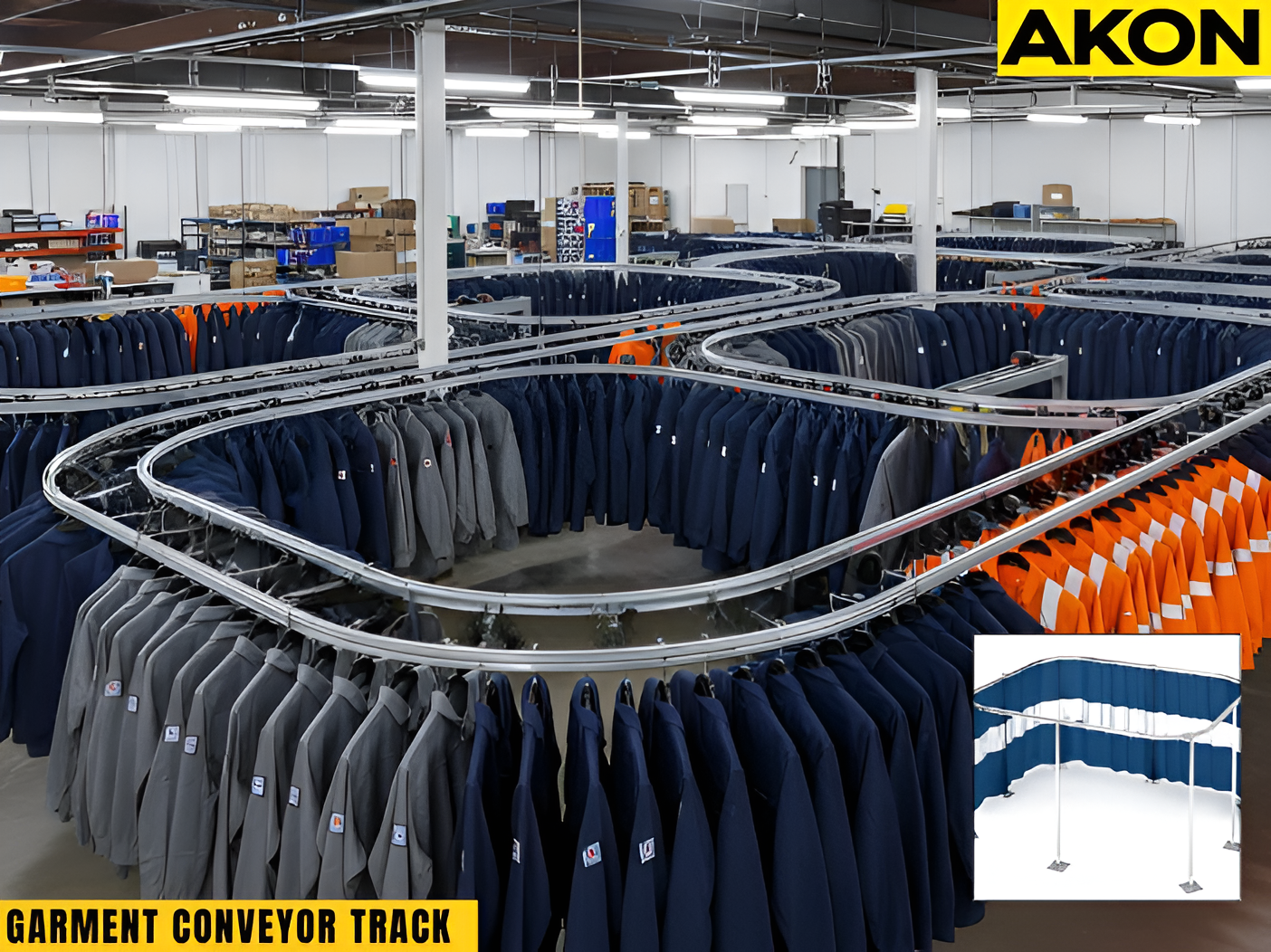
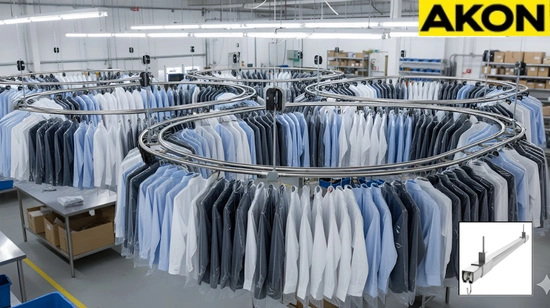
A Garment Conveyor Track is an overhead system used to move and organize hanging garments in industrial and workshop environments such as dry cleaners, uniform storage facilities, and costume shops. This guide explains what the system is, the challenges it addresses, how it works, available options, and when overhead trolley track designs are the right fit.
How a Garment Conveyor Track System Works
Once installed overhead, a garment conveyor track guides hanging garments along a fixed route through the workspace. The system follows a simple layout that keeps movement consistent and easy to manage during daily operations.
Ceiling-Mounted Track Layout
The track is installed above the work area and is typically secured to the ceiling or structural framing. This overhead placement creates a fixed route that garments follow as they move through the space.
The layout can run straight or change direction depending on how the workspace is organized. Once installed, the track defines where garments travel without interfering with floor-level activity.
Enclosed Trolley Movement
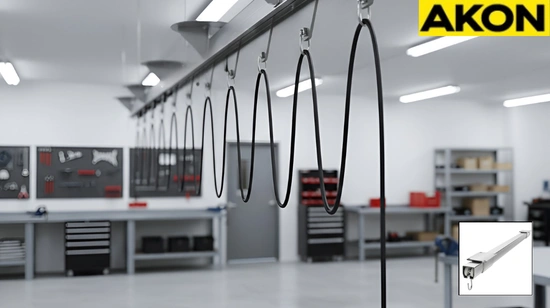
Inside the track, enclosed trolleys are used to carry hanging garments from one location to another. Each garment is attached directly to a trolley, allowing it to remain suspended during movement.
As the trolleys roll along the track, garments follow the same controlled path through the system. This enclosed movement keeps garments aligned as they pass between designated areas.

Make Shapes
Radius Corner
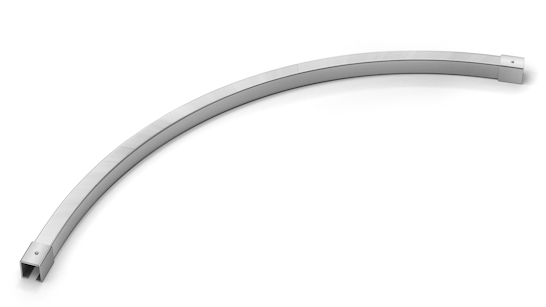
By using a 90 degree radius corner you can go around obstructions or make shapes. The 24" radius corner quickly attaches and detaches as needed. Use 1 radius for an L-Shape design, 2 radius corners for a C-Shape and 4 radius corners for a complete enclosure.

Why Businesses Choose Garment Conveyor Tracks
After knowing how garments move through the system, the next question is why this setup is commonly used in garment-heavy environments. Businesses that manage clothing daily often look for solutions that keep operations orderly and manageable as volume increases.

• Simpler garment organization. Garments follow a defined path through the facility. This makes it easier to group items by order, type, or processing stage. Staff can locate and manage garments without constant rearranging.
• More predictable internal movement. Garment flow remains consistent throughout the day. Items move along expected routes, reducing confusion during busy periods. This helps staff know where garments are and where they are headed.
• Better use of vertical space. Overhead routing frees up valuable floor and storage areas. Facilities can take advantage of available height instead of expanding outward. This is especially useful in compact workshops and back-of-house spaces.
Workflow Efficiency
Garment conveyor tracks keep garments moving smoothly between work areas.
Space Optimization
Garments are routed overhead to help keep floors clear and storage areas organized.
Built for Industrial Use
The system is designed to support repeated daily operation in industrial and workshop settings.
Garment Handling System Options
Once the general benefits are clear, comparing different garment handling setups helps determine which option fits best in an industrial or workshop environment. Each system manages garment movement differently, which can affect space usage, durability, and how smoothly garments move throughout daily operations.
| System Type | Space Usage | Durability | Movement Smoothness | Best Use Cases |
|---|---|---|---|---|
| Enclosed Overhead Track | Uses vertical space and keeps floors open | Built for continuous daily operation | Smooth and controlled movement | Dry cleaners, uniform storage facilities, costume shops |
| Open Track Systems | Partially overhead with some exposure | Suitable for light to moderate use | Generally smooth but more exposed | Smaller workshops or low-volume garment areas |
| Floor-Based Garment Handling | Occupies floor space and walkways | Depends on carts or racks used | Movement can be interrupted | Short transfers or temporary garment storage |
While each option has its place, enclosed overhead track systems are typically preferred for garment-heavy operations where consistent movement and organized handling are required in professional settings.
Types of Curtain Track Mounts
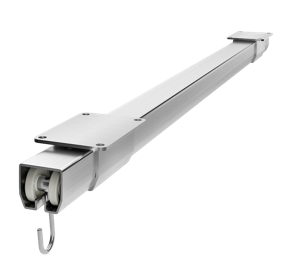
Ceiling Mount Curtain Track
Choose this mounting style if you want your industrial curtain track to mount to the ceiling with only a few inches of open gap.
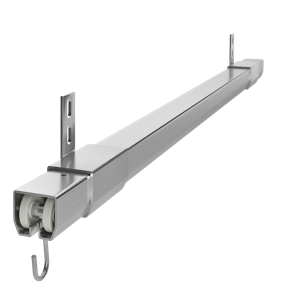
Wall Mount Curtain Track
This curtain track mount is designed for mounting the track next to a vertical wall or stud. This can be parallel to the wall, or perpendicular.
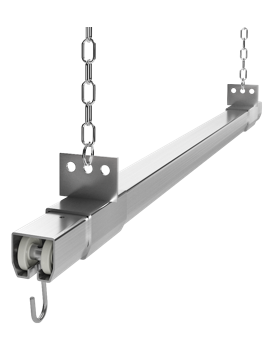
Chain or Cable Curtain Track
Like the threaded rod, a chain supported curtain track is also good for spanning large distances. Both chain or cable can be used to hold up the track.
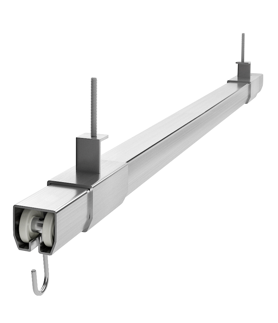
Threaded Rod Curtain Track
If the distance between the anchor points above is higher than where you want the curtain track, then a threaded rod mount might work well. Steel rods support the track and span the distance between the track and the ceiling.
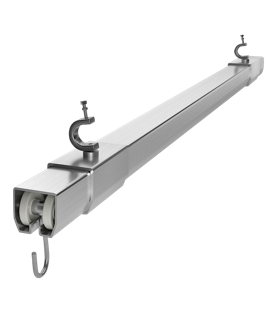
I-Beam Curtain Track
When connecting to a truss, I-Beam or any other horizontal steel support this style of mount works best. Once connected, you simply tighten down the set screw.

Ceiling Trolley
This is the most direct match for garment conveyor track systems and forms the backbone of overhead garment movement. It is commonly used in operations where garments need to follow a fixed overhead route throughout the day.
• Supports steady, point-to-point garment movement across work areas
• Commonly used in dry cleaners, uniform storage facilities, and costume shops
• Keeps garments suspended and easy to access during handling
• Fits environments with consistent, high garment turnover
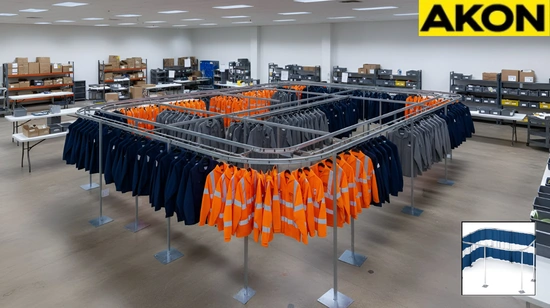
Free Standing Trolley
A free standing trolley is a practical option when ceiling mounting is limited or not possible. It provides overhead routing flexibility while still supporting organized garment movement.
• Useful in back-of-house workshops or temporary garment handling areas
• Can be positioned without relying on ceiling structure
• Supports changing layouts or evolving garment workflows
• Works well in facilities that need mobility or non-permanent setups
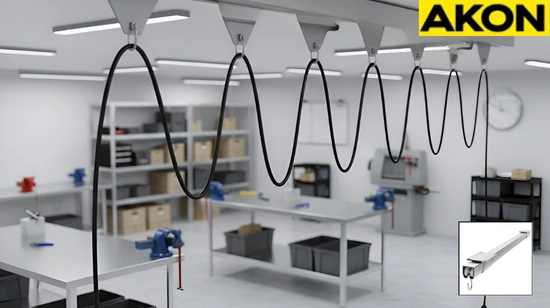
Overhead Electrical Cord Trolley
Although designed for cords and cables, this trolley system complements garment conveyor setups in active workspaces. It helps manage supporting equipment overhead alongside garment movement.
• Keeps electrical cords off floors and out of walkways
• Reduces clutter around pressing, sorting, or staging areas
• Helps maintain cleaner, more organized garment work zones
• Useful in shared spaces where garments and powered equipment operate together
Frequently Asked Questions
FAQs: About Garment Conveyor Tracks
Is a garment conveyor track suitable for dry cleaning operations?
Yes. Garment conveyor tracks are widely used in dry cleaning operations, especially when installed with ceiling-mounted overhead trolley systems that support frequent garment movement throughout the day.
Can a garment conveyor track work for uniform storage or distribution rooms?
It can. Uniform storage and distribution rooms often use overhead trolley track systems to organize garments by order, department, or pickup schedule.
Are garment conveyor tracks practical for costume shops with limited floor space?
Yes. Costume shops benefit from routing garments overhead, which allows large collections to be managed without relying heavily on floor storage.
How much weight can a garment conveyor track handle?
Weight capacity depends on the track and trolley configuration used. Overhead trolley systems are designed to carry multiple hanging garments during normal daily operation.
Is professional installation required in workshop environments?
Professional installation is typically recommended to ensure the track is properly mounted and aligned for safe, consistent use in workshop settings.
Can garment conveyor tracks be customized to fit my facility layout?
Yes. Track routes can be designed to follow straight runs, curves, or specific pathways based on how garments move through your space.
Do garment conveyor tracks work in facilities with low ceilings?
They can, depending on available clearance. In some cases, alternative routing or free standing trolley options may be considered.
Are garment conveyor tracks only used for storage?
No. They are used for both garment storage and internal movement between work areas, staging zones, and pickup points.
Can one system handle different garment types?
Yes. Many facilities manage various garment types on the same overhead trolley track system with proper spacing and routing.
Do garment conveyor tracks require frequent maintenance?
Routine inspection and basic maintenance are usually sufficient. Keeping the track clear and trolleys moving freely helps maintain smooth operation.
Can a garment conveyor track system be expanded later?
Many systems allow for future expansion. Additional track sections or routing changes can be added as workflows evolve.
Are garment conveyor tracks suitable for back-of-house workshop areas?
Yes. They are commonly installed in back-of-house spaces to keep garments organized without interfering with daily work activity.
How are garments attached to the conveyor track?
Garments are typically hung using standard hangers or hooks attached to trolleys that move along the overhead track.
Can garment conveyor tracks support peak operating hours?
They are often used in facilities that experience peak periods, where consistent garment movement is needed throughout the day.
Are garment conveyor tracks noisy during operation?
Most overhead trolley track systems are designed to operate smoothly and quietly under normal use conditions.
Do garment conveyor tracks work well in shared workspaces?
Yes. Overhead routing allows garments to move above other activities, reducing interference with equipment or staff below.
Is a garment conveyor track a permanent installation?
Some installations are permanent, while others can be adjusted or reconfigured depending on the track system selected.
Can garment conveyor tracks improve organization in busy facilities?
They help maintain order by giving garments a defined path and predictable location as they move along the overhead track.
Are garment conveyor tracks suitable for small operations?
Yes. Both small workshops and larger industrial facilities use overhead trolley track systems when layouts and garment volume justify it.
How do I choose the right garment conveyor track system for my business?
The right system depends on your space, garment volume, and workflow. Reviewing layout needs and consulting with a provider like Industrial Curtain Track can help identify the best overhead trolley solution for your operation.
Photo Gallery
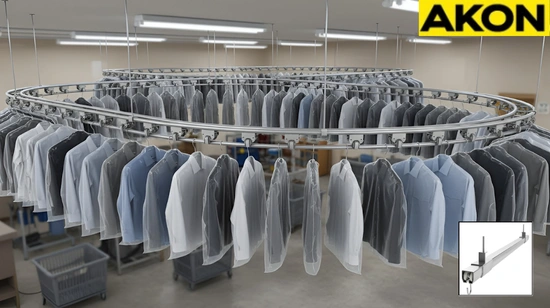
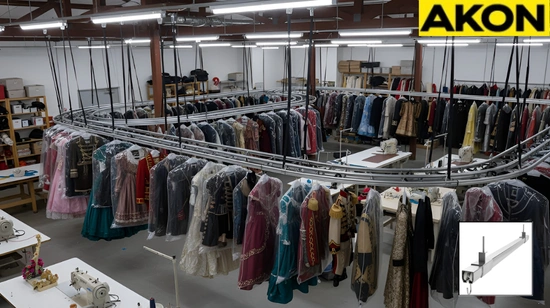
Improving Garment Handling in Industrial and Workshop Environments
A well-designed garment conveyor track system brings structure to daily garment movement without complicating operations. For dry cleaners, uniform storage facilities, costume shops, and similar environments, overhead trolley track solutions support organized workflows while making better use of available space. Reviewing the right overhead trolley setup for your facility can help ensure your garment handling process stays efficient, adaptable, and aligned with how your team works every day.
Overhead Garment Handling System
