
Heavy-Duty Track Systems
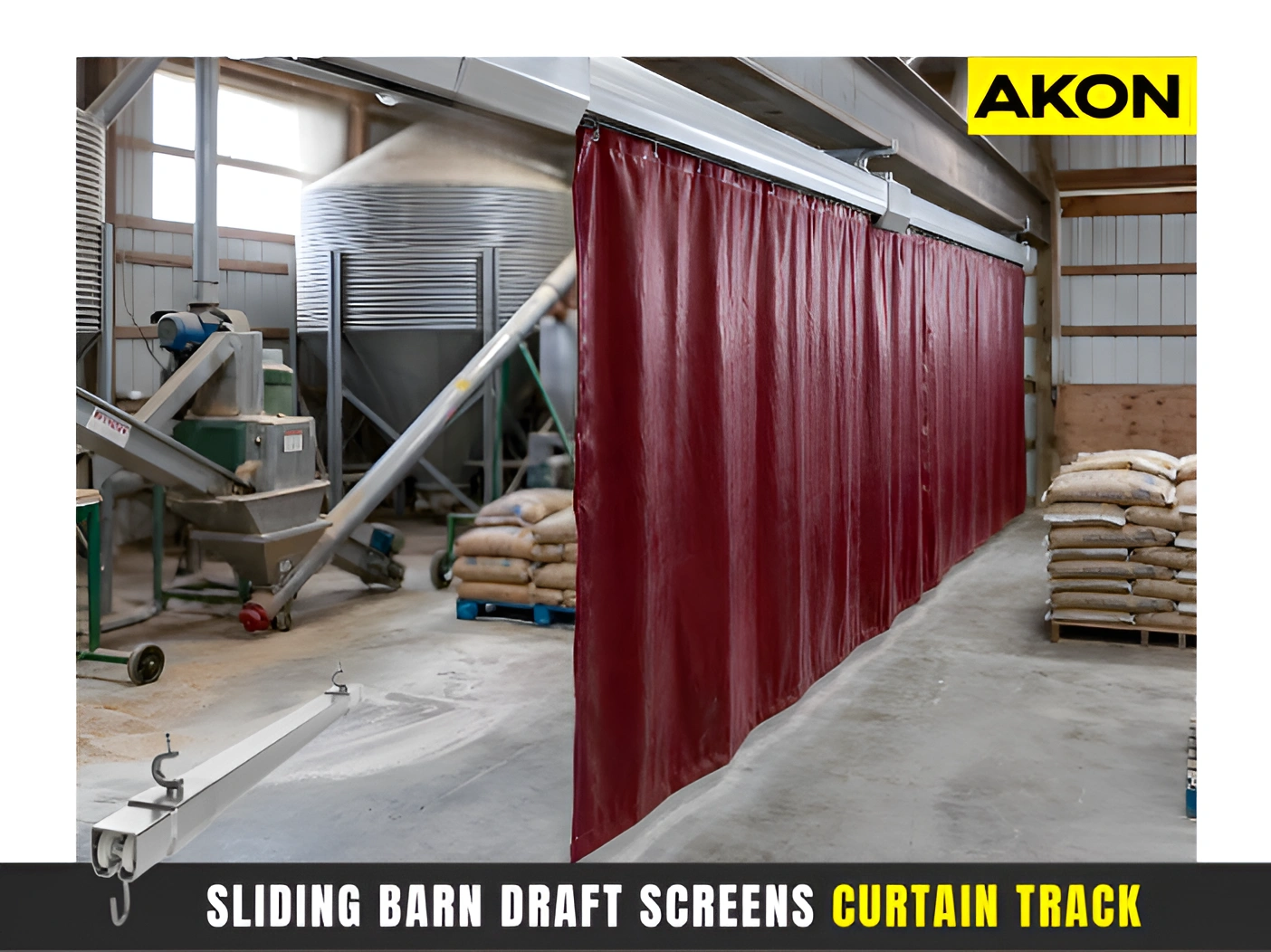
Sliding barn draft screens are movable curtain barriers that help control wind, weather, and airflow in livestock barns. This guide explains the draft control challenges modern barns face, how sliding curtain systems work, and the track hardware that supports large movable draft screens.
The Draft Control Problem in Modern Barn Designs
Many modern livestock barns use open-wall designs to encourage natural ventilation. While this improves airflow, it can also make it harder to control the indoor environment when outdoor conditions change.

Wind Exposure
• Strong winds can pass through open barn walls and create uncomfortable drafts across stalls and feeding areas
• Cold gusts may expose animals to sudden temperature changes during storms or colder months
• Wind-driven rain or snow can enter the structure and affect bedding and equipment
Seasonal Temperature Swings
• Barn conditions can shift quickly as outdoor temperatures rise or drop
• Areas near large openings may become colder or warmer than the rest of the building
• Managing comfort becomes more difficult when airflow cannot be adjusted easily

Dust Movement
• Air currents can carry bedding particles and feed dust across the barn
• Dust may collect in feeding areas or animal resting spaces
• Constant movement of debris can increase cleaning and maintenance needs
Inconsistent Airflow
• Natural ventilation can create uneven airflow patterns throughout the barn
• Some areas may experience strong drafts while others receive little air movement
• Operators often need a way to guide airflow instead of leaving openings fully exposed
Make Shapes
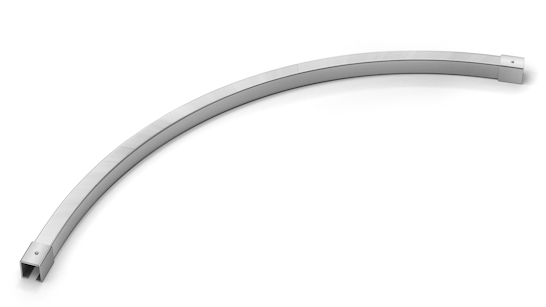
Radius Corner
By using a 90 degree radius corner you can go around obstructions or make shapes. The 24" radius corner quickly attaches and detaches as needed. Use 1 radius for an L-Shape design, 2 radius corners for a C-Shape and 4 radius corners for a complete enclosure.

System Architecture: How Sliding Draft Screen Track Systems Work
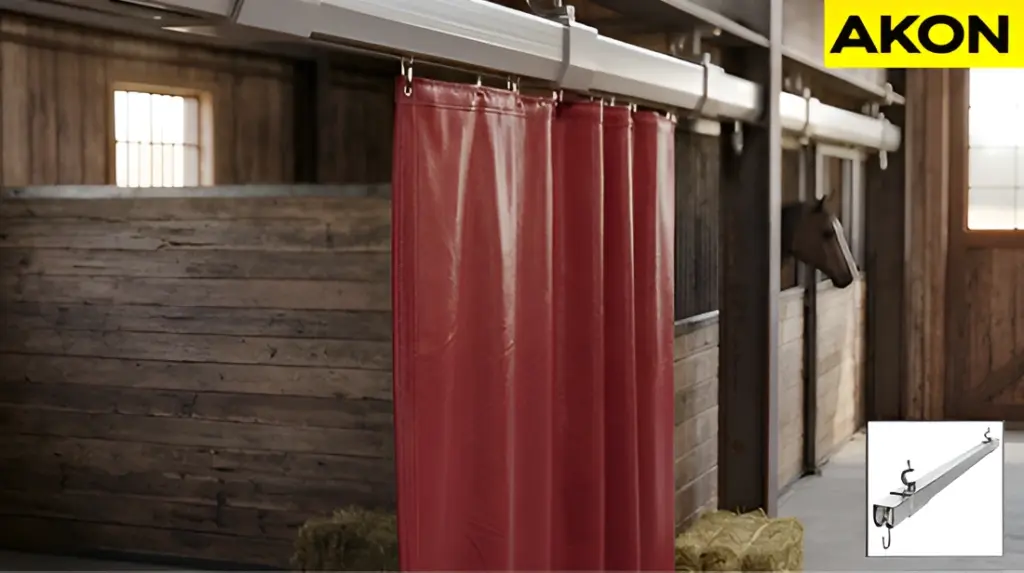
Once draft control needs are identified, the next step is understanding how sliding draft screen systems are built. These systems combine curtain materials, track hardware, and mounting components that allow large screens to move smoothly across barn openings.

• Vinyl Draft Curtain Panels. Reinforced vinyl panels form the movable barrier that covers barn openings when draft protection is needed.
• Roller Carriers and Track Rail. Roller carriers attach to the curtain and allow it to glide smoothly along the heavy-duty track rail.
• Ceiling Mounts and Brackets. Mounting brackets secure the curtain track to barn beams or structural framing.
• Manual Sliding or Pulley Operation. Curtains can be moved manually along the track or operated using simple pulley systems for larger openings.
Together, these components create a coordinated system that allows barn operators to adjust openings quickly while keeping the curtain movement stable and reliable.
Types of Curtain Track Mounts
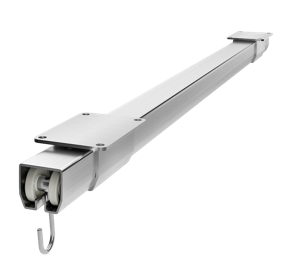
Ceiling Mount Curtain Track
Choose this mounting style if you want your industrial curtain track to mount to the ceiling with only a few inches of open gap.
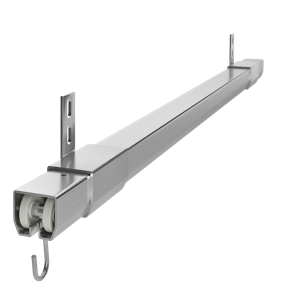
Wall Mount Curtain Track
This curtain track mount is designed for mounting the track next to a vertical wall or stud. This can be parallel to the wall, or perpendicular.
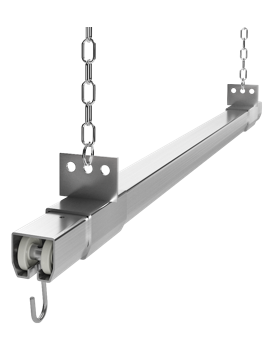
Chain or Cable Curtain Track
Like the threaded rod, a chain supported curtain track is also good for spanning large distances. Both chain or cable can be used to hold up the track.
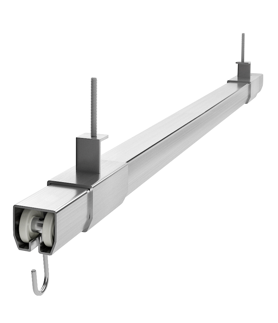
Threaded Rod Curtain Track
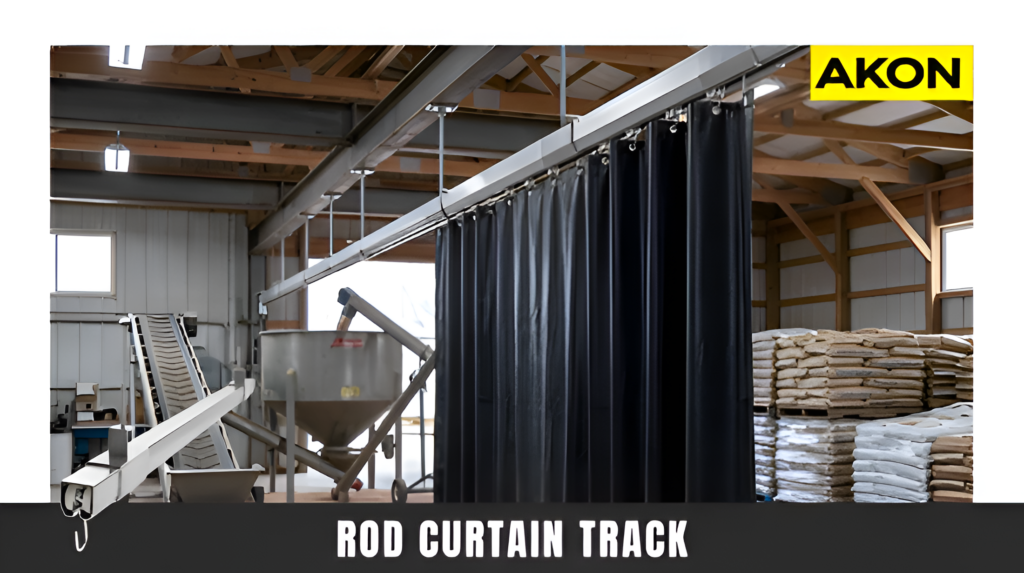
If the distance between the anchor points above is higher than where you want the curtain track, then a threaded rod mount might work well. Steel rods support the track and span the distance between the track and the ceiling.
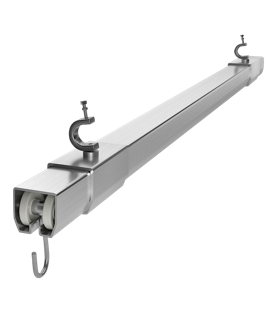
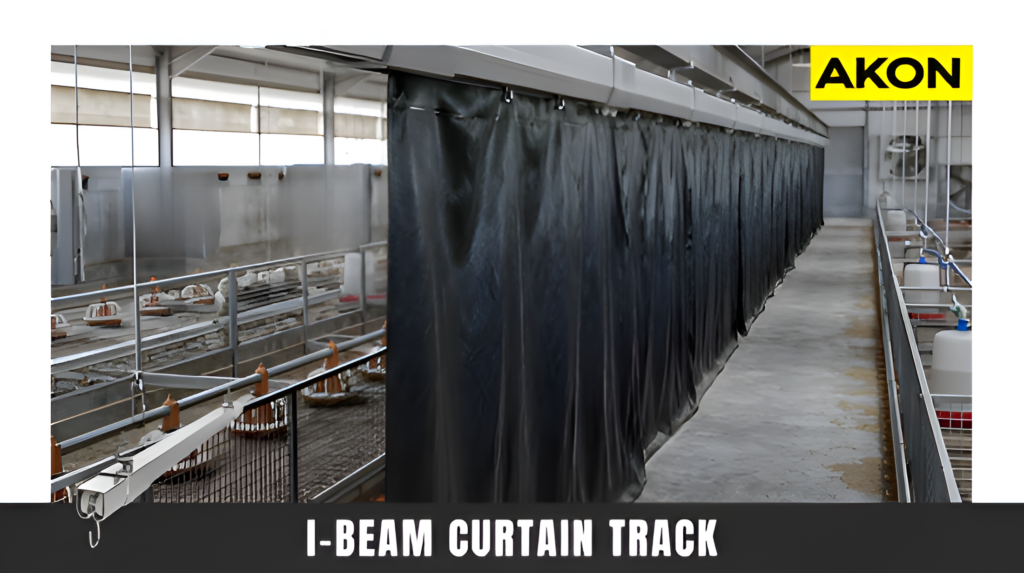
I-Beam Curtain Track
When connecting to a truss, I-Beam or any other horizontal steel support this style of mount works best. Once connected, you simply tighten down the set screw.
Hardware Stack: Track Components That Power Barn Draft Screen Systems
Once the curtain system layout is planned, the next step is choosing the track configuration that best fits the barn’s structure and installation conditions. Different track systems allow installers to adapt sliding barn draft screens to ceiling framing, beam layouts, or suspended mounting setups.

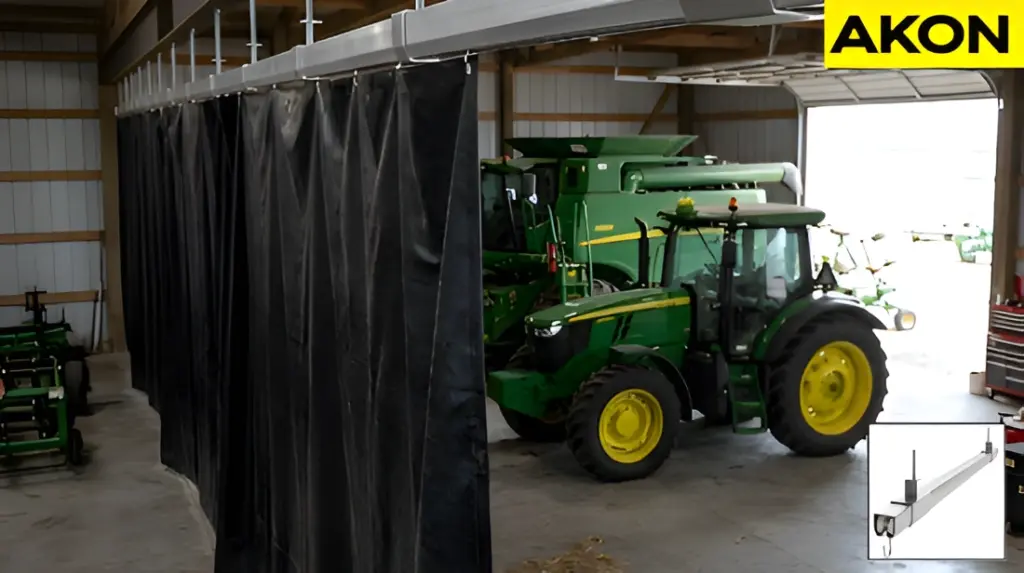
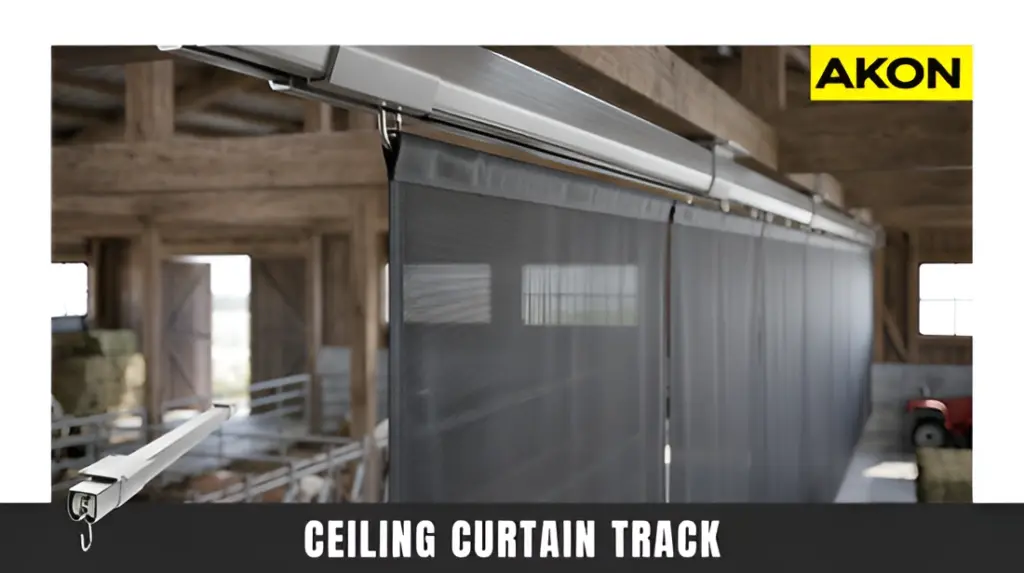
Ceiling Curtain Track systems are commonly used when the track can mount directly to the barn’s overhead framing. This setup works well for wide barn openings where sliding draft curtains need stable support across long spans.
• Mounts directly to overhead framing such as rafters or ceiling beams
• Supports long curtain runs across large barn openings
• Built from durable galvanized steel designed for industrial environments
• Track sections can connect together to create extended curtain spans

I-Beam Curtain Track systems are designed for barns that already use structural steel or large support beams. The track attaches directly to the beam, creating a strong path for sliding curtain movement.
• Attaches directly to structural I-beams using beam-mounted hardware
• Uses rolling carriers that move forward and backward along the beam line
• Ideal for barns with existing steel or heavy timber beams
• Provides strong structural support for heavier curtain systems

Chain curtain track systems are designed for environments where manual curtain movement is needed over longer spans. The chain-driven mechanism allows users to open or close divider curtains without pulling directly on the curtain panels.
• Uses a chain control system to move curtain panels smoothly along the track.
• Useful in wash racks where operators need controlled curtain movement during washing tasks.
• Helps manage divider curtains in larger wash areas where manual sliding would be less convenient.
Draft Control System Comparison for Agricultural Buildings
After knowing what track hardware, barn operators often compare different draft control methods to determine which system works best for their building. Each option offers different levels of airflow control, installation effort, and long-term flexibility.
| Draft Control System | Wind Protection | Ventilation Flexibility | Installation Complexity | Typical Use |
|---|---|---|---|---|
| Sliding Draft Screens with Track Systems | High | Very High | Moderate | Livestock barns |
| Fixed Wall Panels | High | None | High | Permanent barn walls |
| Roll-Up Curtains | Moderate | Moderate | Low | Smaller agricultural buildings |
| Hinged Doors | Moderate | Low | Moderate | Equipment access openings |
Sliding draft screens supported by curtain track systems offer the most operational flexibility. Instead of permanently blocking airflow like fixed walls or limiting adjustments like doors, track-mounted curtains allow barn openings to be quickly opened, partially closed, or fully sealed depending on weather conditions.
Frequently Asked Questions
FAQ: Sliding Barn Draft Screen Track Systems
1. How much weight can heavy-duty curtain track systems support?
Heavy-duty curtain track systems such as Ceiling Curtain Track, I-Beam Curtain Track, and Rod Curtain Track are designed to support large vinyl draft curtain panels used in barns. The total weight capacity depends on the curtain size, roller carriers, and the strength of the mounting structure.
2. How far apart should curtain track mounting brackets be spaced?
Bracket spacing depends on the track type and curtain load. Most Ceiling Curtain Track and Rod Curtain Track installations follow manufacturer spacing guidelines to keep the rail aligned across long curtain runs.
3. Can sliding barn draft screens be installed in existing barns?
Yes. Sliding barn draft screens are commonly retrofitted into existing barns. Systems such as Ceiling Curtain Track or Rod Curtain Track can mount to rafters, beams, or suspended supports.
4. What type of vinyl works best for sliding barn draft screens?
Most barn draft curtains use reinforced agricultural vinyl designed to handle moisture, temperature changes, and daily barn activity. The curtain material must also be strong enough to slide smoothly along the curtain track system.
5. How long can curtain track runs be in large agricultural buildings?
Track systems can span long openings by connecting multiple sections together. This allows Ceiling Curtain Track or I-Beam Curtain Track systems to support sliding curtains across wide barn walls.
6. Are sliding barn draft screens manually operated?
Yes. Many sliding barn draft screens move manually along the curtain track. In larger installations, pulley systems may also be added to assist curtain movement.
7. Can draft screens be partially opened?
Yes. Sliding draft screens allow barn operators to adjust openings throughout the day. Curtains can be partially opened to balance ventilation and draft protection.
8. What type of barns use sliding barn draft screen systems?
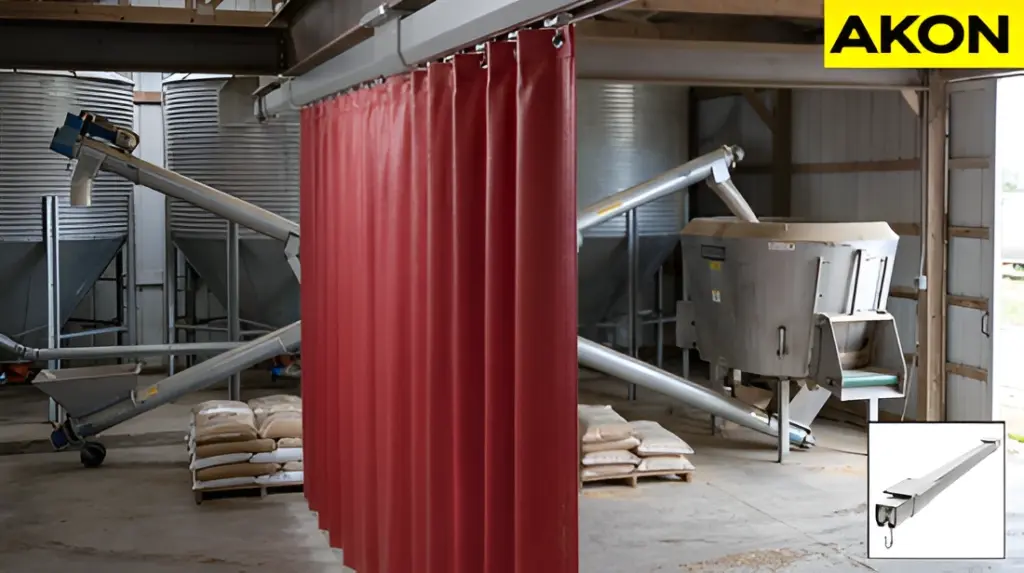
These systems are commonly used in livestock barns, dairy barns, agricultural equipment buildings, and other structures with large wall openings.
9. Are curtain track systems resistant to barn humidity and dust?
Most Ceiling Curtain Track and I-Beam Curtain Track systems are made from galvanized steel to handle humid agricultural environments.
10. Can sliding draft screens help reduce wind entering the barn?
Yes. Sliding barn draft screens allow operators to cover open wall sections during windy conditions while still maintaining ventilation.
11. Do curtain track systems require regular maintenance?
Curtain track systems typically require minimal maintenance. Periodic inspections help ensure the track, carriers, and mounting hardware remain aligned and functional.
12. Can sliding curtain systems be customized for different barn sizes?
Yes. Curtain panels and curtain track runs can be sized to match the width and height of individual barn openings.
13. What hardware allows curtains to move along the track?
Roller carrier assemblies attach to the curtain and glide along the curtain track rail, allowing the screen to move smoothly across the opening.
14. Can sliding barn draft screens be used year-round?
Yes. Barn operators often adjust curtain positions throughout the year as weather and airflow conditions change.
15. Are curtain track systems difficult to install?
Installation difficulty depends on the barn structure and track type. Systems such as Ceiling Curtain Track or Rod Curtain Track are designed for straightforward installation on common barn framing.
16. Can curtain tracks be mounted to steel beams?
Yes. I-Beam Curtain Track systems are specifically designed to attach directly to structural beams using beam-mounted hardware.
17. What determines the best curtain track system for a barn?
The best system depends on the barn’s structure, curtain size, and installation layout. Ceiling-mounted tracks, beam-mounted tracks, or rod-suspended tracks may be used depending on the building design.
18. Do sliding draft screens interfere with barn operations?
No. When installed properly, sliding curtains move along the wall opening and do not interfere with normal barn activity.
19. Can curtain track systems be expanded later?
Yes. Many track systems allow additional sections to be connected if curtain runs need to be extended.
20. Why are heavy-duty curtain track systems recommended for barn draft screens?
Heavy-duty systems such as Ceiling Curtain Track, I-Beam Curtain Track, and Rod Curtain Track provide the strength needed to support large sliding barn draft screens and allow smooth curtain operation in agricultural environments.
Why Heavy-Duty Track Systems Are Ideal for Sliding Barn Draft Screens
Heavy-duty curtain track systems provide a reliable way to manage airflow while protecting livestock areas from changing weather conditions. By supporting sliding barn draft screens, these systems help control wind exposure, adjust ventilation quickly, move large curtain panels smoothly, and maintain stable conditions inside agricultural buildings, making them a practical long-term solution for modern barns.
Structural Layout of a Sliding Barn Draft Screen

Photo Gallery