
Overhead Tool Trolley Track
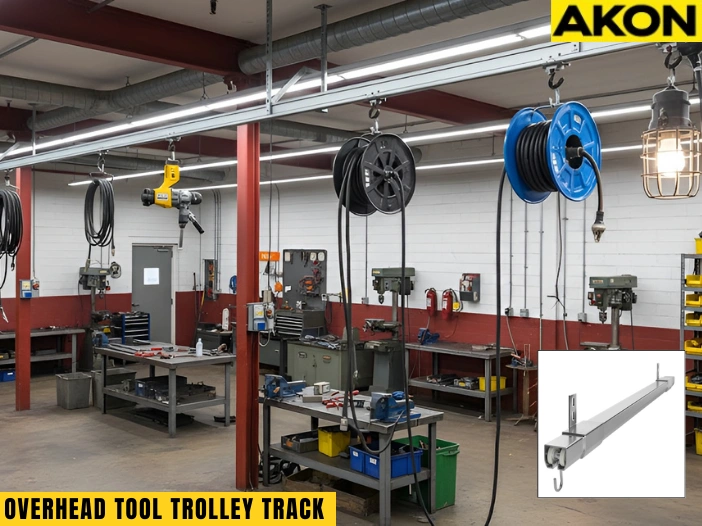
An Overhead Tool Trolley Track is a ceiling-mounted system used in industrial and workshop environments to move tools or equipment overhead. This guide explains how it works, where it’s commonly used, and the benefits it offers. It also compares key features, highlights product options, and answers common questions to help you choose the right setup.
What It Is and How It Works
This section explains the basic structure of an overhead tool trolley track system and how it operates in industrial and workshop environments, focusing only on components and movement.
Core Components of the System
An overhead tool trolley track system consists of a fixed track, rolling trolleys, and overhead mounting hardware. The track is installed along ceilings or structural beams commonly found in industrial and workshop spaces.
Trolleys are fitted with rollers that move inside the track and support tools, equipment, or curtain systems. Mounting components hold the track in place and keep the system properly aligned during use.
How Movement Works in Industrial and Workshop Layouts
Tools, equipment, or curtains are attached directly to the trolleys. As the trolley rolls, the attached items move along the path set by the overhead track.
The track can be routed across workstations, along production areas, or around corners as needed. In workshops, overhead systems are commonly used because they operate above machinery and work areas without requiring floor rails or surface changes.
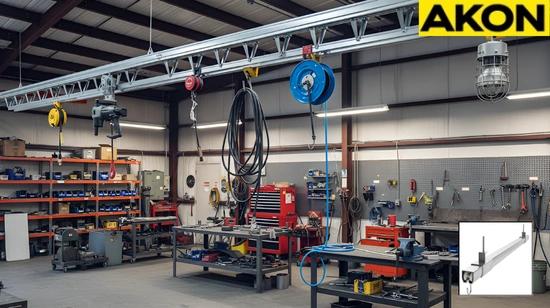
Make Shapes
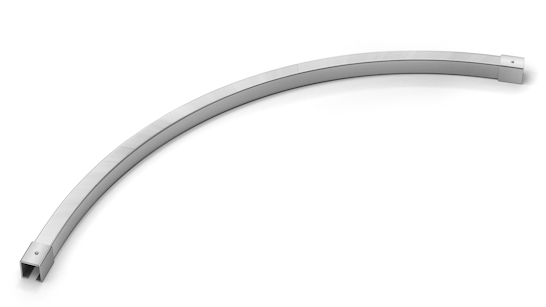
Radius Corner
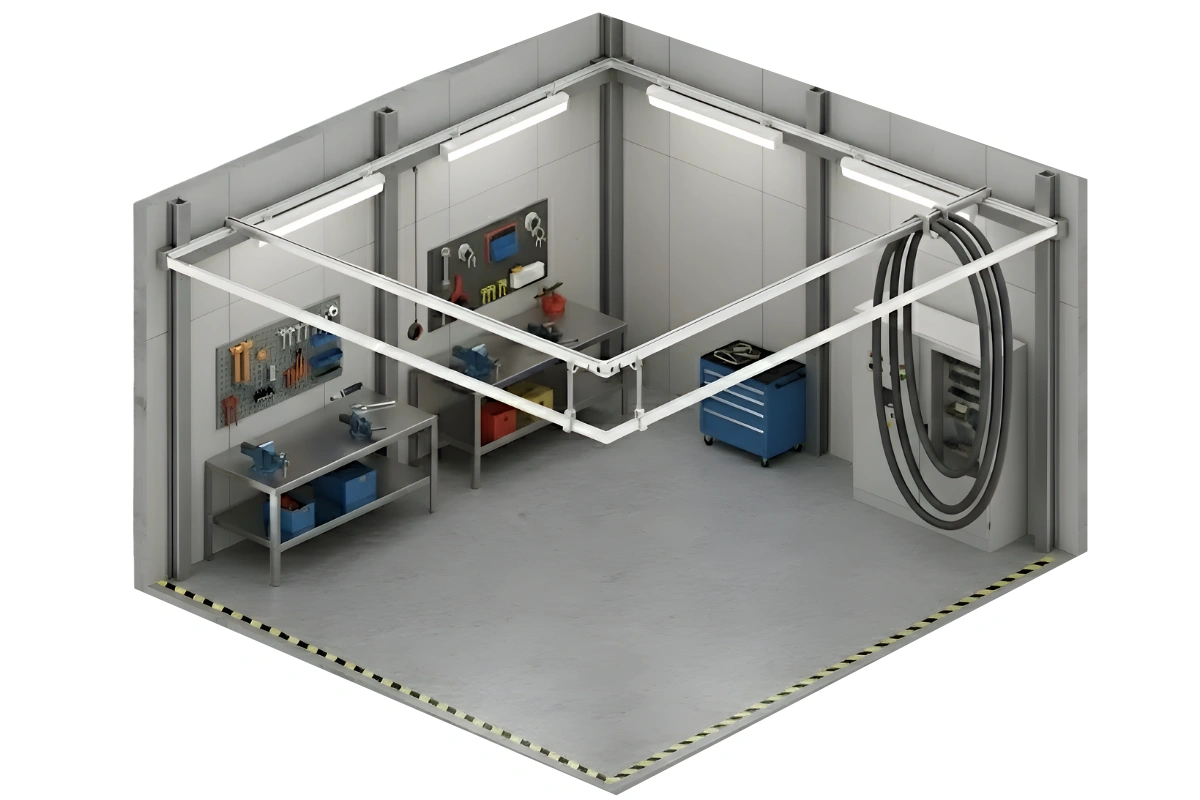
By using a 90 degree radius corner you can go around obstructions or make shapes. The 24" radius corner quickly attaches and detaches as needed. Use 1 radius for an L-Shape design, 2 radius corners for a C-Shape and 4 radius corners for a complete enclosure.

Key Benefits of an Overhead Tool Trolley Track
Once the system’s structure and movement are clear, its value in industrial and workshop environments becomes easier to recognize during everyday use.
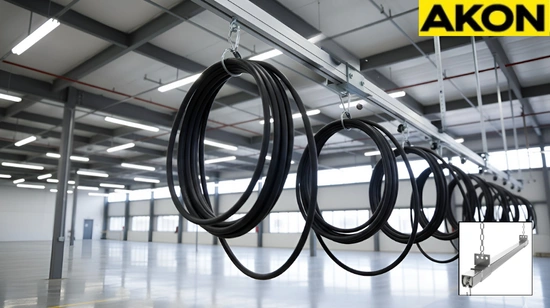
• Supports flexible workstation layouts. Layouts can adapt as tools or processes change. This allows work areas to evolve without major adjustments. It also helps accommodate new equipment or workflows.
• Maintains consistent tool placement. Tools can return to the same locations after use. This reduces searching and confusion during busy shifts. Consistency supports smoother coordination between work areas.
• Fits both permanent and evolving setups. The system works well for long-term installations. It also supports gradual changes as operations grow or shift. This makes it suitable for a wide range of industrial and workshop environments.
Clear, Organized Workspaces
This helps keep active work areas tidy and easier to manage. Workstations remain clear without constant repositioning of items.
Improved Workflow Efficiency
Equipment can be repositioned as needed during daily tasks. This supports steady progress without unnecessary interruptions.
Safer Daily Operations
With fewer obstacles on the floor, visibility improves around equipment. Movement across work areas feels more controlled and predictable.
Key Features to Compare Before Choosing a Trolley Track System
With the main benefits already covered, this section focuses on the specific features that help industrial and workshop buyers compare options with confidence. Rather than explaining how the system works, the table below highlights what each feature represents and why it matters when selecting a trolley track for real-world use.
| Feature | What It Means | Why It Matters in Industrial and Workshop Use |
|---|---|---|
| Enclosed Track Design | Trolleys move inside a contained rail | Supports consistent operation in high-use work areas |
| Galvanized Steel Construction | Heavy-duty material with corrosion resistance | Built to handle demanding industrial conditions |
| Flexible Mounting Options | Can be ceiling-mounted or free-standing | Works across different workshop layouts |
| Smooth-Rolling Trolleys | Low-friction rollers inside the track | Allows steady, controlled movement during daily tasks |
This comparison helps narrow down which system characteristics align best with your workspace layout and usage needs, setting up the next section where specific product options are reviewed.
Types of Curtain Track Mounts
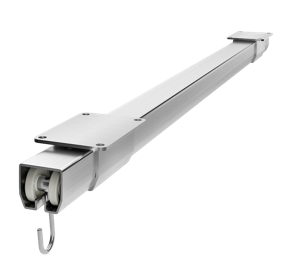
Ceiling Mount Curtain Track
Choose this mounting style if you want your industrial curtain track to mount to the ceiling with only a few inches of open gap.
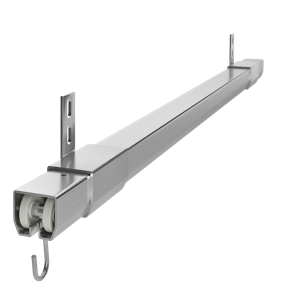
Wall Mount Curtain Track
This curtain track mount is designed for mounting the track next to a vertical wall or stud. This can be parallel to the wall, or perpendicular.
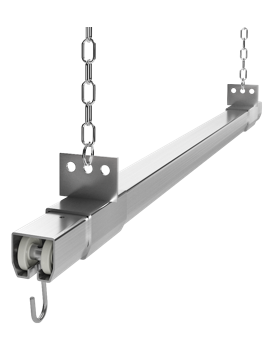
Chain or Cable Curtain Track
Like the threaded rod, a chain supported curtain track is also good for spanning large distances. Both chain or cable can be used to hold up the track.
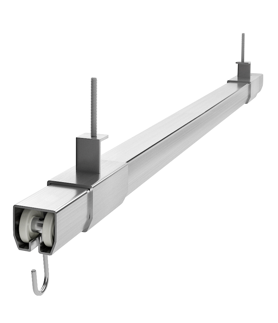
Threaded Rod Curtain Track
If the distance between the anchor points above is higher than where you want the curtain track, then a threaded rod mount might work well. Steel rods support the track and span the distance between the track and the ceiling.
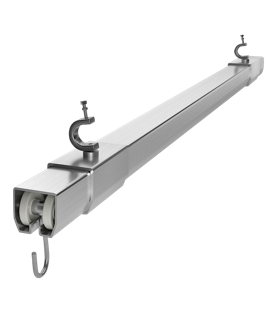
I-Beam Curtain Track
When connecting to a truss, I-Beam or any other horizontal steel support this style of mount works best. Once connected, you simply tighten down the set screw.
Recommended Overhead Tool Trolley Track Products
After comparing key features, the next step is selecting a product that fits how your industrial or workshop space is built and how equipment needs to move.
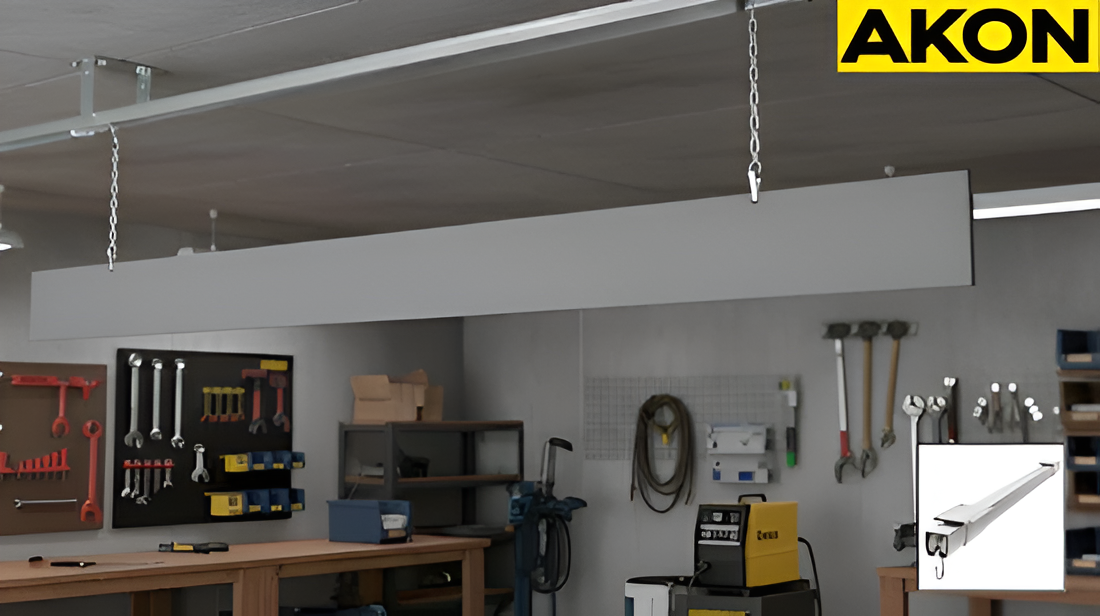
Ceiling Trolley
The Ceiling Trolley is a ceiling-mounted solution designed for overhead movement in industrial and workshop environments. It is best suited for spaces with reliable overhead structure.
• Designed for permanent ceiling-mounted installations
• Supports overhead movement of tools, equipment, or hanging systems
• Works well in straight runs or routed track layouts
• Commonly used in workshops with consistent overhead clearance
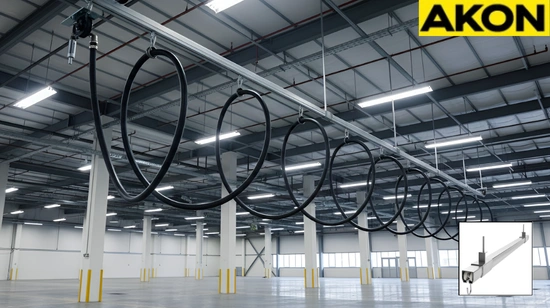
Hose Festoon System
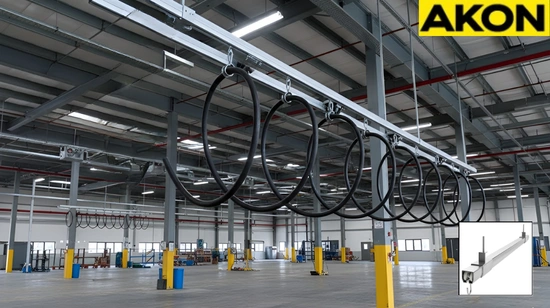
The Hose Festoon System combines overhead trolley hardware with hose or cable management. It allows hoses or lines to move along the track while staying suspended overhead.
• Used to manage air hoses, water lines, or electrical cables
• Keeps service lines accessible without floor routing
• Supports movement alongside mobile tools or workstations
• Integrates into overhead trolley track layouts
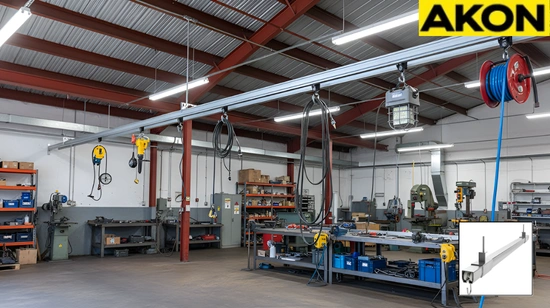
Free Standing Trolley
The Free Standing Trolley system provides overhead movement without attaching to ceiling structures. It is a practical option for workshops where ceiling mounting is limited or unavailable.
• Supported by its own frame rather than overhead beams
• Allows placement in areas without ceiling access
• Suitable for flexible or changing workshop layouts
• Can be repositioned as workspace needs change
Frequently Asked Questions
FAQs: About Overhead Tool Trolley Track
What is an overhead tool trolley track used for in workshops?
An overhead tool trolley track is used to guide tools, hoses, cables, or equipment along an overhead path. In workshop settings, this supports controlled movement across work areas without relying on floor-based routing.
Can an overhead tool trolley track be installed in industrial spaces without ceiling support?
Yes, free standing trolley systems allow overhead movement without attaching to ceiling beams. These systems are commonly used in industrial workshops with limited or restricted overhead structures.
How much weight can an overhead tool trolley track handle in a workshop?
Weight capacity depends on the specific track and trolley configuration selected. Load ratings should always be matched to the intended workshop use, such as tool handling or hose movement.
Is an overhead tool trolley track customizable for different industrial layouts?
Yes, overhead tool trolley track systems can be configured for straight runs, turns, or extended paths. This allows them to fit a wide range of industrial and workshop layouts.
What maintenance is required for overhead tool trolley tracks in high-use workshops?
Basic maintenance typically includes inspecting trolleys, fasteners, and track alignment. Keeping the system clean and checking for wear helps support consistent operation in high-use environments.
Can overhead tool trolley tracks be used with hoses or electrical cords?
Yes, overhead tool trolley track systems are often paired with hose festoon systems or overhead electrical cord solutions. This allows service lines to move along the same overhead track.
Are overhead tool trolley tracks suitable for daily industrial use?
They are designed for frequent operation in industrial and workshop settings. Proper installation and routine checks help support long-term use.
Do overhead tool trolley track systems require special tools for installation?
Installation usually involves standard mounting hardware and tools. Requirements may vary depending on whether the system is ceiling-mounted or free standing.
Can an overhead tool trolley track be expanded later?
Many overhead trolley track systems allow additional sections to be added. This supports future layout changes or expanded work areas.
Will an overhead tool trolley track work with existing workshop equipment?
Yes, these systems are commonly installed alongside existing machinery and workstations. Planning the track route helps ensure compatibility with current layouts.
Can overhead tool trolley tracks follow curved or corner paths?
Yes, overhead tool trolley tracks can be routed around corners when designed for that purpose. This supports movement across complex workshop layouts.
Is an overhead tool trolley track considered a permanent installation?
Some systems are installed as permanent solutions, while others can be adjusted or relocated. The installation type depends on the selected ceiling trolley or free standing trolley system.
How are tools or equipment attached to an overhead trolley?
Tools or accessories are typically suspended using hooks, brackets, or connectors. Attachment methods depend on the application and load requirements.
Are overhead tool trolley tracks suitable for temporary work areas?
Yes, free standing trolley systems are often used in temporary or changing workshop zones. They do not require structural modification.
Can overhead tool trolley tracks be installed in workshops with low ceilings?
They can be installed in lower ceiling environments if clearance is planned properly. Track placement should account for equipment height and movement.
Are overhead tool trolley tracks suitable for outdoor or semi-exposed industrial use?
Some systems are designed for indoor use only, while others can handle semi-exposed environments. Material selection and finish play an important role.
How long does it take to install an overhead tool trolley track system?
Installation time depends on layout complexity and mounting type. Simple installations may be completed quickly, while larger systems require more planning.
Can multiple trolleys run on the same overhead tool trolley track?
Yes, multiple trolleys can operate on the same track. Spacing and load limits should be considered during system design.
Is professional installation required for overhead tool trolley tracks?
Some workshops choose professional installation, especially for larger or complex systems. Others install using provided guidelines and standard tools.
How do I choose the right overhead tool trolley track system for my workshop?
Choosing the right system depends on ceiling access, layout, load requirements, and how tools or service lines need to move. Reviewing ceiling trolley, free standing trolley, and hose festoon options helps narrow down the best fit.
Photo Gallery
Choosing the Right Overhead Tool Trolley Track for Your Workspace
Overhead tool trolley tracks are designed to support industrial and workshop environments by keeping tools and equipment organized, accessible, and moving efficiently above the work area. Built for durability and flexible installation, these systems adapt well to demanding conditions and changing layouts. Choosing the right trolley track solution starts with understanding your workspace and selecting a system that fits how your operation works today and in the future.
Routing Around a Work Area