
Parts Handling Trolley Track
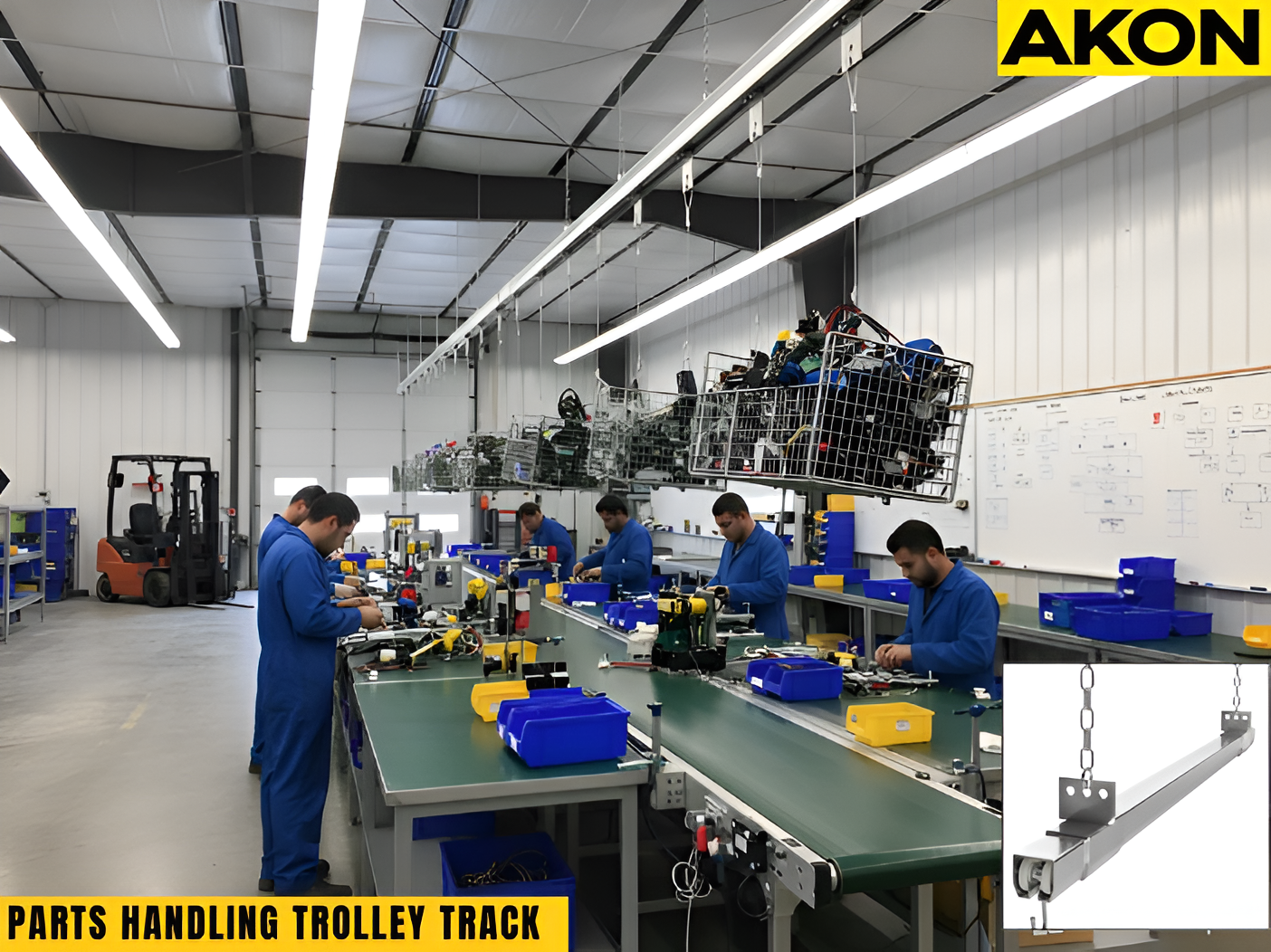
A Parts Handling Trolley Track is an overhead enclosed rail system used in industrial and workshop settings to move small components between workstations. It keeps parts organized and off the floor while supporting controlled, station-to-station workflow. This article covers common workshop challenges, key benefits, layout options, and system recommendations for industrial use.
Common Challenges in Workshop Parts Movement
In many industrial workshops, moving small components between stations is treated as a routine task. Yet this routine movement often creates hidden inefficiencies that impact productivity. For shop-floor supervisors and operations managers, these small disruptions can gradually affect workflow consistency and output.
Workflow Inefficiencies Between Stations
Without a defined movement system, workers frequently carry parts by hand from one station to another. Multiple trips across the floor may seem minor, but over time they consume valuable production minutes.
When components do not move in a structured path, delays begin to appear between fabrication, assembly, and finishing processes. This lack of rhythm makes it difficult to maintain steady throughput and predictable scheduling.
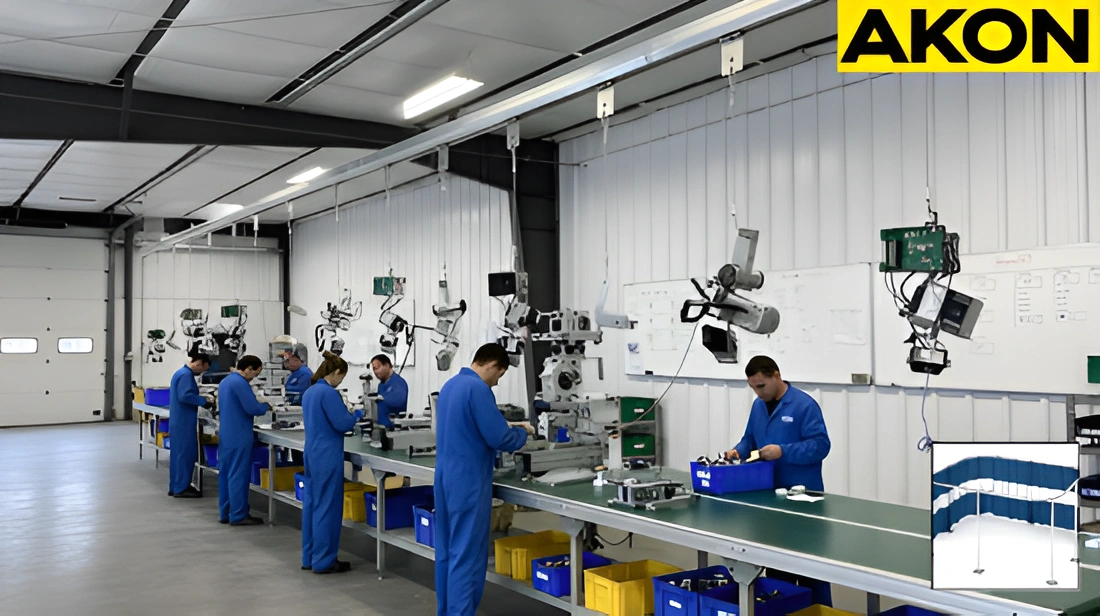
Clutter and Organization Challenges on the Shop Floor
As parts wait to be transferred, they often collect on benches, carts, or temporary surfaces. Small components can accumulate quickly, especially during busy production cycles.
This buildup reduces usable workspace and can crowd walkways in compact industrial shops. When materials mix with work in progress, organization becomes harder to manage, increasing the likelihood of slowdowns or confusion during assembly.
Make Shapes
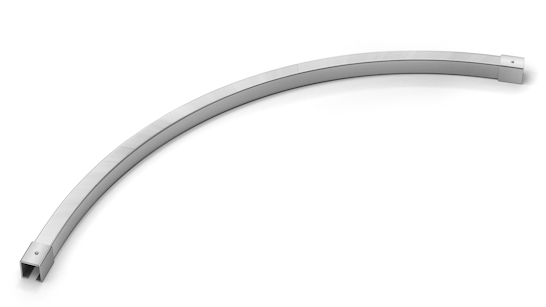
Radius Corner
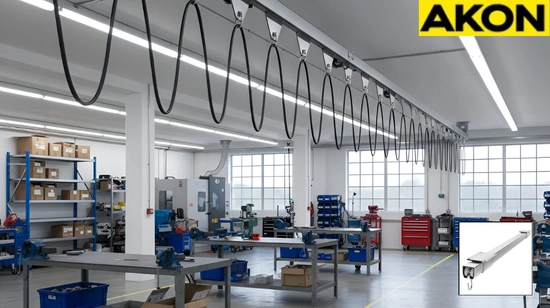
By using a 90 degree radius corner you can go around obstructions or make shapes. The 24" radius corner quickly attaches and detaches as needed. Use 1 radius for an L-Shape design, 2 radius corners for a C-Shape and 4 radius corners for a complete enclosure.

Key Benefits for Industrial and Workshop Environments
When workshop movement becomes inconsistent, adding structure changes everything. A Parts Handling Trolley Track creates a defined overhead route that improves coordination between stations without interrupting daily operations.
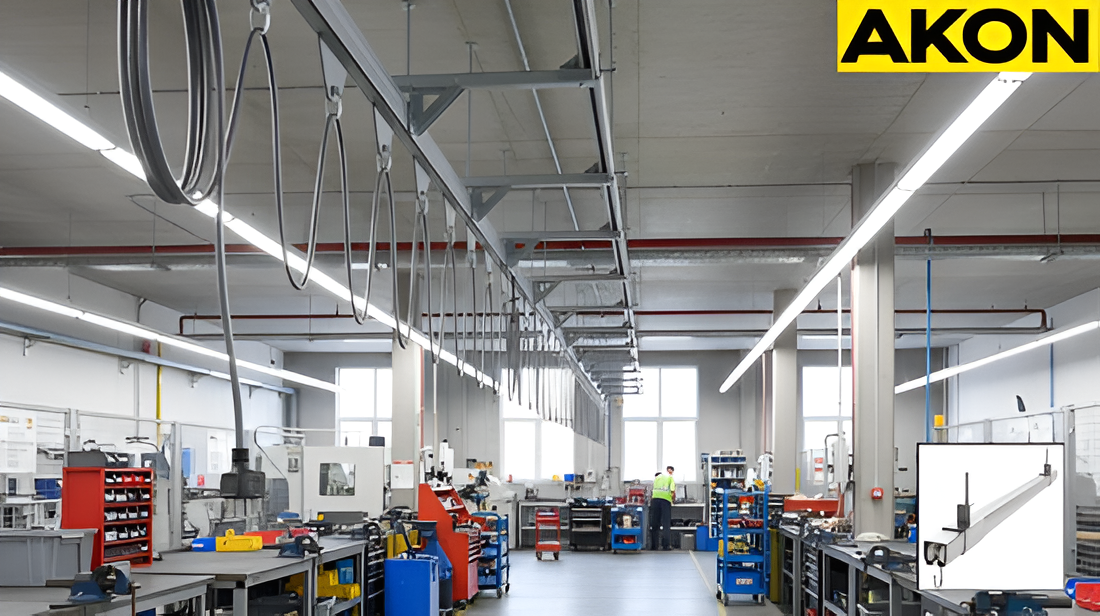
• More predictable production flow. Parts follow a consistent route between stations instead of relying on informal transfer methods. Supervisors can better monitor movement and maintain balanced workloads. This helps stabilize daily output and reduce workflow variability.
• Reduced operational interruptions. Fewer manual transfers mean fewer production pauses during handoffs. Teams stay focused on core tasks rather than transporting components. Over time, this supports smoother coordination across departments.
• Improved space planning flexibility. With movement guided overhead, floor layouts can be arranged around production efficiency instead of transport needs. Equipment placement becomes more strategic and less constrained. This makes future adjustments easier as production demands evolve.
Clear Work Areas
Moves small components above active production zones to preserve usable workspace.
Faster Station-to-Station Transfer
Creates a direct movement path that improves transition speed between fabrication, assembly, and finishing.
Safer Daily Operations
Limits unnecessary back-and-forth movement across busy shop floors.
Track Configurations for Workshop Layouts
Once a structured movement path is in place, selecting the right configuration becomes essential. Workshop layouts vary based on equipment placement, ceiling structure, and station sequence, so the track system should align with how components naturally move through your process rather than forcing workflow adjustments.
| Configuration | Best For | Key Advantage |
|---|---|---|
| Straight Track | Direct station-to-station movement | Simple, efficient workflow |
| Curved Track | Routing around equipment | Smooth directional transfer |
| Ceiling-Mounted Track | Workshops with strong overhead structure | Keeps floor fully clear |
| Free-Standing Track | Shops without ceiling support | Independent structural solution |
Choosing the appropriate configuration ensures the system complements your production layout and supports efficient movement between stations over the long term.
Types of Curtain Track Mounts
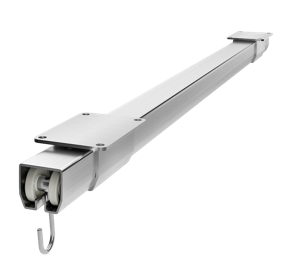
Ceiling Mount Curtain Track
Choose this mounting style if you want your industrial curtain track to mount to the ceiling with only a few inches of open gap.
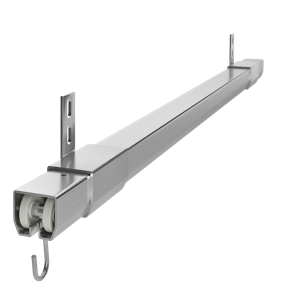
Wall Mount Curtain Track
This curtain track mount is designed for mounting the track next to a vertical wall or stud. This can be parallel to the wall, or perpendicular.
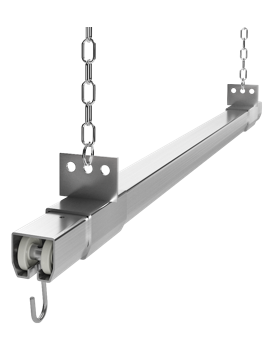
Chain or Cable Curtain Track
Like the threaded rod, a chain supported curtain track is also good for spanning large distances. Both chain or cable can be used to hold up the track.
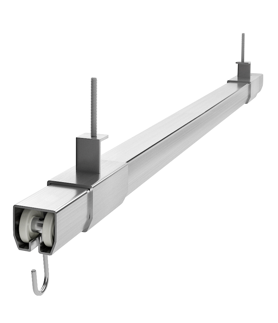
Threaded Rod Curtain Track
If the distance between the anchor points above is higher than where you want the curtain track, then a threaded rod mount might work well. Steel rods support the track and span the distance between the track and the ceiling.
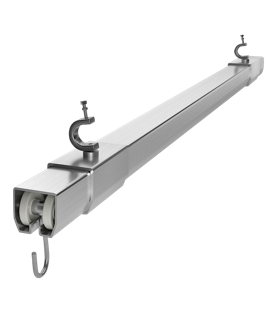
I-Beam Curtain Track
When connecting to a truss, I-Beam or any other horizontal steel support this style of mount works best. Once connected, you simply tighten down the set screw.
Recommended Trolley Track Systems for Industrial Workshops
After knowing which configuration best fits your layout, the next step is selecting a system that matches your facility structure and daily operational demands. The following overhead trolley products are well suited for industrial workshops focused on moving small components between stations.
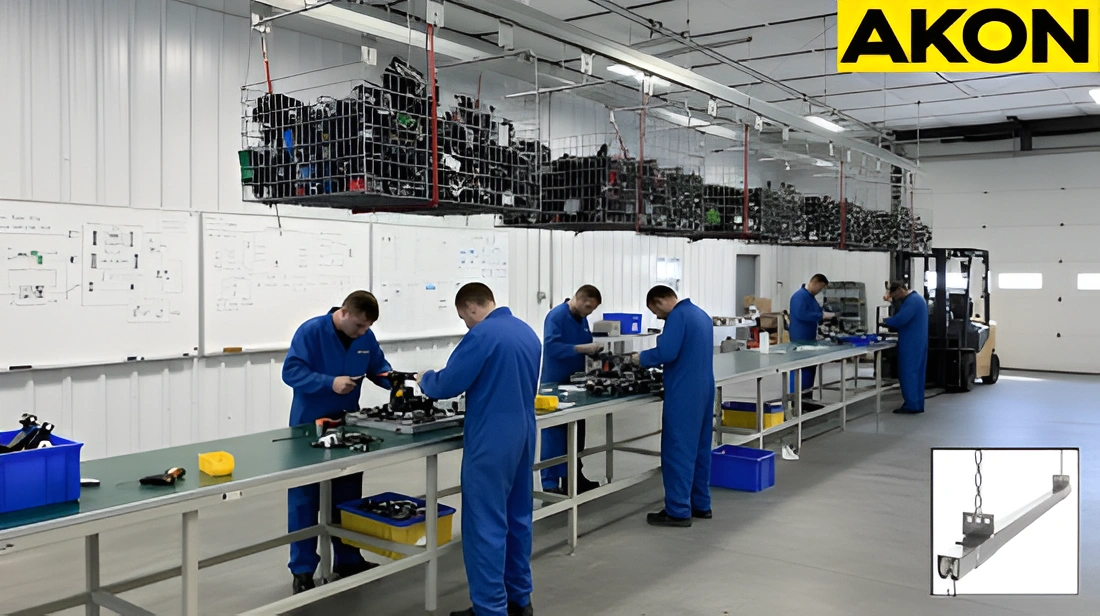
Ceiling Trolley
A Ceiling Trolley system mounts directly to reinforced overhead structures for permanent installation. It is ideal for workshops with strong ceiling support and established production layouts.
• Attaches directly to beams or structural framing
• Suitable for continuous station-to-station movement
• Designed for long, uninterrupted track runs
• Built with heavy-duty components for repeated daily use
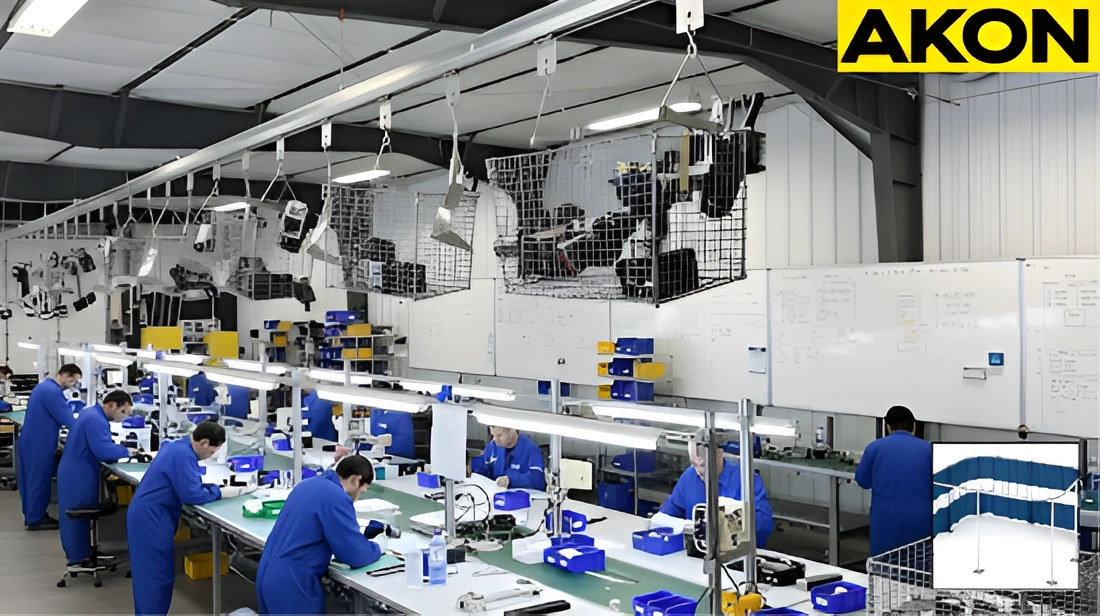
Free Standing Trolley
A Free-Standing Trolley system includes its own support structure for independent installation. It works well in facilities where ceiling anchoring is limited or not permitted.
• Requires no ceiling modification
• Ideal for leased spaces or retrofit environments
• Provides stable overhead routing with standalone framing
• Allows future repositioning as shop layouts evolve
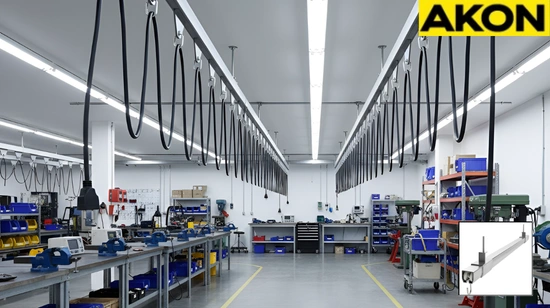
Overhead Electrical Cord Trolley
An Overhead Electrical Cord Trolley keeps power cables elevated and organized along a defined path. It supports controlled electrical access in active workshop settings.
• Keeps extension cords off floors and away from work areas
• Guides cables between stations without tangling
• Supports tool power distribution across production lines
• Helps maintain safer and more organized electrical routing
Frequently Asked Questions
FAQs: About Parts Handling Trolley Track
What size components can a Parts Handling Trolley Track handle?
A Parts Handling Trolley Track is typically designed for small to mid-sized industrial components. Load capacity depends on the specific trolley system selected, such as a Ceiling Trolley or Free-Standing Trolley. Matching the track rating to your component weight ensures reliable daily performance.
Is a Parts Handling Trolley Track suitable for small industrial workshops?
Yes. Many compact fabrication and assembly shops use Free-Standing Trolley systems when ceiling support is limited. The modular design allows efficient station-to-station movement even in tight layouts.
Can a Parts Handling Trolley Track run between multiple workstations?
Yes. Track sections can be configured to connect several stations in sequence. Curved sections allow routing around machinery or structural obstacles as needed.
How many trolleys can be installed on one track?
The number of trolleys depends on track length and load spacing. Proper distribution ensures smooth movement without overloading the system. Planning layout spacing helps maintain steady component flow.
Does a Ceiling Trolley require reinforced ceiling support?
A Ceiling Trolley system requires adequate structural anchoring. If ceiling reinforcement is not available, a Free-Standing Trolley system can provide a stable alternative.
Can a Parts Handling Trolley Track be expanded later?
Yes. Additional track sections and trolleys can be added as production volume increases. Expansion planning should consider ceiling capacity and total load requirements.
What is the difference between a Ceiling Trolley and a Free-Standing Trolley?
A Ceiling Trolley mounts directly to structural overhead supports. A Free-Standing Trolley includes its own frame and does not rely on ceiling anchoring. The choice depends on building structure and installation flexibility.
Can an Overhead Electrical Cord Trolley be used alongside a Parts Handling Trolley Track?
Yes. An Overhead Electrical Cord Trolley can run parallel to parts movement systems to manage power distribution. This helps keep extension cords elevated and organized across workstations.
Is a Parts Handling Trolley Track manual or powered?
Most workshop installations operate manually for controlled station-to-station transfer. Powered options may be available depending on operational needs and facility size.
How long does installation usually take?
Installation time depends on track length and mounting conditions. Smaller workshop systems can be completed quickly, while larger routed systems require additional planning.
Can curved track sections be added later?
Yes. Enclosed Roller Trolley Track Systems allow modular additions, including curved sections. This makes future routing adjustments possible as workshop layouts evolve.
Does the system interfere with lighting or ventilation?
With proper planning, a Parts Handling Trolley Track can be installed without disrupting ceiling utilities. Layout coordination during design helps prevent conflicts.
Is maintenance required for trolley systems?
Routine inspection of rollers, mounting points, and hardware is recommended. Keeping components clean ensures consistent operation in workshop environments.
Can the track support tools as well as parts?
Some workshops use trolley systems to support light tools in addition to components. Load capacity should always be confirmed before expanding usage.
Is a Free-Standing Trolley system suitable for leased buildings?
Yes. Because it does not require ceiling modification, a Free-Standing Trolley is often chosen for leased or retrofit spaces.
What materials are used in Ceiling Trolley systems?
Most Ceiling Trolley systems use durable steel and industrial-grade see components. These materials are selected for strength and long-term reliability.
Can one track serve multiple production lines?
This depends on layout and routing design. Some workshops install separate tracks for different production cells to maintain organized movement.
How do I determine the correct track length?
Track length is based on station spacing and routing requirements. Measuring workstation distances helps determine the appropriate configuration.
Will a Parts Handling Trolley Track improve daily workflow consistency?
Yes. By creating a defined overhead movement path, workshops gain better control over how components transition between stations.
How do I choose the right Parts Handling Trolley Track system for my workshop?
Start by evaluating ceiling structure, component weight, and routing needs. Then determine whether a Ceiling Trolley, Free-Standing Trolley, or complementary system like an Overhead Electrical Cord Trolley best supports your operation.
Photo Gallery
Improve Workflow with a Structured Overhead Solution
A Parts Handling Trolley Track introduces a more deliberate and organized way to move small components through an industrial workshop. By creating a reliable overhead path between stations, workshops can support smoother transitions, maintain clearer work areas, and strengthen overall production flow. If you are reviewing how parts currently move across your facility, this is a practical opportunity to consider whether a structured overhead system could better support efficiency and long-term growth.
Overhead Parts Handling Trolley Track
