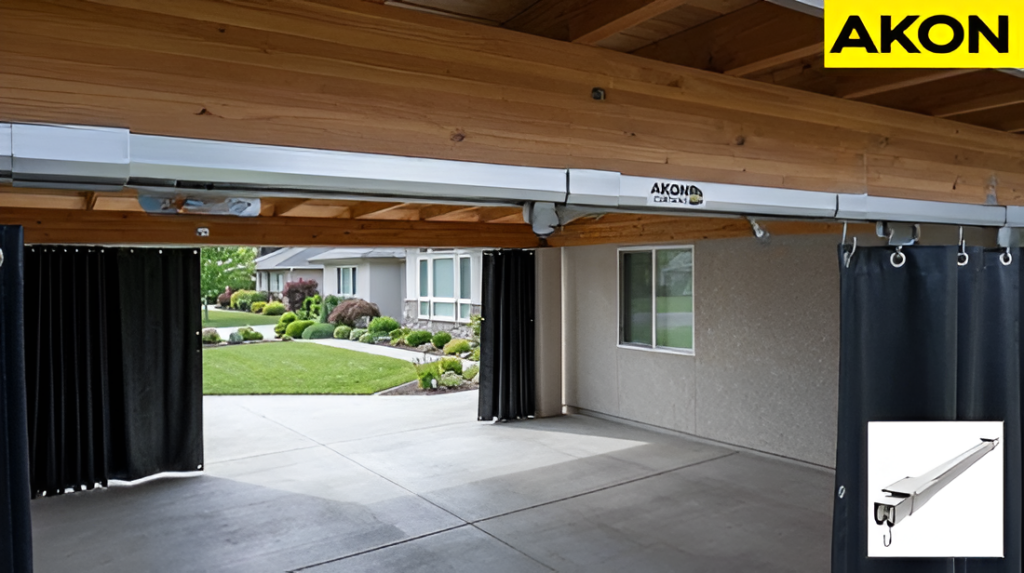

Sliding Track Systems
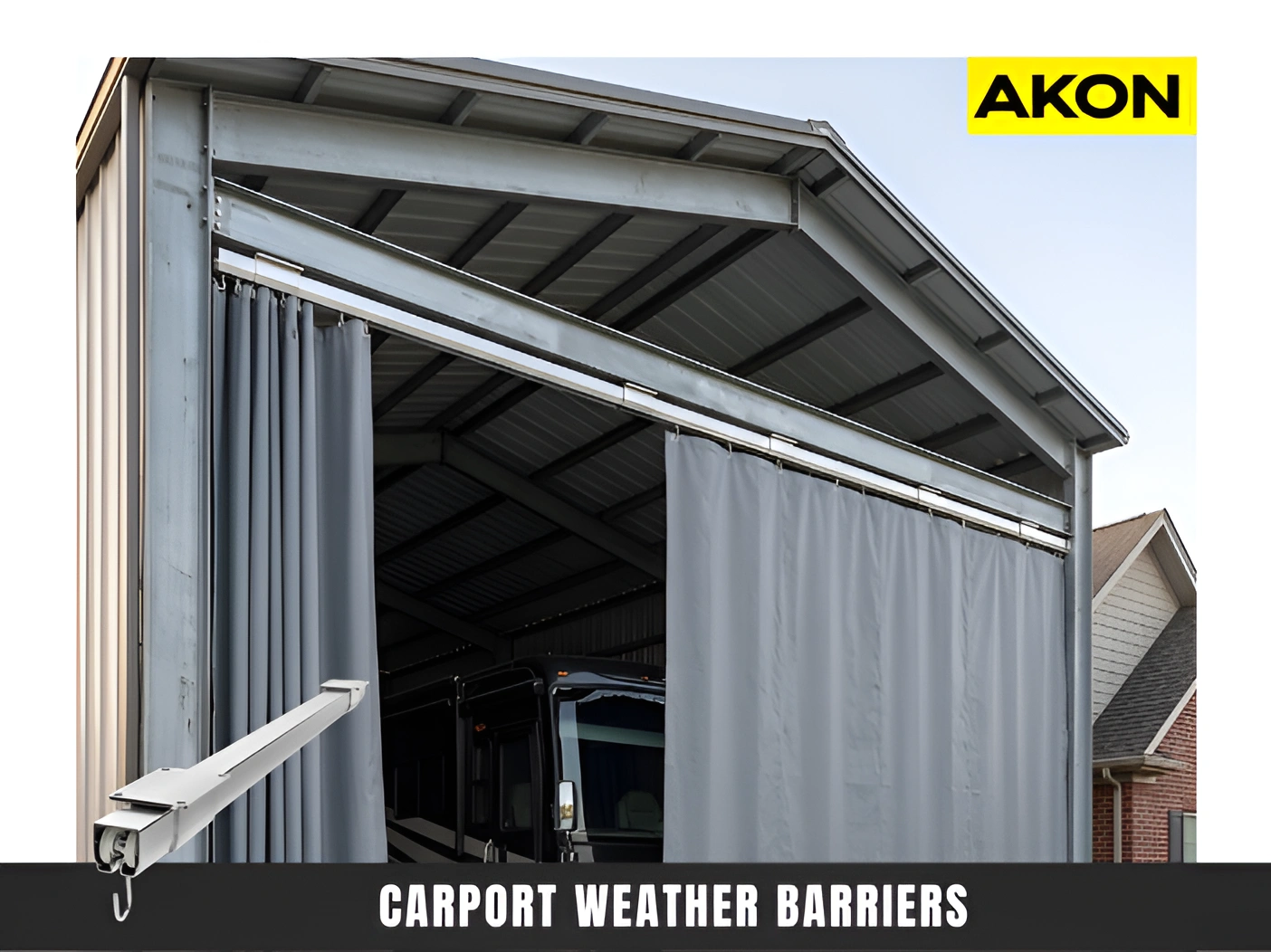
Open carports provide overhead cover but leave the sides exposed to wind-driven rain, dust, and debris. Temporary tarps and light curtain rods often fail under load. This guide explains why enclosures fail, how overhead trolley track systems create retractable protection, and how to choose a load-rated, structurally mounted solution for reliable weather performance.
Why Most Carport Enclosures Fail in Wind and Heavy Rain
Carports protect vehicles from sun and rain, but their open sides leave them exposed to wind-driven weather. Many enclosure systems fail because the track hardware and mounting structure cannot handle outdoor forces. Understanding why these failures happen helps explain why properly supported sliding track systems perform much better in exposed carport environments.
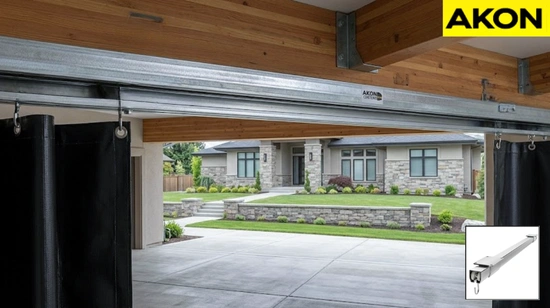
Wind Pressure Against Large Vinyl Surfaces
• Wide panels create surface area that catches wind like a sail.
• Gusts generate lateral force that transfers directly into the track system.
• Repeated stress weakens hardware that is not load-rated for outdoor exposure.
Track Deflection From Overspanning
• Long unsupported track sections begin to flex under panel weight.
• Even minor bending affects trolley alignment and sliding performance.
• Over time, deflection can become permanent and reduce system stability.
Inadequate Bracket Spacing
• Wide bracket intervals concentrate weight instead of distributing it evenly.
• Increased load between supports accelerates sagging.
• Improper spacing reduces long-term durability in exposed environments.

Mounting to Non-Structural Surfaces
• Fascia boards and trim are not designed for sustained load transfer.
• Fasteners can loosen as wind pressure cycles over time.
• Structural framing provides the necessary holding strength for outdoor systems.
Underestimating Panel Weight
• Clear vinyl increases weight significantly per linear foot.
• Heavier panels increase stress on carriers and mounting points.
• Miscalculating panel load leads to premature system failure.
Make Shapes
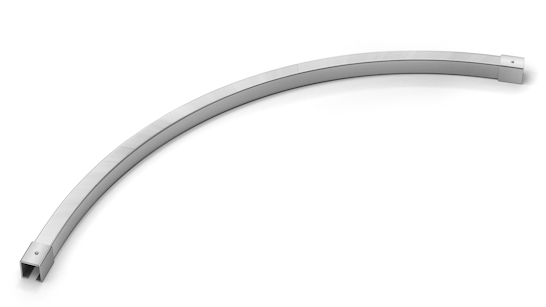
Radius Corner
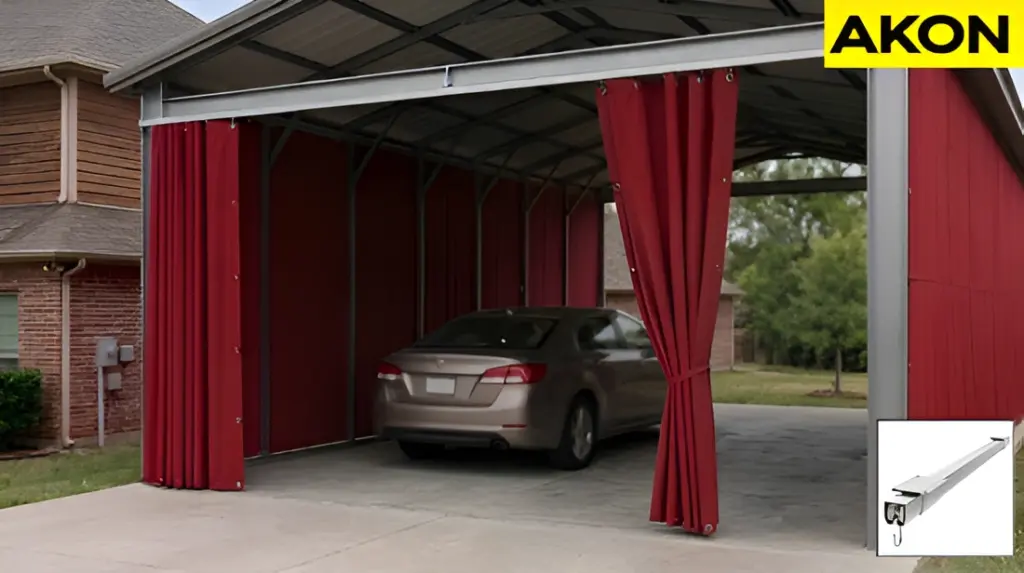
By using a 90 degree radius corner you can go around obstructions or make shapes. The 24" radius corner quickly attaches and detaches as needed. Use 1 radius for an L-Shape design, 2 radius corners for a C-Shape and 4 radius corners for a complete enclosure.

How Overhead Trolley Track Systems Solve the Structural Problem
When properly engineered, overhead trolley track systems manage panel weight and movement through controlled load distribution. Instead of relying on light-duty hardware, they use reinforced components designed for sustained outdoor performance.

• Heavy-gauge steel track runs along load-bearing members to create a stable support path. This maintains alignment across wider openings without distortion.
• Each carrier is built to handle defined weight capacities while maintaining smooth travel inside the track channel. Multiple rolling points distribute panel load evenly.
• Bracket placement follows calculated spacing to preserve rigidity across long spans. Consistent support keeps the track profile straight under sustained use.
• Precision trolley wheels allow steady sliding even with thicker vinyl panels. Movement remains smooth without placing excess strain on hardware.
• Galvanized and corrosion-resistant components withstand weather conditions common to open carports. Durable construction supports long-term reliability with minimal maintenance.
Engineered overhead trolley track systems provide the strength and stability required for retractable carport weather barriers. With reinforced components and load-rated design, they support dependable performance in exposed environments.
Types of Curtain Track Mounts
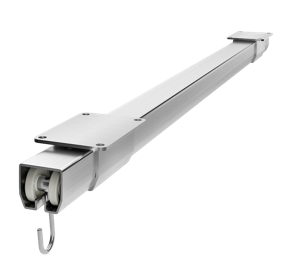
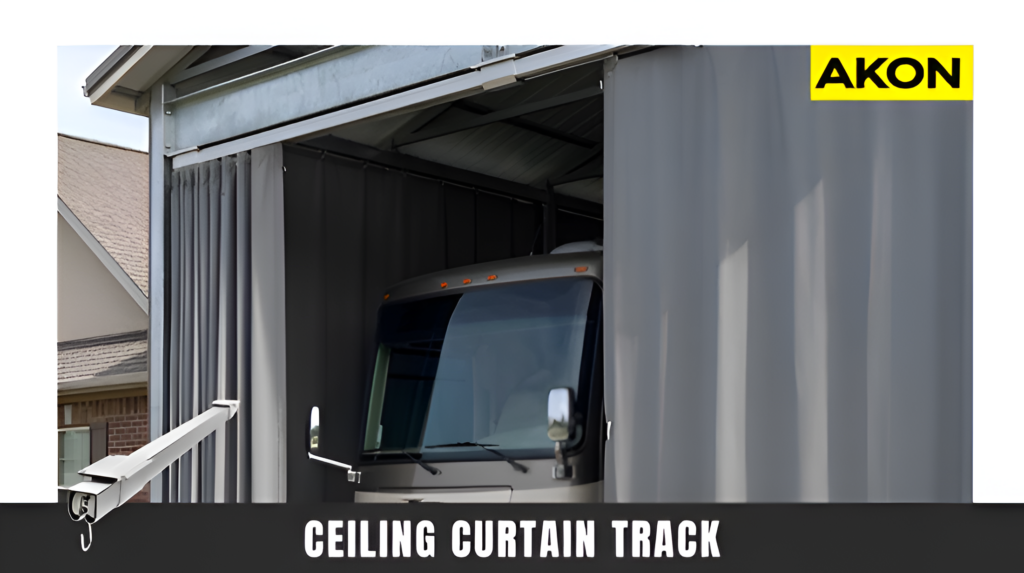
Ceiling Mount Curtain Track
Choose this mounting style if you want your industrial curtain track to mount to the ceiling with only a few inches of open gap.
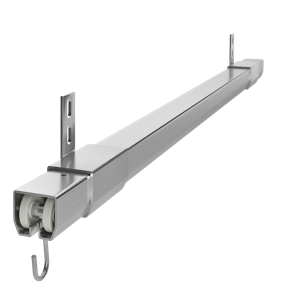
Wall Mount Curtain Track
This curtain track mount is designed for mounting the track next to a vertical wall or stud. This can be parallel to the wall, or perpendicular.
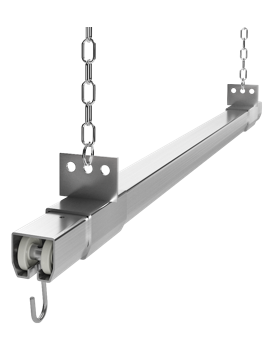
Chain or Cable Curtain Track
Like the threaded rod, a chain supported curtain track is also good for spanning large distances. Both chain or cable can be used to hold up the track.
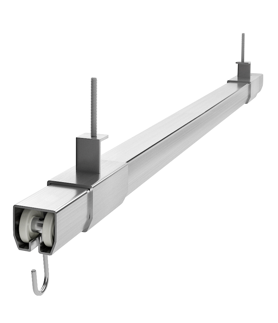
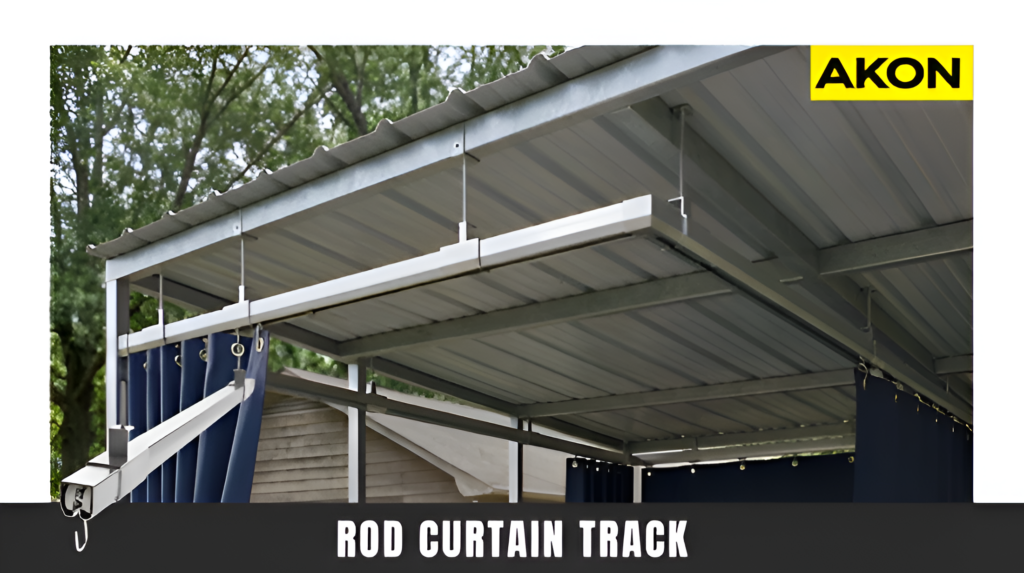
Threaded Rod Curtain Track
If the distance between the anchor points above is higher than where you want the curtain track, then a threaded rod mount might work well. Steel rods support the track and span the distance between the track and the ceiling.
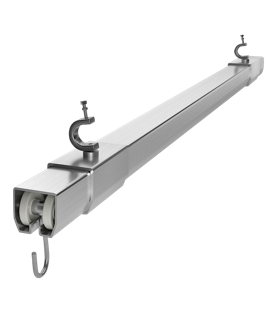
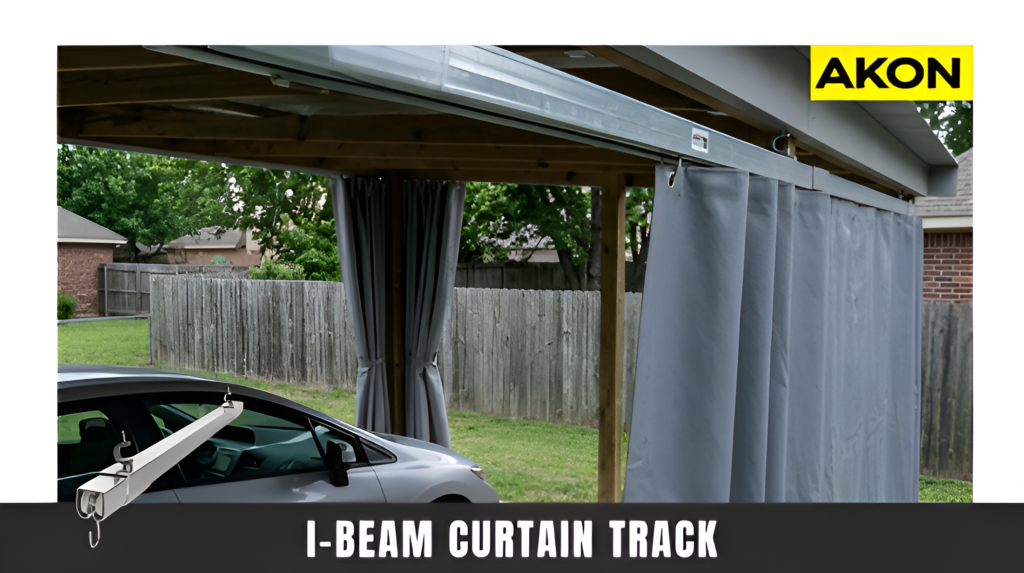
I-Beam Curtain Track
When connecting to a truss, I-Beam or any other horizontal steel support this style of mount works best. Once connected, you simply tighten down the set screw.
Recommended Sliding Track Systems for Carport Weather Barriers
With the structural fundamentals in place, selecting the right trolley system depends on your opening layout, mounting options, and intended use. Below are three overhead trolley configurations from the pillar page that adapt well to sliding carport weather barrier applications.

Ceiling curtain track systems mount directly to overhead beams and provide a continuous sliding path for weather barrier panels. Their rigid alignment keeps carriers moving smoothly across the span, making them a dependable option for residential and light commercial carport enclosures.
• Carport installations with strong overhead mounting points
• Straight spans where panels need smooth guided travel
• Applications requiring clean ceiling-mounted alignment

Rod curtain track systems use a straightforward rod-style rail that allows panels to slide easily along the opening. They work well in lighter-duty environments where the panel weight and span do not require a heavier structural track system.
• Smaller residential carports
• Lighter vinyl or fabric barrier panels
• Installations that require a simple sliding solution

I-beam curtain track systems provide a rigid steel profile that supports higher loads and longer spans. Their beam design helps maintain straight alignment and stable sliding movement even when heavier weather barrier panels are used.
• Wider carport openings
• Heavy clear vinyl weather barriers
•vInstallations exposed to stronger wind conditions
Track Selection Matrix for Carport Applications
Now that you know the available trolley configurations, the next step is matching your carport conditions to the appropriate system. The matrix below simplifies the selection process based on span, exposure, and panel weight.
| Opening Width | Wind Exposure | Panel Weight | Recommended System | Installation Note |
|---|---|---|---|---|
| Under 12 ft | Low | Light vinyl | Ceiling Trolley | 3–4 ft support spacing |
| 12–20 ft | Moderate | Medium vinyl | Overhead Electrical Cord Trolley | 2.5–3 ft spacing |
| 20+ ft | High | Heavy clear vinyl | Ceiling Trolley with tighter spacing | Mount directly to load-bearing framing |
| Corner or offset layout | Variable | Any | Free Standing Trolley | Independent support configuration |
| Wind Level | Suggested Maximum Support Spacing |
|---|---|
| Low | 4 ft |
| Moderate | 3 ft |
| High | 2–2.5 ft |
This structured approach makes selecting sliding track systems for carport weather barriers straightforward and performance-focused. In the next section, we’ll address common installation and durability questions that often come up during planning.
Frequently Asked Questions
FAQs: Sliding Track Systems for Carport Weather Barriers
Q1. Can sliding track systems for carport weather barriers withstand strong wind?
Yes, when the system is matched to the opening width and exposure level. In higher wind areas, an I-Beam Curtain Track with proper support spacing provides stronger structural stability.
Q2. What thickness of vinyl works best for carport weather barriers?
Thicker clear vinyl performs better in exposed areas but adds weight per linear foot. Heavier panels are best paired with an I-Beam Curtain Track designed to support higher loads.
Q3. How far apart should track supports be spaced on a carport?
Support spacing depends on wind exposure and span length. In moderate to high wind zones, spacing is typically reduced to maintain proper track alignment and support panel weight.
Q4. Can I mount a sliding track system to wood beams in my carport?
Yes, provided the beams are structural and securely anchored. Ceiling Curtain Track systems are commonly installed directly along overhead framing in residential carports.
Q5. Will curtain tracks rust outdoors?
Galvanized curtain track systems are designed for exterior exposure. I-Beam Curtain Track and Rod Curtain Track systems are commonly manufactured with corrosion-resistant materials suitable for outdoor environments.
Q6. What size sliding track system do I need for a 20-foot carport opening?
A 20-foot opening typically requires a stronger track profile. An I-Beam Curtain Track is often recommended for wider spans and heavier weather barrier panels.
Q7. Can I open just one section of a carport weather barrier at a time?
Yes, curtain panels can slide independently along the track. This allows you to partially open the enclosure while keeping other sections closed.
Q8. Is a heavy-duty system necessary for clear vinyl panels?
Clear vinyl adds noticeable weight across wider openings. For heavier panels, I-Beam Curtain Track systems provide greater structural strength and long-term stability.
Q9. Can I retrofit sliding track systems onto an existing carport?
In most cases, yes. Ceiling Curtain Track or Rod Curtain Track systems can often be mounted to existing structural beams in residential carports.
Q10. How long do curtain track systems last outdoors?
With proper installation and corrosion-resistant materials, ceiling, rod, and I-beam curtain track systems can provide reliable long-term outdoor performance.
Q11. Which curtain track system is best for high-wind carports?
For exposed environments, I-Beam Curtain Track systems are typically the best option because they provide stronger structural support for heavier panels.
Q12. When should I choose a rod curtain track instead of a ceiling curtain track?
A Rod Curtain Track works well for lighter panels and smaller spans where a simple sliding system is sufficient. Ceiling Curtain Track systems are often preferred when the track needs to mount directly to overhead framing.
Q13. Is rod curtain track suitable for sliding vinyl carport panels?
Yes, Rod Curtain Track systems can support lighter vinyl weather barriers and allow smooth sliding movement in residential carport installations.
Q14. Can sliding curtain track systems handle daily opening and closing?
Yes, curtain track systems are designed for repeated movement. Proper installation and alignment ensure smooth operation over time.
Q15. Do I need reinforcement for wide-span carports?
Wider spans typically benefit from stronger track profiles. I-Beam Curtain Track systems are often used for larger openings or heavier barrier panels.
Q16. Can I install sliding curtain tracks on both sides of a carport?
Yes, independent curtain tracks can be installed along multiple sides of a carport. This allows full perimeter weather protection when needed.
Q17. Does temperature change affect sliding curtain track performance?
Quality steel curtain tracks are designed to handle normal outdoor temperature variation. Proper mounting helps maintain smooth panel movement.
Q18. Are custom layouts possible for corner carports?
Yes, Ceiling Curtain Track systems can be configured to follow structural layouts, allowing weather barrier panels to run along multiple sides.
Q19. What is the best sliding track system for straight-line carport openings?
For straight spans mounted to overhead beams, Ceiling Curtain Track systems provide clean alignment and smooth panel movement.
Q20. How do I choose the right sliding track system for my carport?
Measure the opening width, evaluate wind exposure, and consider panel weight. Based on those factors, you can choose Rod Curtain Track for lighter setups, Ceiling Curtain Track for standard installations, or I-Beam Curtain Track for heavier spans.
Build for Load, Not Just Coverage
Carports are open structures exposed to shifting wind and weather, so effective protection depends on more than just adding vinyl panels. Long-term performance comes from matching panel weight, span, and exposure to a properly supported overhead trolley system. If you want sliding track systems for carport weather barriers that stay aligned and operate smoothly over time, explore the Curtain Track options and choose a system engineered for real-world load conditions.
Carport Weather Barrier System
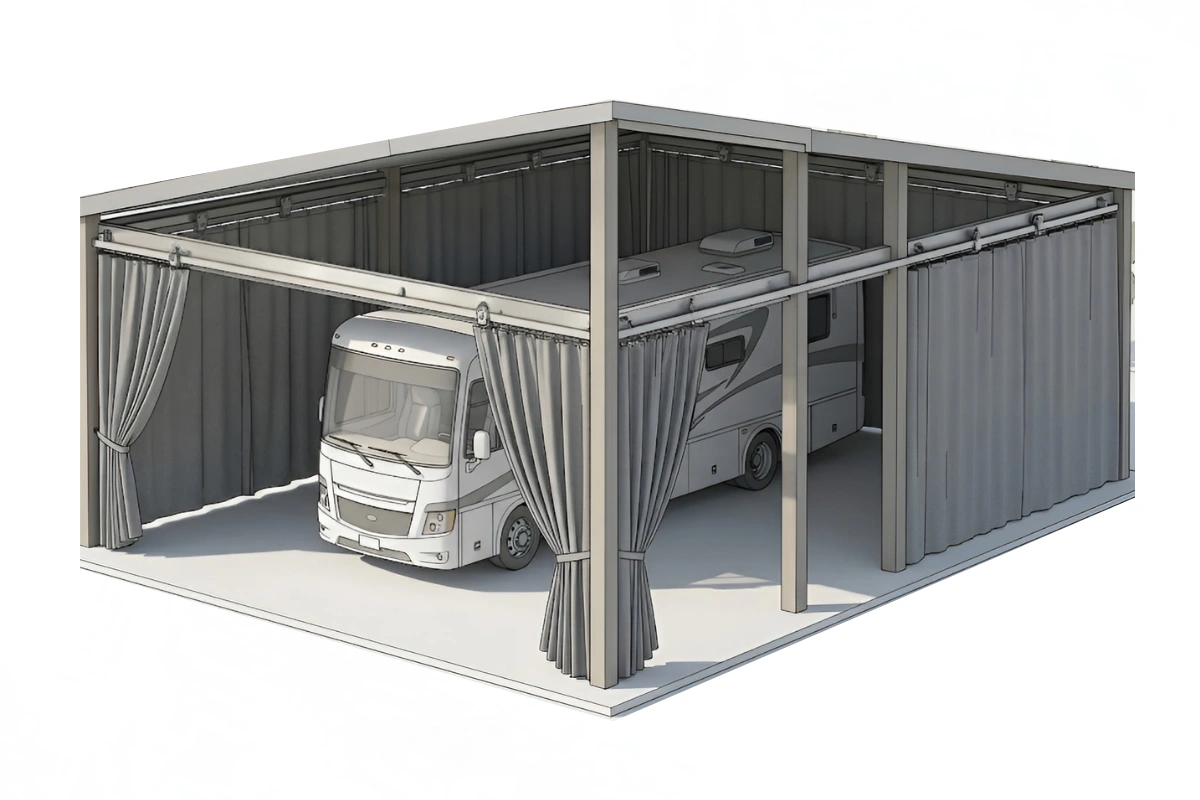
Photo Gallery