
Industrial Track Rails
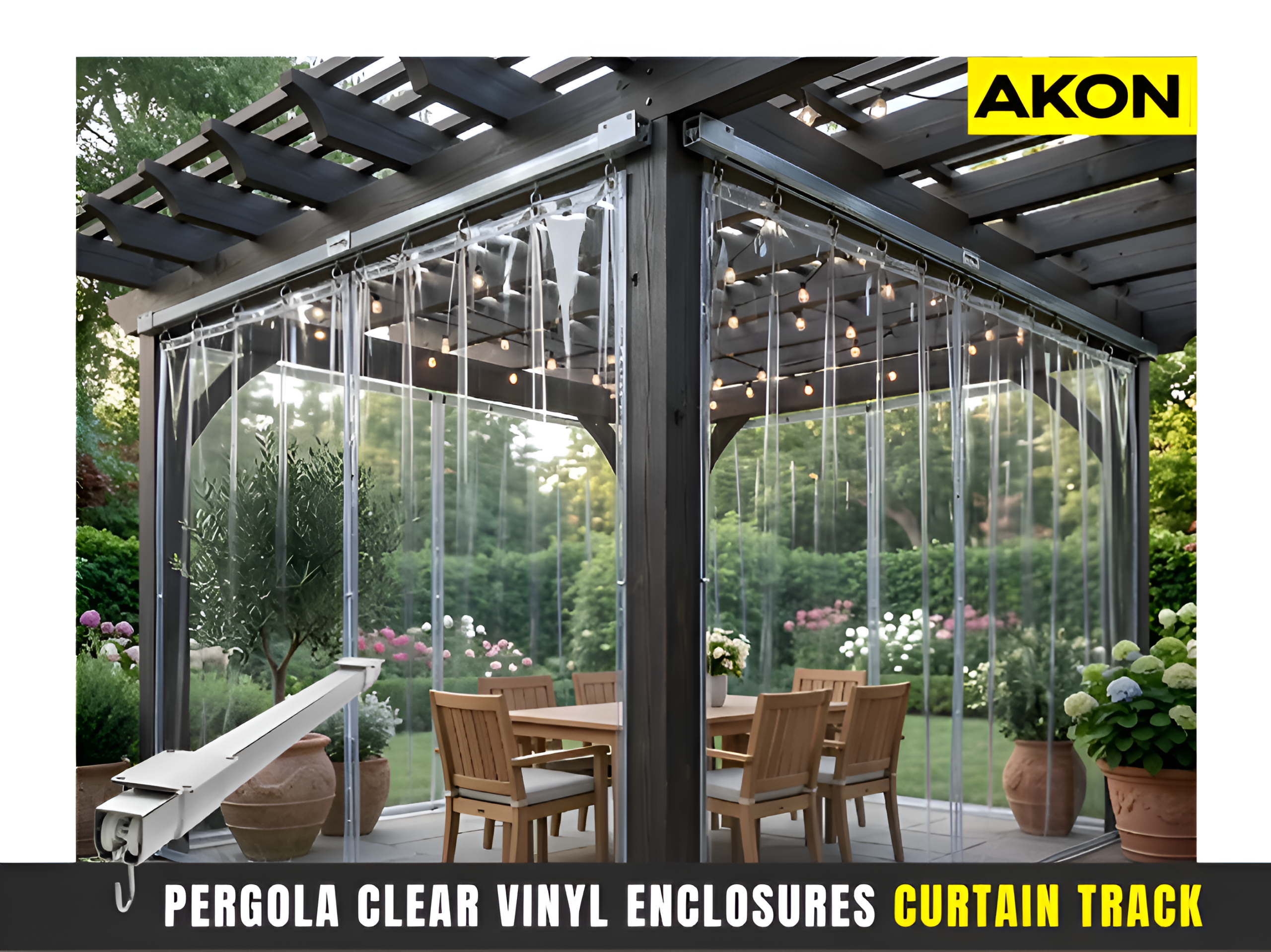
Clear vinyl behaves differently than fabric under wind load, and pergolas create crosswind exposure. Most failures occur due to deflection and poor mount spacing. This guide breaks down the engineering principles, real-world applications, and the right overhead track systems designed for wind-exposed pergolas, including product recommendations and installation tips.
Wind Load Engineering: What Most Pergola Installs Get Wrong
To know why pergola enclosure systems fail in wind, you have to look at the physics behind load distribution and structural support. Wind pressure is not just “force against fabric.” It creates shifting loads across spans, brackets, and mounting points. If those forces are not engineered correctly, movement begins.

Static vs. Dynamic Wind Load
• Static load is steady wind pressure pushing consistently against the vinyl surface.
• Dynamic load comes from gusts, direction changes, and pressure fluctuations that increase force suddenly.
• Pergola systems typically fail under dynamic load because the track and mounting were designed for steady pressure, not impact-style gusts.
Surface Area Pressure on 18–20 Mil Vinyl
• Thicker 18–20 mil clear vinyl increases surface tension and captures more wind force.
• Larger panels multiply total pressure across the full span of the track.
• As panel size grows, load transfers directly into brackets and anchor points, not just the vinyl.
Track Span Deflection Over 8–12 Ft Runs
• Longer track spans create leverage points where wind force amplifies in the center.
• Even slight mid-span flex reduces panel tension and increases stress on carriers.
• Steel tracks resist deflection better than lighter systems when installed over extended runs.

Bracket Spacing Rules
• Wider bracket spacing increases unsupported track length, allowing flex under load.
• 16–18 inch spacing is typically required for moderate wind exposure with 18–20 mil vinyl.
• Closer spacing distributes load more evenly and reduces stress concentration at single points.
Structural Beam Anchoring vs Fascia Mounting
• Fascia boards are not primary load-bearing elements and can shift under dynamic pressure.
• Structural beam anchoring transfers wind load directly into the pergola’s frame.
• High-wind environments require mounting into solid framing members, not decorative trim.
Real-World Example: 12 ft Clear Vinyl Panel at 20 Mil
• A 12-foot, 20 mil panel exposed to 30–40 mph gusts experiences amplified mid-span pressure.
• If mounted with wide bracket spacing or fascia anchoring, track flex begins at the center.
• Once deflection starts, load increases on carriers and anchors, accelerating system fatigue.
Make Shapes
Radius Corner
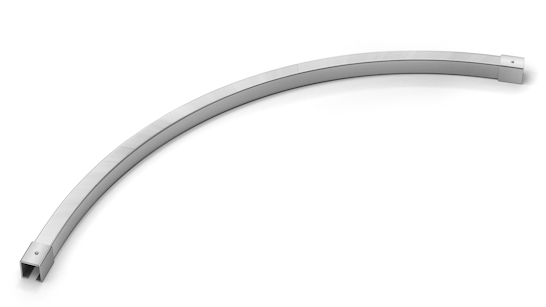
By using a 90 degree radius corner you can go around obstructions or make shapes. The 24" radius corner quickly attaches and detaches as needed. Use 1 radius for an L-Shape design, 2 radius corners for a C-Shape and 4 radius corners for a complete enclosure.

Real-World Application: Coastal Pergola Retrofit
Engineering principles matter, but real-world performance is what validates a system. Here’s how a coastal pergola retrofit corrected ongoing instability without replacing the vinyl.

• An open, ocean-facing pergola experienced frequent gust exposure that caused visible panel movement during storms. The decorative rod began bending under sustained tension, and anchor points gradually loosened.
• The rod system was replaced with a heavy-duty overhead trolley track mounted directly into structural beams. Bracket spacing was reduced, and enclosed carriers with end stops were installed to better control panel travel.
• The upgraded system remained stable during high-wind events without visible track distortion. Panels now glide smoothly and stay aligned even during sustained gust conditions.
This retrofit shows that wind stability comes from the support system, not just the vinyl. When tracks and mounting are engineered correctly, pergola enclosures perform reliably even in gust conditions.
Types of Curtain Track Mounts
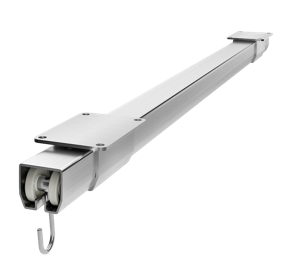
Ceiling Mount Curtain Track
Choose this mounting style if you want your industrial curtain track to mount to the ceiling with only a few inches of open gap.
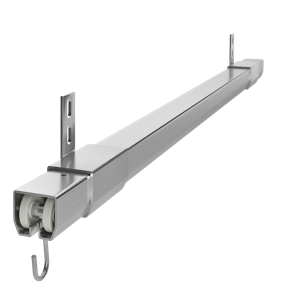
Wall Mount Curtain Track
This curtain track mount is designed for mounting the track next to a vertical wall or stud. This can be parallel to the wall, or perpendicular.
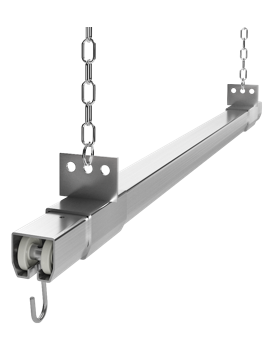
Chain or Cable Curtain Track
Like the threaded rod, a chain supported curtain track is also good for spanning large distances. Both chain or cable can be used to hold up the track.
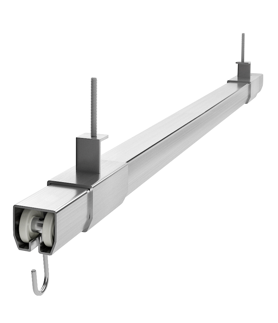
Threaded Rod Curtain Track
If the distance between the anchor points above is higher than where you want the curtain track, then a threaded rod mount might work well. Steel rods support the track and span the distance between the track and the ceiling.
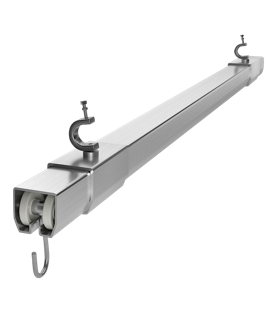
I-Beam Curtain Track
When connecting to a truss, I-Beam or any other horizontal steel support this style of mount works best. Once connected, you simply tighten down the set screw.
Recommended Overhead Track Systems for Wind-Exposed Pergolas
After knowing how structural upgrades corrected real-world instability, the next step is choosing a track system built for controlled overhead movement and higher load tolerance. The right overhead configuration ensures consistent glide performance while maintaining alignment during gust activity.

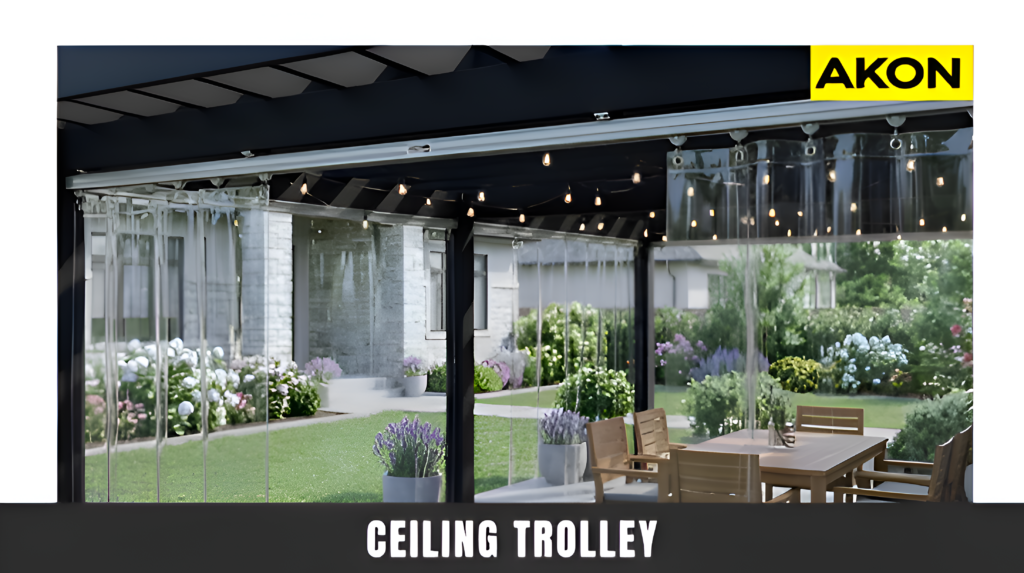
The Ceiling Trolley system offers a strong balance of structural durability and smooth operation, making it ideal for pergolas that experience seasonal gusts but do not require industrial reinforcement.
• Best for: Residential pergolas with moderate wind exposure.
• When to use: Open backyard installations using 18–20 mil clear vinyl that require reliable overhead travel.
• Why it performs in wind: The galvanized steel track and steel-wheel trolley assemblies provide stable guided movement while maintaining rigidity across standard residential spans.

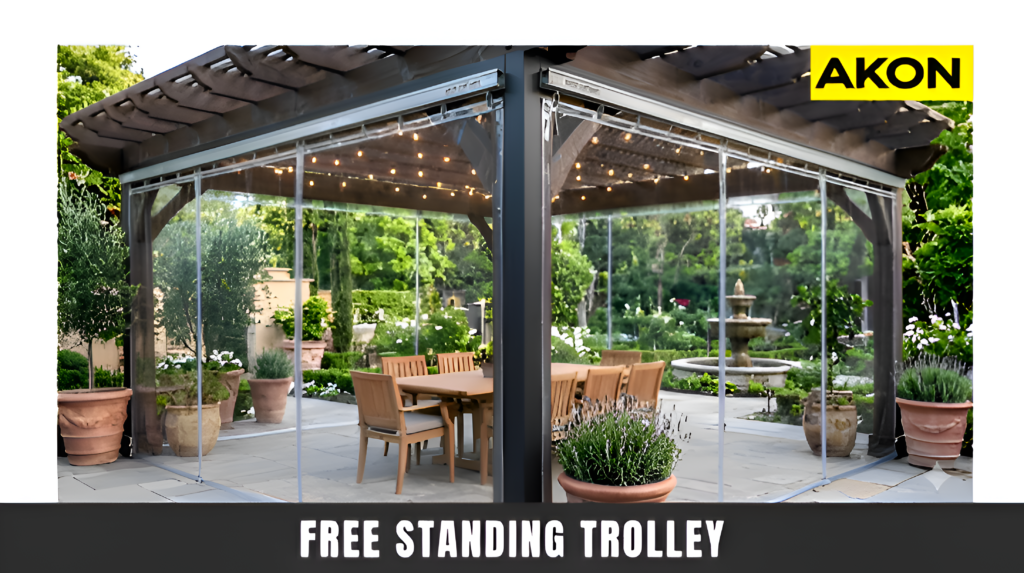
The Free Standing Trolley is especially useful when the pergola structure itself is decorative and not designed to carry higher lateral loads.
• Best for: Larger pergola footprints or installations where overhead anchoring options are limited.
• When to use: Configurations that benefit from a self-supported track structure independent of decorative framing.
• Why it performs in wind: By isolating the load path from non-structural trim elements, this system maintains alignment and minimizes movement transfer during wind events.

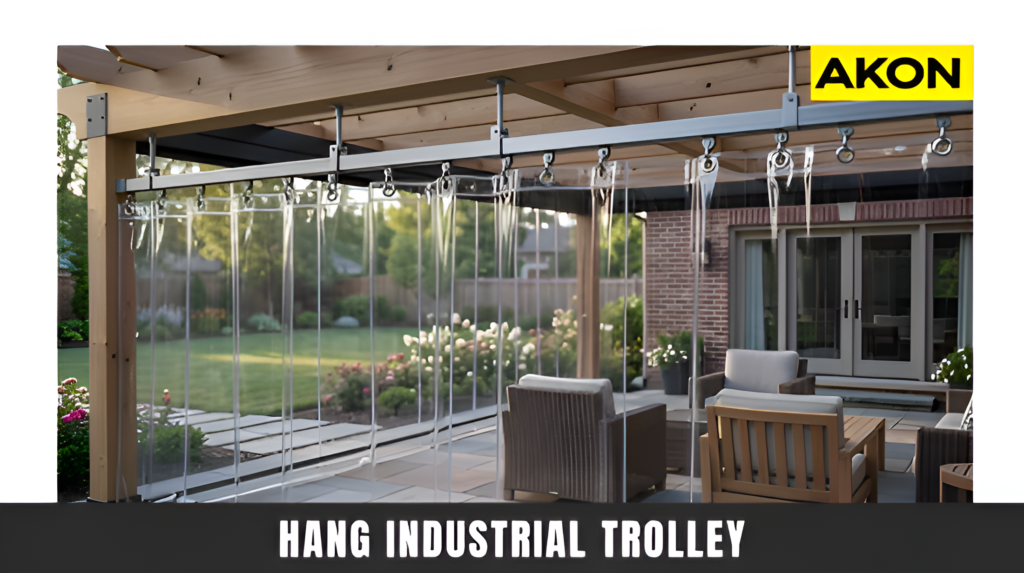
The Hang Industrial Trolley system is designed for demanding overhead applications, making it well-suited for pergola environments where wind exposure and panel weight require stronger load stability without compromising smooth operation.
• Best for: Heavier pergola clear vinyl enclosures requiring elevated load support.
• When to use: Installations using thicker vinyl panels or setups exposed to consistent wind activity.
• Why it performs in wind: The reinforced track profile and durable trolley carriers are engineered to manage sustained suspended loads while maintaining controlled, guided movement.
Application Mapping Table: Confirming the Right System
Now that you know your system category, use this quick-reference table to confirm your selection. This structured overview matches room conditions with the appropriate track solution so you can validate your decision with confidence.
| Room Type | Total Drape Weight | Span Width | Support Spacing | Movement Frequency | Recommended System |
|---|---|---|---|---|---|
| Small media room | 20–40 lbs | Under 14 ft | Every 4 ft | Occasional | Moderate load system |
| Mid-size theater | 40–80 lbs | 15–20 ft | Every 3–4 ft | Moderate | Heavy-duty steel rail |
| Dedicated cinema room | 80–150 lbs | 20+ ft | Every 2–3 ft | Frequent | Reinforced industrial system |
| Multi-use theater | 60–120 lbs | Variable | Reinforced ceiling anchors | Daily | Motorized trolley system |
With your room conditions clearly mapped, you now have a practical reference point for selecting the right industrial track rail. Instead of guessing, you can move forward knowing your system choice aligns with your span, usage level, and long-term performance expectations.
Frequently Asked Questions
FAQs: Wind Resistance, Load Ratings & Installation Questions
Q1. How much wind can a pergola curtain track handle?
A properly mounted steel overhead trolley system can handle moderate to high gust conditions when installed into structural framing. Systems like the Ceiling Trolley or Free Standing Trolley perform reliably when bracket spacing and load capacity are aligned with panel weight.
Q2. What bracket spacing is recommended for 20 mil clear vinyl panels?
For 20 mil vinyl in exposed areas, tighter support intervals are typically required to maintain track alignment. Many wind-resistant curtain track installations use 12–16 inch spacing depending on span length and structural backing.
Q3. Is 18 mil clear vinyl too heavy for a light-duty curtain rod?
In many cases, yes. Thicker vinyl increases both suspended weight and wind capture, which can exceed the capacity of decorative rods not designed for exterior load conditions.
Q4. Can wind cause a pergola curtain track to bend over long spans?
Yes, especially on extended runs without adequate support. Reinforced systems such as the Ceiling Trolley are built to maintain consistent track alignment across wider pergola openings.
Q5. Do I need structural reinforcement for coastal pergola installs?
In high-exposure environments, anchoring into primary beams is strongly recommended. Systems like the Free Standing Trolley are often used when additional structural independence is required.
Q6. Does vinyl thickness affect which track system I should choose?
Yes. As vinyl thickness increases, both load capacity and mounting precision become more important when selecting wind-resistant curtain tracks for pergola clear vinyl enclosures.
Q7. Are aluminum tracks strong enough for outdoor pergolas?
Aluminum systems may work in sheltered conditions. For moderate to high wind exposure, steel-based trolley systems generally provide greater long-term durability.
Q8. What causes carrier failure in windy pergola setups?
Carrier failure typically results from uneven load distribution or excessive movement across unsupported spans. Enclosed trolley assemblies help maintain guided travel and reduce stress on individual components.
Q9. Can enclosed trolley systems improve wind stability?
Yes. Enclosed systems help control horizontal movement and keep panels aligned during gust activity.
Q10. Does panel width matter as much as vinyl thickness?
Yes. Wider panels increase total surface area, which raises the amount of force transferred into the overhead track system.
Q11. Can mounting into fascia boards lead to premature failure?
Fascia boards are often decorative and not designed for sustained lateral load. Structural beam anchoring provides a more reliable foundation for wind-exposed pergolas.
Q12. How do I know if my pergola framing can support a trolley system?
If the mounting location connects directly into primary beams or load-bearing members, it is typically suitable. If unsure, reinforcement should be evaluated before installation.
Q13. Should I increase bracket count in windy areas?
Increasing support points improves load distribution and reduces movement amplification along the span.
Q14. What is the safest track option for larger pergolas?
For larger footprints or longer spans, reinforced steel systems like the Ceiling Trolley or Hose Festoon System provide higher suspended load tolerance.
Q15. Can wind-resistant curtain tracks prevent vinyl tearing?
While no system eliminates stress entirely, proper track alignment and secure mounting significantly reduce tension points that lead to tearing.
Q16. Is smooth glide important for wind performance?
Yes. Controlled movement prevents sudden load shifts, which can place stress on carriers and anchor points.
Q17. Do free-standing trolley systems reduce stress on decorative pergolas?
Yes. The Free Standing Trolley allows the load path to remain independent of non-structural trim elements.
Q18. What happens if bracket spacing is too wide?
Wider spacing increases unsupported track length, which can lead to alignment shifts during gust conditions.
Q19. Can clear vinyl act like a sail in strong wind?
Yes. Even moderate gusts can create significant surface pressure, which is why engineered overhead support systems are essential.
Q20. What is the best wind-resistant curtain track for pergola clear vinyl enclosures?
The best option depends on pergola size, vinyl thickness, and exposure level. For most wind-prone applications, systems like the Ceiling Trolley, Free Standing Trolley, or Hose Festoon System provide the structural capacity and guided movement required for reliable performance.
Build for Wind, Not Just Shade
Pergolas are open structures, and once clear vinyl panels are installed, the system must manage real surface load and movement. Most performance issues trace back to track flex and insufficient support, not the vinyl itself. Choosing an engineered overhead system with proper load capacity, precise bracket spacing, and secure structural mounting ensures your pergola enclosure performs reliably in wind, not just in calm weather.
Engineered Overhead Curtain Track

Photo Gallery